Introduction
Choosing the correct water type for your autoclave is not just about compliance—it’s a core factor that determines the equipment’s performance, durability, and safety standards. Whether you operate in medical, laboratory, pharmaceutical, or industrial settings, water purity directly influences sterilization results, device longevity, and maintenance costs.
In this guide, you’ll learn what kind of water should be used in an autoclave, why it matters, which water types are recommended or prohibited, and how to maintain optimal water quality for consistent, safe sterilization.
Why Water Quality Matters in Autoclaves
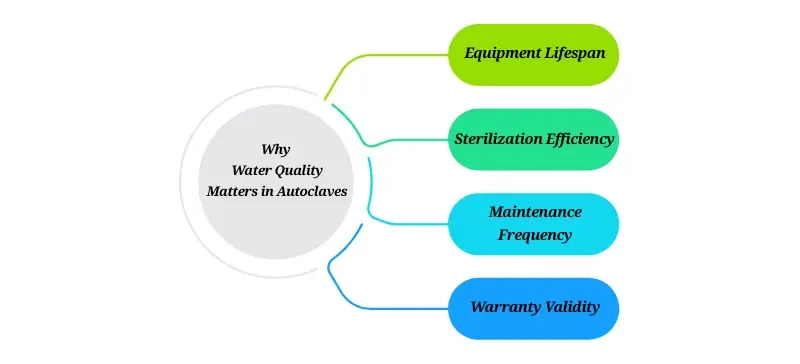
Autoclaves sterilize instruments and materials using high-pressure steam. This steam is generated from water, and the quality of that water can directly affect:
Equipment Lifespan – Poor-quality water can corrode internal parts like heating elements and sensors.
Sterilization Efficiency – Contaminated water can reduce the effectiveness of microbial elimination.
Maintenance Frequency – Scale buildup leads to clogged valves and costly repairs.
Warranty Validity – Using unapproved water types can void manufacturer warranties.
Risks of Using Tap Water in Autoclaves
Although readily available, tap water is unsuitable for autoclave use due to its high content of:
Minerals like calcium and magnesium
Salts, chlorine, and chemical residues
Conductivity levels often around 700 µS/cm
These impurities cause scale deposits, overheating, and sensor damage. Over time, such issues lead to sterilization failure or complete autoclave breakdown.
Recommended Water Types for Autoclaves
– Distilled Water
How it’s made: Through boiling and re-condensation.
Conductivity: Typically between 1–10 µS/cm.
Benefits: Free from minerals, bacteria, and most contaminants.
Best for: Standard medical, lab, and clinical autoclave use.
– Deionized (DI) or Demineralized Water
How it’s made: Via ion exchange or reverse osmosis.
Conductivity: Often < 5 µS/cm.
Benefits: Removes ions, salts, and organic matter.
Best for: Long-term autoclave reliability and sensitive applications.
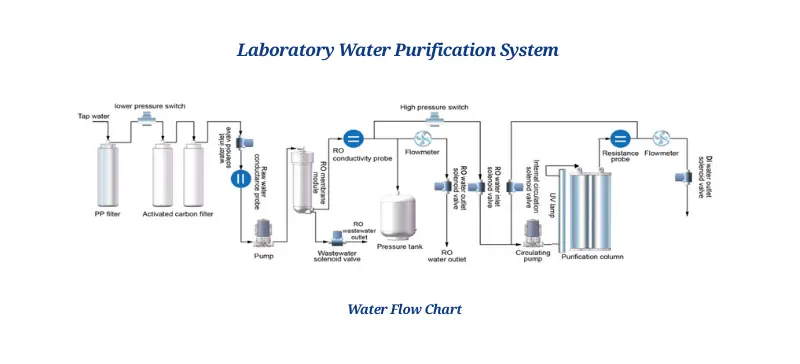
– Reverse Osmosis (RO) Water
How it’s made: Using a semipermeable membrane.
Note: Purity level depends on pre- and post-filtration systems.
Use case: Suitable when combined with polishing (e.g., deionization).
Other Water Types and Their Suitability
| Water Type | Suitable for Autoclaves? | Notes |
|---|
| Tap Water | Not Recommended | High mineral content, leads to scale buildup and corrosion |
| Purified Water | Use with Caution | Depends on purification method; may not meet medical-grade standards |
| Ultra-Pure Water | Yes (Special Use) | Used in high-precision industries like biotech and pharmaceuticals |
Water Conductivity Guidelines
Water conductivity indicates the level of dissolved ions and is a key quality parameter for autoclaves:
Ideal range: 0 – 15 µS/cm
Tap water: ~700 µS/cm
Distilled water: 1 – 10 µS/cm
Deionized water: < 5 µS/cm
Tip: Use a digital conductivity meter to monitor your autoclave water regularly.
Preventing Damage & Maintaining Performance
If poor-quality water has been used:
Mild buildup? Use the autoclave’s blow-down or flushing function.
Moderate issues? Upgrade to a water purification system (RO + DI).
Severe damage? Replace affected components or consult with your supplier.
Best Practices for Autoclave Water Management
Follow Manufacturer Guidelines – Always consult your autoclave’s manual.
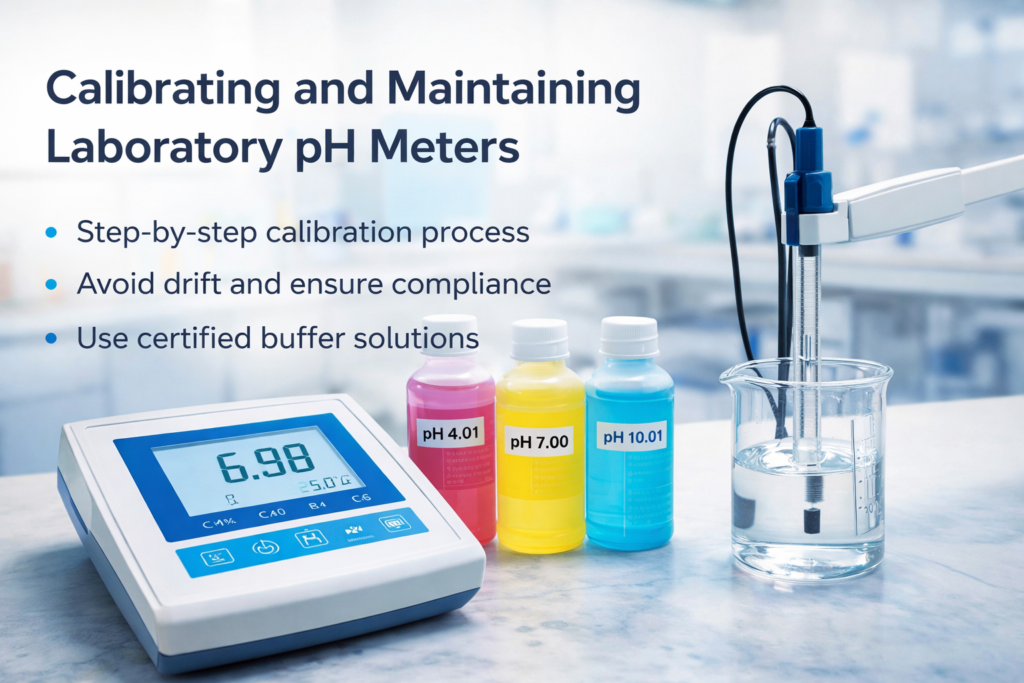
Use Conductivity Meters – Ensure water quality stays within acceptable ranges.
Regular Maintenance – Clean chambers and inspect heating elements periodically.
Label and Refresh Water Supplies – Avoid contamination and biofilm buildup.
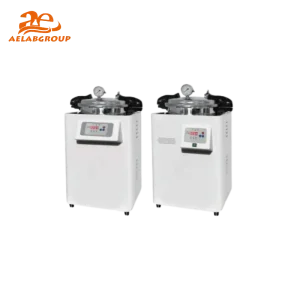
Portable Pressure Steam SterilizerAE-P18B series
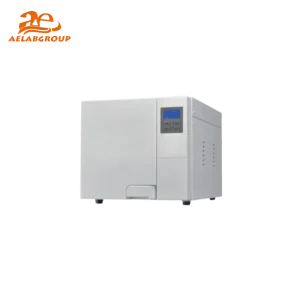
Class B Autoclave AE-C8/C12 Series
Conclusion
Using the correct water in an autoclave is a simple yet essential step to ensure consistent sterilization, extend equipment life, and maintain safety. For most users:
Distilled water is a safe and accessible choice.
Deionized water offers enhanced purity and better long-term performance.
Tap water should be strictly avoided due to its mineral content.
Invest in water quality testing tools and purification systems to protect your autoclave and guarantee reliable sterilization every time.