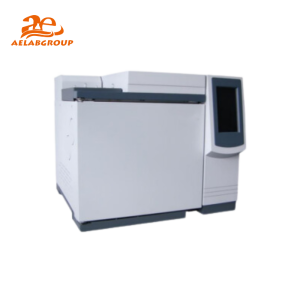
1. Sample Injection: Precision Starts Here
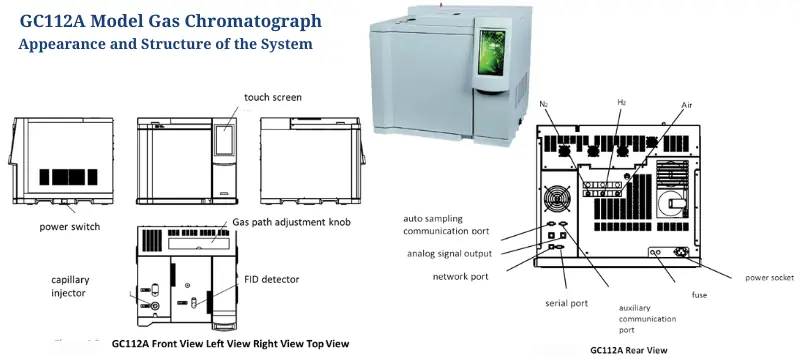
The sample injector is the gateway into the GC system and plays a critical role in accuracy and reproducibility. Injectors are typically heated to immediately vaporize the sample upon entry.
Common Injection Techniques:
Split Injection: Only a fraction of the sample enters the column; ideal for high-concentration samples.
Splitless Injection: Entire sample enters the column; best for trace analysis.
On-Column Injection: Direct sample introduction; suitable for thermally sensitive compounds.
Programmable Temperature Vaporization (PTV): Allows gentle, controlled vaporization of larger volumes.
Pro Tip: Optimize injection parameters—such as temperature, liner type, and volume—to enhance peak shapes and reduce sample loss.
2. Carrier Gas: The Mobile Phase Engine
The carrier gas propels vaporized analytes through the GC column. It must be inert, consistent, and appropriately selected to match the application.
Common Carrier Gases:
Helium (He): Most common; high resolution and inert.
Hydrogen (H₂): Fast and efficient; cost-effective but flammable.
Nitrogen (N₂): Stable and inexpensive; slower separations.
Argon/Methane: Used in specific detector configurations (e.g., ECD or GC-MS).
Pro Tip: Use ultra-high-purity gases and precisely control flow rates to prevent baseline noise and ensure peak reproducibility.
3. Column and Stationary Phase: Where Separation Happens
The column is the core of the Gas Chromatography system. It houses the stationary phase that interacts with the analytes and dictates their separation.
Column Types:
Packed Columns: Larger diameter, lower resolution; filled with coated solid supports.
Capillary (Open Tubular) Columns: High efficiency; narrow inner diameter with a film of stationary phase on the inner wall.
Stationary Phase Varieties:
Gas-Liquid Chromatography (GLC): Non-volatile liquid phase coated onto solid support (e.g., PEG, PDMS).
Gas-Solid Chromatography (GSC): Uses solid adsorbents like activated carbon.
Considerations: Choose column length, diameter, film thickness, and polarity based on sample composition.
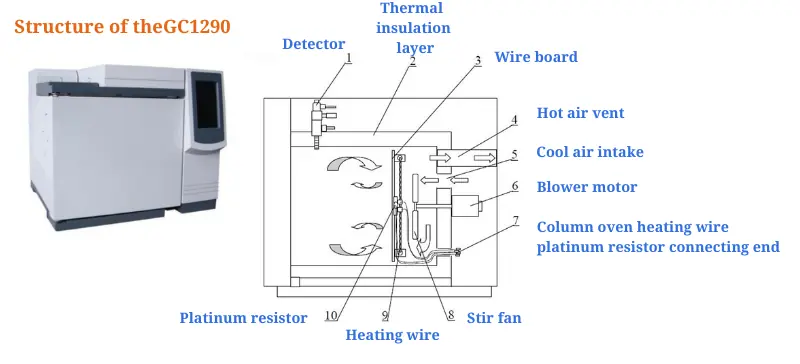
4. Column Oven: Thermal Control for Efficient Separation
The oven surrounds the column and maintains a controlled thermal environment essential for consistent retention times and separation quality.
Modes of Operation:
Isothermal: Constant temperature throughout the run.
Temperature Programming: Gradual or stepwise increases in temperature to elute analytes with different boiling points.
Pro Tip: Use temperature programming for complex mixtures to improve resolution and shorten analysis time.
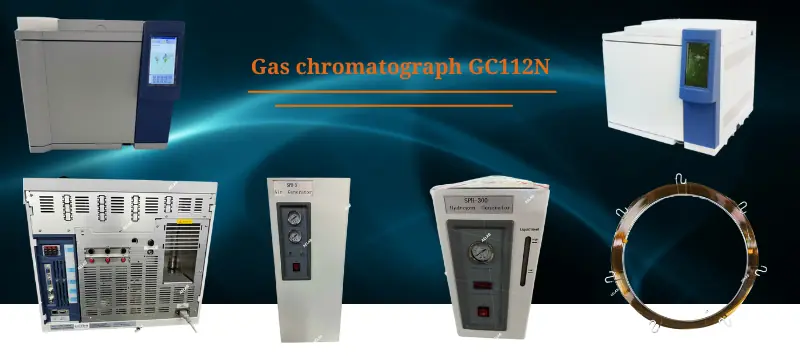
5. Detector: Turning Signals into Data
Detectors identify and quantify compounds as they elute from the column. They convert physical or chemical properties into electrical signals recorded as chromatographic peaks.
Common Detector Types:
Flame Ionization Detector (FID): High sensitivity for hydrocarbons; widely used.
Thermal Conductivity Detector (TCD): Universal and non-destructive; responds to changes in gas thermal conductivity.
Electron Capture Detector (ECD): Extremely sensitive for halogenated compounds and pesticides.
Mass Spectrometer (MS): Provides structural information and molecular weights; ideal for complex samples (GC-MS).
Flame Photometric Detector (FPD): Selective for sulfur- and phosphorus-containing compounds.
Pro Tip: Choose your detector based on the target analyte and required sensitivity. Regular calibration ensures accuracy and consistency.
6. Data System: The Brain Behind the Chromatogram
Modern Gas Chromatography systems are integrated with software for acquiring, processing, and interpreting data.
Key Functions:
Plotting chromatograms (signal vs. time)
Calculating retention time and peak area
Performing quantitative calibration
Supporting spectral libraries (in GC-MS systems)
A stable baseline and well-shaped peaks are indicators of a healthy GC system and successful separation.