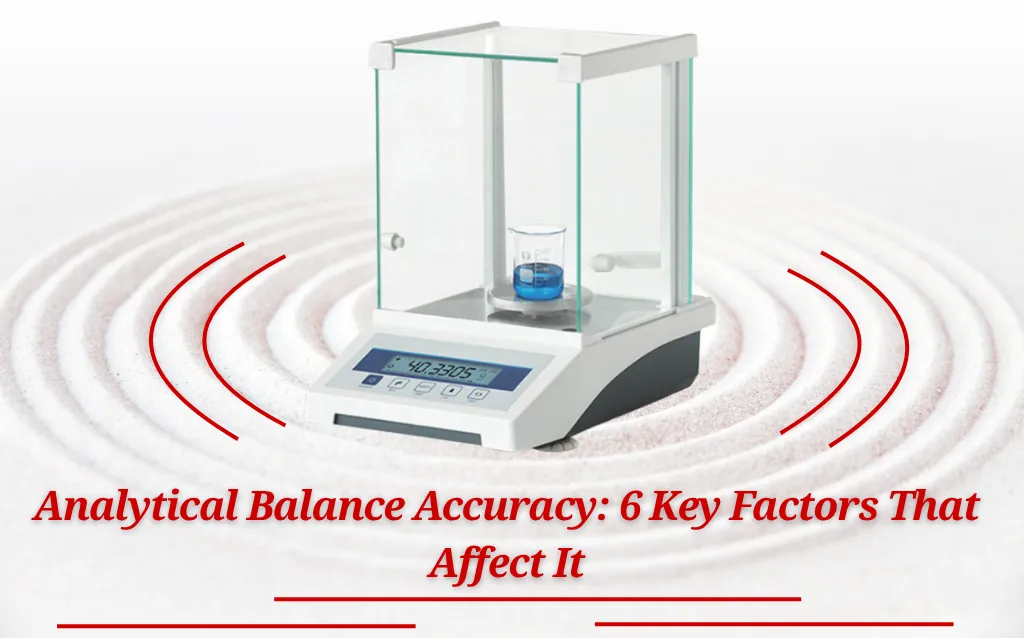
"Introduction: The Essential Role of Analytical Balance Accuracy in Precision Weighing"
In any laboratory setting—whether pharmaceutical, academic, or industrial—precision is critical. Analytical balances, capable of measuring weights down to 0.0001g, are indispensable tools. However, even high-end models like those from AELAB can deliver inaccurate results if not used under optimal conditions.
This article outlines 6 key factors that affect Analytical Balance Accuracy and provides best practices to eliminate common sources of weighing error, ensuring reliable and repeatable results.
1. Calibration: The Foundation of Accurate Measurement
Calibration is the first step to reliable weighing. Without regular calibration, no balance—no matter how sophisticated—can deliver trustworthy data.
Best Practices:
Perform daily internal calibration (if available).
Conduct weekly external calibration with certified calibration weights.
Recalibrate after moving the balance or if there’s a major change in temperature or humidity.
Follow the manufacturer’s calibration procedures carefully.
2. Environmental Conditions: Stability Is Key
The weighing environment has a significant impact on Analytical Balance Accuracy.
Temperature:
Sudden fluctuations can affect both the sample and the balance.
Maintain a constant room temperature (~20°C / 68°F).
Allow both the balance and sample to acclimate before weighing.
Humidity:
Low humidity increases static charge.
High humidity may cause moisture absorption by the sample.
Ideal humidity range: 40–50% RH.
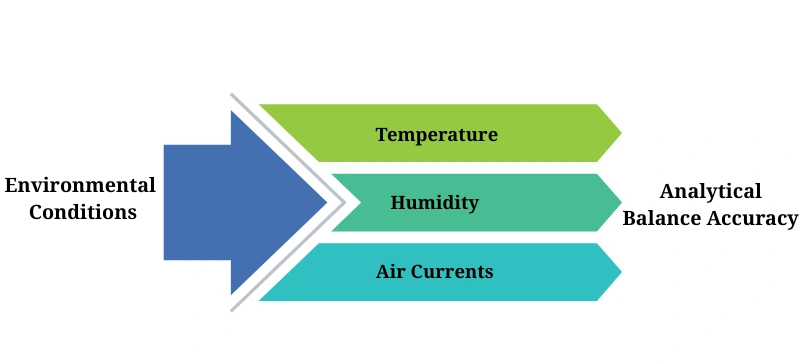
Air Currents:
Open windows, doors, and air vents introduce micro-drafts.
Always use a draft shield and place the balance away from airflow sources.
3. Improper Installation and Leveling
Analytical balances are extremely sensitive to vibration and instability.
Common Issues:
Prevention:
Place the balance on a vibration-isolated weighing table (granite if possible).
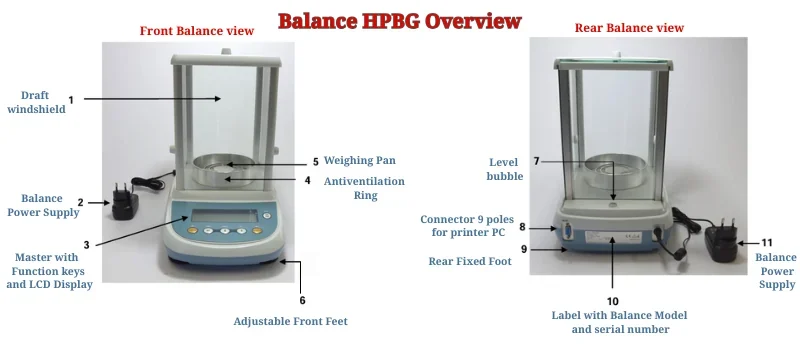
Check and adjust the leveling bubble before each use.
Install in a quiet, low-traffic area of the lab.
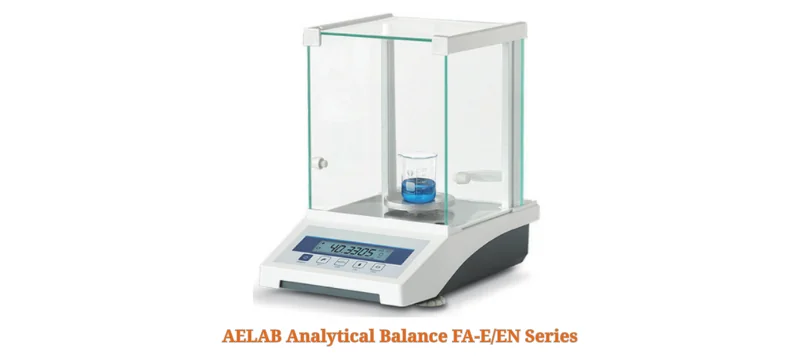
AELAB Analytical Balance FA-E/EN Series | 0.0001g Precision with Internal Auto Calibration
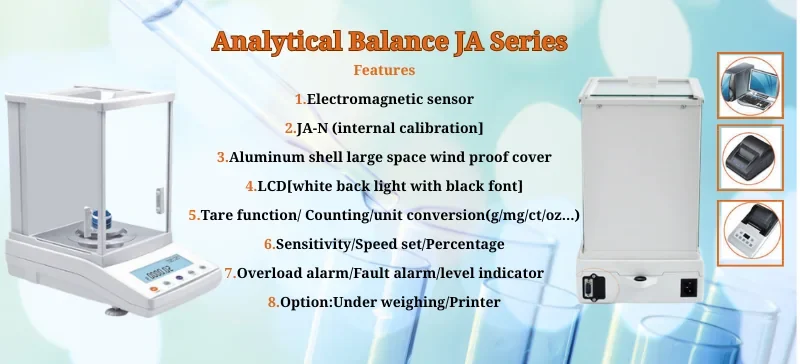
Analytical Balance JA Series
4. Static Electricity: The Silent Disruptor
Electrostatic forces can cause unstable and non-repeatable readings, especially when using plastic or glass containers.
Tips to Reduce Static:
Use metal containers or anti-static accessories.
Ground both the balance and power supply.
Stand on anti-static mats and avoid synthetic clothing.
Maintain lab humidity above 40%.
5. Sample and Container Characteristics
Sample behavior can vary depending on temperature, volatility, and moisture content.
Temperature Effects:
Volatility & Moisture:
Handling Tips:
Use sealed or narrow-neck containers.
Weigh quickly with balance doors closed.
Always handle with tweezers or gloves.
6. Operator Error: Training Makes the Difference
Even with a properly calibrated and installed balance, human error can compromise Analytical Balance Accuracy.
Recommendations:
Establish Standard Operating Procedures (SOPs).
Conduct regular user training.
Emphasize gentle handling and proper sample placement.
Quick Analytical Balance Accuracy Checklist
| Factor | Why It Matters | Prevention |
|---|
| Calibration | Ensures measurement traceability | Daily/internal & weekly/external |
| Environment | Reduces drift & error | Stable temperature, humidity, airflow |
| Static Electricity | Improve repeatability | Grounding, humidity control |
| Installation | Maintains balance sensitivity | Use anti-vibration tables |
| Sample Properties | Prevents weight fluctuation | Use proper containers, temp control |
| Operator Training | Reduces human error | SOPs & regular training |
Conclusion: Accuracy Is a Process, Not a Feature
Achieving precision in analytical weighing goes beyond just using a high-quality balance—it requires managing the entire weighing environment, equipment setup, operator behavior, and sample handling.
By applying the best practices outlined above, you can significantly improve Analytical Balance Accuracy and ensure your results remain consistent, reliable, and scientifically valid every time.