

Introduction : Why Autoclave Sterilization Matters & How Autoclaves Kill Microorganisms Effectively
In healthcare, laboratory, and industrial environments, effective sterilization is not a luxury—it’s a necessity. Whether it’s surgical instruments in hospitals or lab media in research facilities, eliminating harmful microorganisms is critical to ensure safety, compliance, and operational accuracy.
Among all sterilization methods, autoclaves are considered the gold standard. These advanced machines are trusted to neutralize even the most resilient microbial forms—like bacterial spores—through high-pressure steam and heat.
In this article, we’ll explore how autoclaves kill microorganisms, the scientific principles behind their effectiveness, and why they continue to be the most reliable sterilization solution used worldwide.
What Is an Autoclave and How Does It Work?
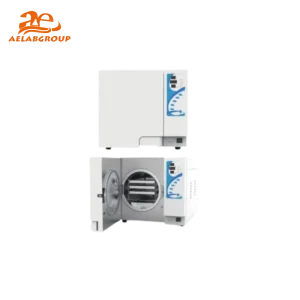
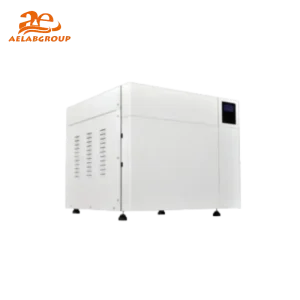
An autoclave is a pressurized chamber that sterilizes medical and laboratory equipment using moist heat (steam) at high temperatures—typically above 121°C (250°F)—and high pressure (usually 15–30 psi). This combination creates an environment lethal to bacteria, viruses, fungi, and even the hardiest endospores.
The Basic Sterilization Process:
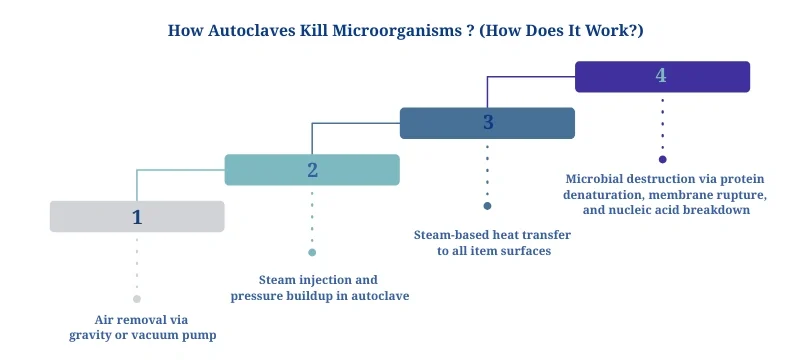
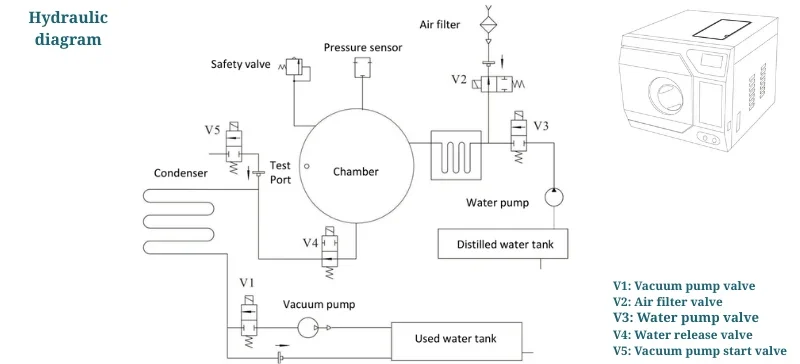
The system removes air from the chamber using gravity displacement or a vacuum pump.
The autoclave introduces steam and allows the pressure to build up.
Steam transfers heat to every surface of the item inside.
- The autoclave destroys microorganisms by denaturing proteins, rupturing membranes, and breaking down nucleic acids.
The Science of Microbial Death: How Heat and Steam Kill
Steam sterilization works by delivering moist heat deep into materials, causing irreversible damage to microbial cells. Here’s how autoclaves kill microorganisms in the process:
1. Protein Denaturation
Proteins are vital for microbial survival and function.
High heat distorts their 3D structure, making them inactive.
Once denatured, these proteins cannot support life processes.
2. Membrane Disruption
Heat increases the fluidity of microbial cell membranes.
This leads to leakage of cell contents, loss of function, and cell lysis.
3. Destruction of DNA & RNA
Nucleic acids are sensitive to thermal damage.
Heat breaks the hydrogen bonds in DNA and RNA strands.
Microorganisms lose the ability to replicate or repair, leading to death.
How Autoclaves Kill Microorganisms: The Role of Steam and Pressure in Sterilization Efficiency
Superheated Steam: Transfers heat more effectively than dry air.
High Pressure: Raises the boiling point of water, allowing steam to reach temperatures above 121°C.
Penetration Power: Steam infiltrates porous and intricate materials, reaching areas that chemical sterilants can’t.
Even Heat Distribution: Circulating steam ensures uniform sterilization throughout the chamber.
Time, Temperature & Pressure: The Golden Trio
| Temperature (°C) | Pressure (psi) | Minimum Exposure Time |
|---|---|---|
| 121 | 15 | 15–20 minutes |
| 134 | 27 | 3–5 minutes |
Even the most resilient bacterial spores, such as Bacillus or Clostridium species, require strict time-temperature combinations to be fully inactivated.
Types of Autoclave Cycles
Autoclaves use different air-removal methods to optimize steam penetration—an essential part of how autoclaves kill microorganisms effectively.
1. Gravity Displacement
Steam enters the top of the chamber, displacing air downward. Effective for unwrapped tools and basic instruments.
2. Pre-Vacuum (High Vacuum)
A vacuum pump removes air before steam enters. Ideal for wrapped instruments, textiles, and porous materials.
Which Microorganisms Do Autoclaves Kill?
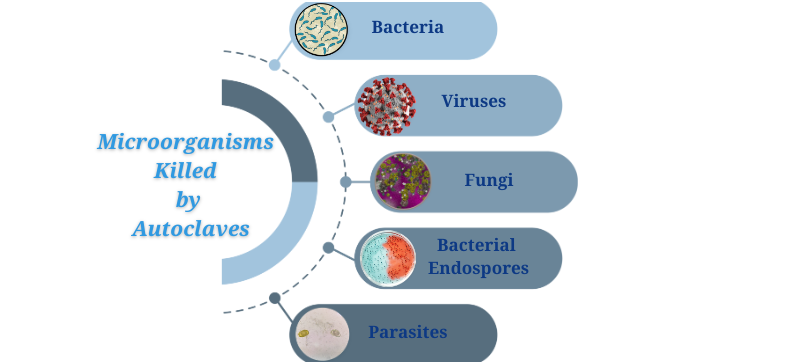
Autoclaves are effective against all forms of microbial life, including:
Bacteria: E. coli, Staphylococcus aureus, Pseudomonas aeruginosa, Salmonella spp.
Viruses: HIV, HBV, HCV, Herpes Simplex Virus (HSV)
Fungi: Candida albicans, Aspergillus spp., Trichophyton spp.
Bacterial Endospores: Bacillus and Clostridium spores
Parasites: Some protozoa and helminths (varies by life stage and protocol)
Conclusion: Why Autoclaves Are Still the Best
Steam sterilization via autoclaves remains the most effective method to kill all known microorganisms, including resistant spores. Understanding how autoclaves kill microorganisms—through the combination of moist heat, pressure, and time—explains why they provide unmatched sterilization power without harmful chemicals or environmental risks.
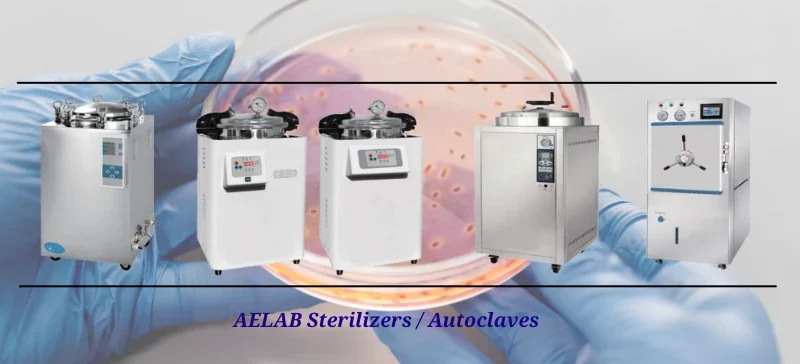
Whether you manage a hospital, clinic, research lab, or industrial facility, investing in a reliable autoclave—such as those from AELAB—means choosing safety, precision, and full compliance.