Introduction
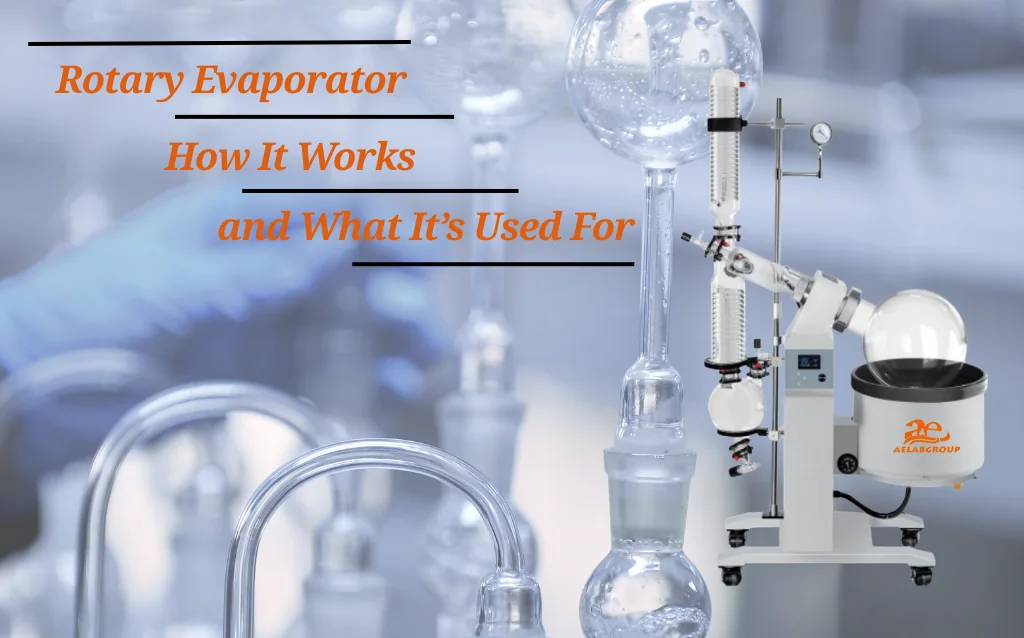
A rotary evaporator, commonly known as a rotovap or rotavapor, is one of the most essential tools in modern laboratories. From pharmaceutical research and natural product extraction to environmental testing and chemical synthesis, this device is crucial for solvent removal, compound concentration, and sample purification.
In this detailed guide, we’ll cover everything you need to know about rotary evaporators — including how they work, their key components, different types, benefits, and common applications. Whether you’re a lab technician, academic researcher, or industrial scientist, this article provides valuable insights to help improve your laboratory processes.
What Is a Rotary Evaporator?
A rotary evaporator is a laboratory device designed for the gentle and efficient removal of solvents from liquid samples under reduced pressure. By combining vacuum, heat, and rotation, it accelerates evaporation while preserving sensitive compounds that might degrade under high temperatures.
This method is far more efficient and safer than traditional evaporation techniques at atmospheric pressure.
How Does a Rotary Evaporator Work?
Core Principle
The rotary evaporator operates on the principle of lowering the boiling point of solvents by applying a vacuum, allowing them to evaporate at much lower temperatures. Simultaneously, rotation increases the sample’s surface area and promotes even heat distribution, which speeds up evaporation and prevents bumping or boiling over.
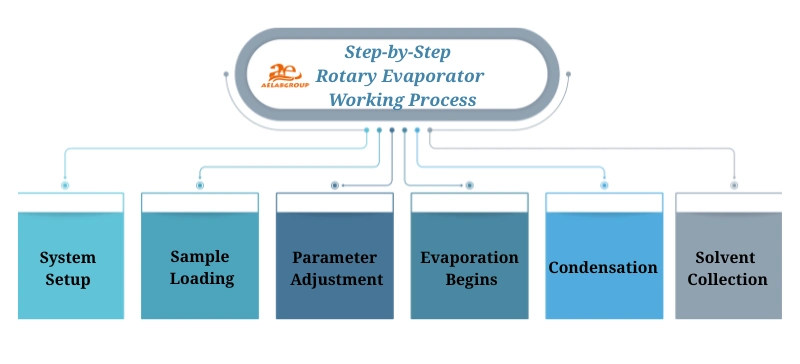
Step-by-Step Process:
System Setup: Assemble all components, check for vacuum integrity, and ensure glassware is clean and dry.
Sample Loading: Fill the evaporation flask with your solution—ideally no more than half full.
Parameter Adjustment: Set the desired water/oil bath temperature, rotation speed, and vacuum pressure based on the solvent properties.
Evaporation Begins: The rotating flask heats up, and solvent begins to evaporate under reduced pressure.
Condensation: Vapors travel to the condenser, which cools them back into liquid form.
Solvent Collection: The condensed solvent collects in the receiving flask, while the concentrated sample remains in the evaporation flask.
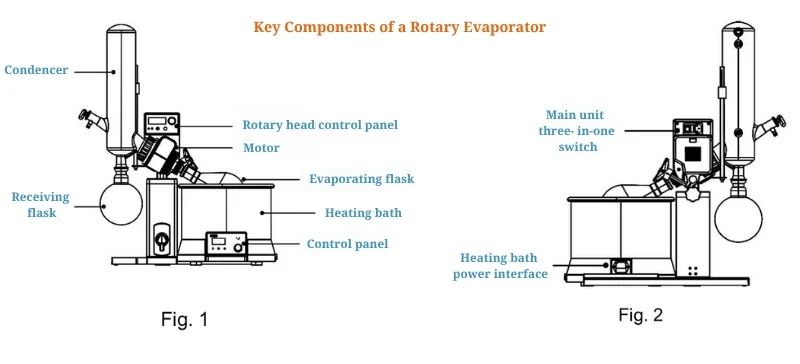
Key Components of a Rotary Evaporator
| Component | Description |
|---|
| Evaporation Flask | A round-bottom glass vessel that holds the liquid sample. |
| Rotary Motor | Rotates the flask to create a thin film and improve heat transfer. |
| Heating Bath | Provides controlled heat (usually water or oil) to facilitate evaporation. |
| Condenser | A coil or vertical glass tube with coolant circulation for condensing vapor. |
| Vacuum Pump | Lowers the system pressure to reduce solvent boiling points. |
| Receiving Flask | Collects the condensed solvent after cooling. |
| Vacuum Controller (Optional) | Allows precise regulation of pressure for sensitive processes. |
| Bump Trap (Optional) | Prevents accidental contamination of the condenser with sample splashes. |
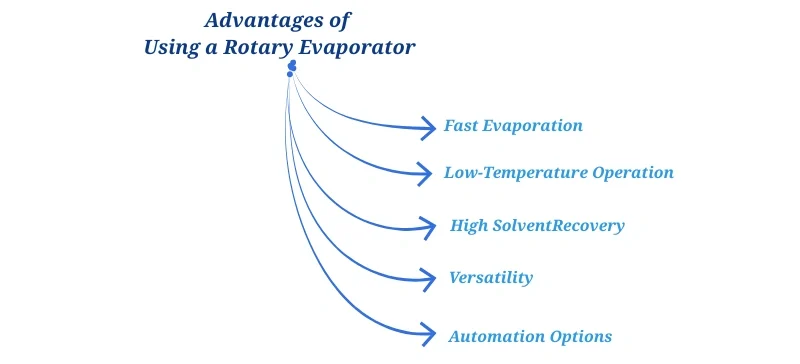
Advantages of Using a Rotary Evaporator
Fast Evaporation
Reduced pressure and increased surface area enable rapid solvent removal.
Low-Temperature Operation
Ideal for heat-sensitive compounds like natural extracts and pharmaceuticals.
High Solvent Recovery
Efficient condensation leads to better solvent reuse and reduced waste.
Versatility
Handles a wide range of solvents and applications, from routine drying to complex separations.
Automation Options
Advanced models include digital interfaces, programmable settings, and motorized lifts.
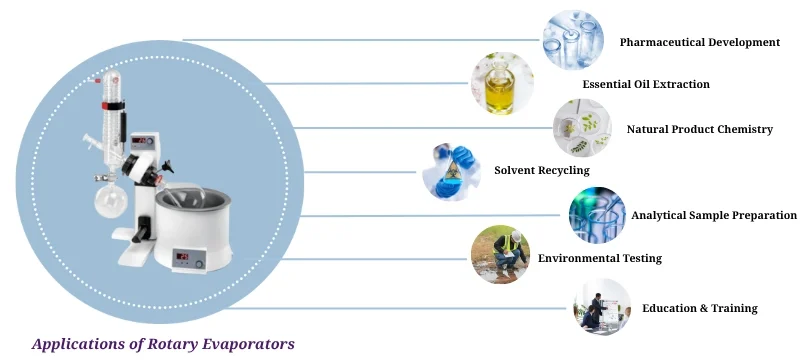
Applications of Rotary Evaporators
Pharmaceutical Development
Concentration of APIs (active pharmaceutical ingredients), purification of intermediates, and formulation research.
Essential Oil Extraction
Gentle extraction of volatile plant oils for cosmetics, aromatherapy, and nutraceuticals.
Natural Product Chemistry
Isolation of bioactive compounds from herbs, marine organisms, fungi, and more.
Solvent Recycling
Recover expensive or toxic solvents for reuse, lowering both costs and environmental impact.
Analytical Sample Preparation
Pre-concentration of analytes prior to techniques like HPLC, GC, or mass spectrometry.
Environmental Testing
Extracting contaminants and residues from soil, water, and air samples.
Education & Training
Demonstrating evaporation principles in universities and teaching labs.
Types of Rotary Evaporators
| Type | Features |
|---|
| Manual (Traditional) | Basic control over speed, temperature, and vacuum—ideal for teaching and general lab use. |
| Digital/Automated | Touchscreens, programmable parameters, and safety alarms for precision workflows. |
| Industrial-Scale | High-volume evaporation for production environments. Durable and efficient for large batches. |
| Parallel Evaporators | Multiple evaporating units in one setup, perfect for high-throughput labs. |
| Cold Trap Systems | Protects vacuum pumps by condensing volatile vapors before they reach the pump. |
| Vacuum-Controlled Models | Allow ultra-precise pressure management for pressure-sensitive materials. |
| Hybrid Units | Combine rotary evaporation with distillation or extraction functions for added flexibility. |
Tips for Optimal Operation
Gradually apply vacuum to prevent bumping
Always monitor bath temperature closely
Use cold traps to protect your vacuum pump
Check seals and joints for leaks before starting
Use appropriate flask size based on sample volume
Clean glassware thoroughly between runs
Common Mistakes to Avoid
Overfilling the evaporation flask
Ignoring damaged seals or vacuum leaks
Running the system at unnecessarily high temperatures
Using incompatible solvents with the setup
Skipping proper maintenance of pumps and glassware
How to Choose the Right Rotary Evaporator
When selecting a rotovap, consider the following factors:
| Factor | Considerations |
|---|
| Solvent Characteristics | Volatility, boiling point, and reactivity |
| Sample Volume | Benchtop for small-scale; industrial models for large volumes |
| Temperature Control | Precision range for sensitive applications |
| Automation Needs | Touchscreen interfaces, auto-lift, programmable cycles |
| Cooling Efficiency | Basic water cooling vs. recirculating chillers |
| Budget & Long-Term Use | Evaluate ROI based on features, durability, and scalability |
Conclusion
A rotary evaporator is a powerful, versatile, and indispensable piece of laboratory equipment. By understanding its working mechanism, components, and proper usage, scientists and technicians can ensure faster, safer, and more efficient solvent removal.
Whether you’re involved in research, production, or teaching, investing in the right rotary evaporator can significantly enhance your lab’s performance and consistency.
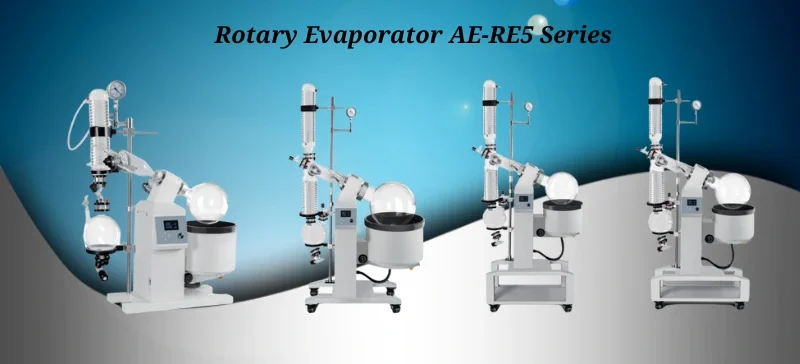
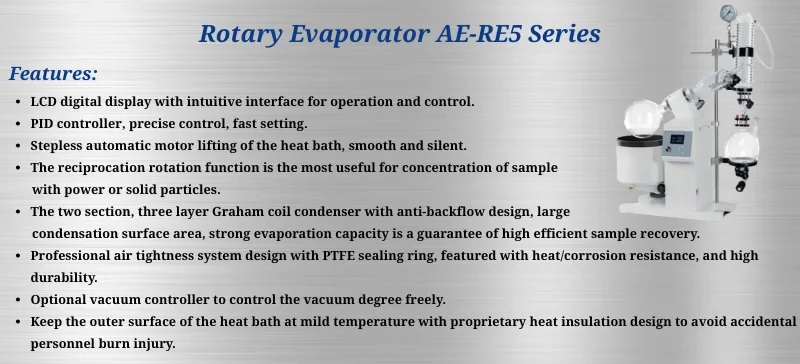
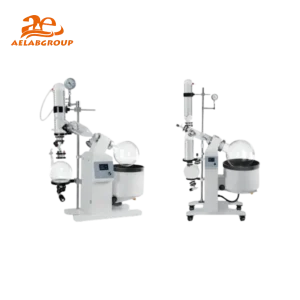
Rotary Evaporator AE-RE5 Series
Looking to Upgrade Your Lab with the Best Rotary Evaporators?
Explore AELAB’s premium selection of high-performance rotary evaporators.
Contact our technical experts today for a free consultation tailored to your lab’s needs.