

Introduction: The Secret Behind Silky Texture and Long-Lasting Stability of Cosmetic Products Using Homogenizers in Cosmetics
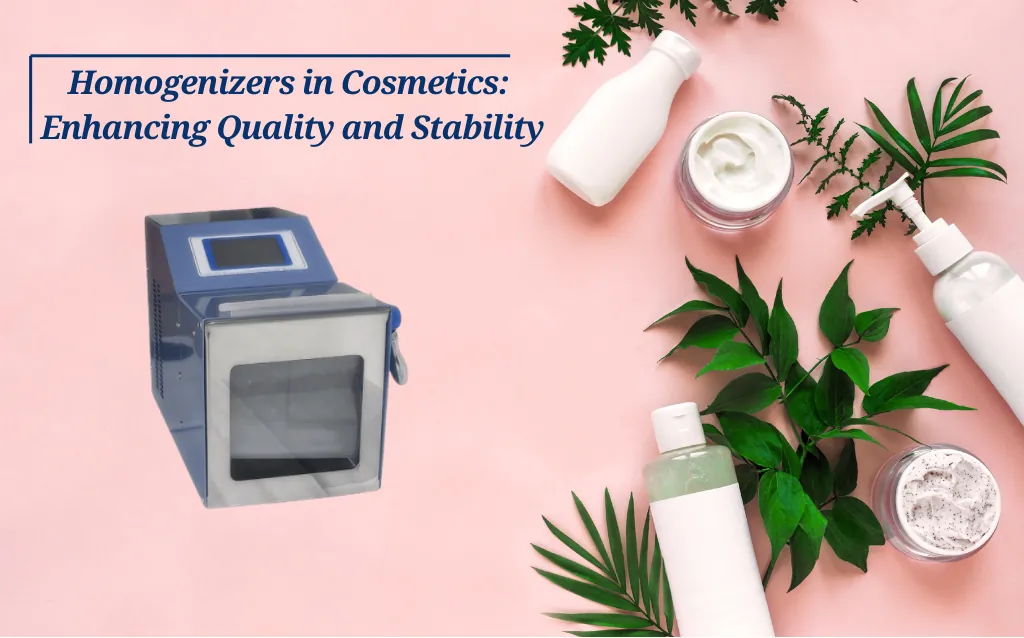
The beauty of cosmetic products is not only in their luxurious feel or premium ingredients but also in their silky texture and long-lasting stability. At the heart of this lies the crucial role of homogenizers in cosmetics, which ensure smooth, stable, and high-quality formulations that meet consumer expectations.
What Is Homogenization — And Why Does It Matter?
The Science of Particle Size Reduction
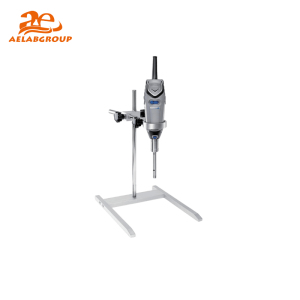
Homogenization is a mechanical process that breaks down and disperses particles—typically oil and water—into a uniform and stable emulsion. This is done through methods such as high-shear mixing, high-pressure processing, or ultrasonic cavitation.
Why Particle Size Matters:
Smaller droplets = smoother textures
Uniform distribution = increased stability
Fine emulsions = better skin absorption
In skincare, nano-sized droplets resist separation, extend shelf life, and improve overall product performance. For instance, nanoemulsions in sunscreens can provide better UV protection while reducing white cast.

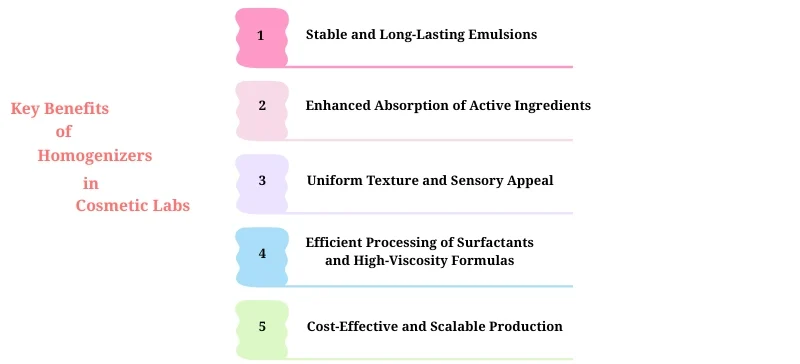
Key Benefits of Homogenizers in Cosmetic Labs
1. Stable and Long-Lasting Emulsions
Cosmetic products like lotions and creams often combine oil and water—two immiscible liquids. Homogenizers ensure a fine, stable dispersion that prevents phase separation during storage, transport, or use.
2. Enhanced Absorption of Active Ingredients
By reducing particle size to nano or micro levels, homogenization boosts the bioavailability of actives such as retinol, peptides, and botanical extracts. This results in deeper, faster skin absorption with less ingredient waste.
3. Uniform Texture and Sensory Appeal
Texture is everything in cosmetics. Homogenizers eliminate lumps and uneven pigment distribution, creating a smooth, silky finish consumers love—whether in creams, balms, or makeup.
4. Efficient Processing of Surfactants and High-Viscosity Formulas
Products like shampoos and body washes often contain high levels of active surfactants. Homogenizers streamline the blending process, even when viscosities differ, reducing mixing time and ensuring even consistency.
5. Cost-Effective and Scalable Production
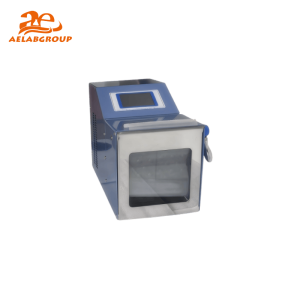
Modern homogenizers like those from AELAB support larger batch sizes, improve process speed, and reduce material waste—minimizing the need for reprocessing and lowering overall production costs.
Collagen-Based Products: How Homogenization Makes a Difference
Collagen is a powerhouse ingredient known for improving skin elasticity and firmness. However, its large molecular structure limits absorption.
Homogenizers break collagen into smaller peptides, enhancing their solubility and ability to penetrate the skin barrier effectively—whether used in creams, serums, or ingestible formulations.
Benefits of Homogenized Collagen Formulas:
Increased skin penetration
Better texture and consistency
Higher solubility and product stability
Improved consumer satisfaction
Homogenizer vs. Traditional Mixer: A Performance Comparison
| Feature | Traditional Mixer | Homogenizer |
|---|---|---|
| Particle Uniformity | Inconsistent | Highly Uniform |
| Emulsion Stability | Prone to Separation | Long-Lasting |
| Final Texture | May Feel Coarse | Silky Smooth |
| Time Efficiency | Slower | Fast and Scalable |
| Viscosity Handling | Limited | Highly Capable |
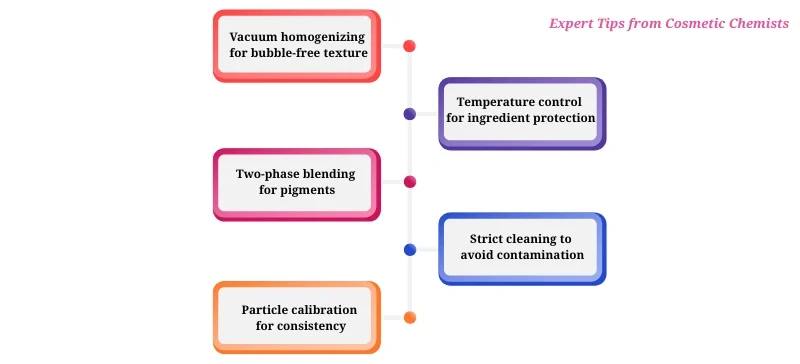
Expert Tips from Cosmetic Chemists
- Use vacuum homogenizers to eliminate air bubbles and achieve premium textur
- Monitor temperature control to preserve sensitive ingredients like enzymes and vitamins
- For pigmented formulations, apply a two-phase homogenization: dry dispersion followed by wet blending
- Follow strict cleaning protocols to prevent cross-contamination
- Regularly calibrate particle size to maintain consistent results
Conclusion: Investing in Precision and Innovation with Homogenizers in Cosmetics
In an era driven by high consumer expectations and scientific precision, homogenizers in cosmetics are no longer optional—they are essential. From enhancing product texture and stability to boosting the effectiveness of active ingredients, homogenization plays a foundational role in creating successful formulations. Whether you’re producing light serums or rich creams, integrating homogenizers in cosmetics ensures superior performance, long shelf life, and consistent quality—key factors for standing out in a competitive market.