

Introduction
In today’s world of advanced scientific analysis, the accuracy of your results hinges on one vital foundation: sample preparation. Regardless of how sophisticated your analytical instruments—be it chromatography, spectroscopy, or mass spectrometry—poorly prepared samples or inadequate sample preparation equipment can lead to misleading data, failed experiments, or even regulatory issues.
This guide offers a comprehensive overview of essential sample preparation techniques, categorized equipment, and cutting-edge innovations that ensure consistency, efficiency, and reliability across various industries including pharmaceuticals, environmental science, food safety, and forensics.
Why Sample Preparation Is Critical
Sample preparation is more than a preliminary step—it defines the quality and credibility of your analytical outcomes. Without proper preparation:
Matrix interferences can skew results
Sensitivity of instruments may be compromised
Data reproducibility becomes unreliable
Regulatory compliance may be at risk
In high-stakes industries, accurate and repeatable results start with precision in preparation.
Types of Sample Preparation Techniques
Solid Samples
Grinding & Homogenization – Ensures uniform particle size
Drying & Ashing – Removes moisture and organic matter for elemental analysis
Liquid Samples
Filtration & Dilution – Removes particulates and adjusts concentration
Liquid-Liquid Extraction (LLE) – Isolates compounds using immiscible solvents
Gas Samples
Gas Collection Bags/Canisters – Preserves volatile organic compounds (VOCs)
Purification – Removes interferences like water vapor or CO₂
Essential Sample Preparation Equipment
By Method
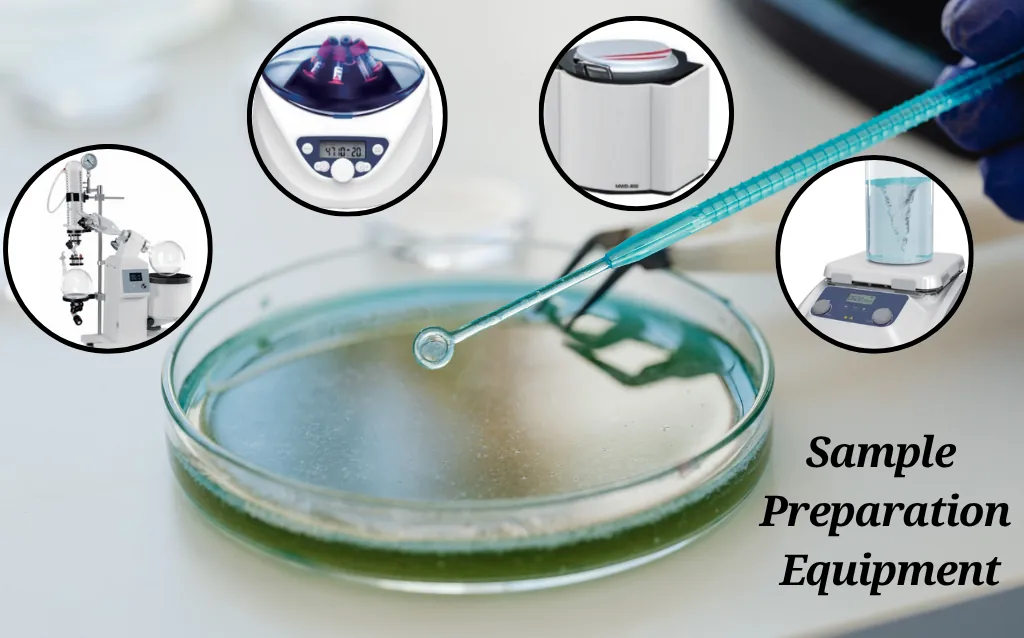
Physical Preparation Tools
| Equipment | Use | Pro Tips |
|---|---|---|
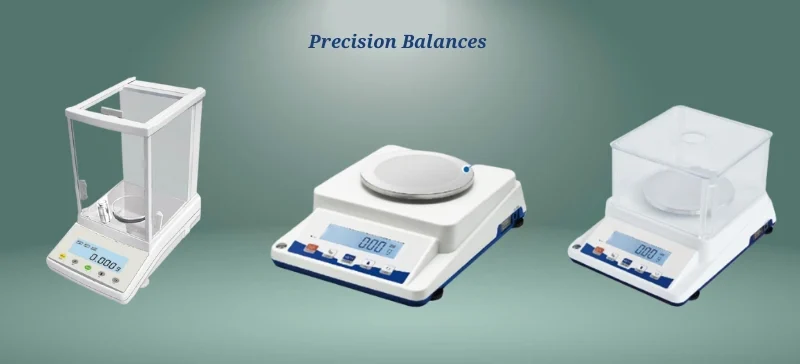
| Precision Laboratory Balances | Accurate mass measurement | Use in stable, draft-free areas with auto-calibration |
| Homogenizers | Cell/tissue disruption | Choose rotor-stator, bead mill, or ultrasonic based on sample type |
| Cryogenic & Ball Mills | Powdering solid samples | Ideal for heat-sensitive materials |
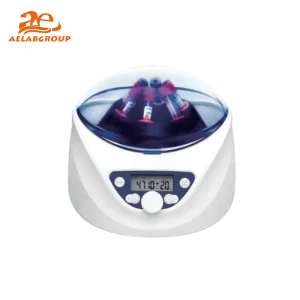
| Laboratory Centrifuges | Density-based separation | Look for temperature control and digital settings |
Chemical Preparation Tools
| Equipment | Function | Applications |
|---|---|---|
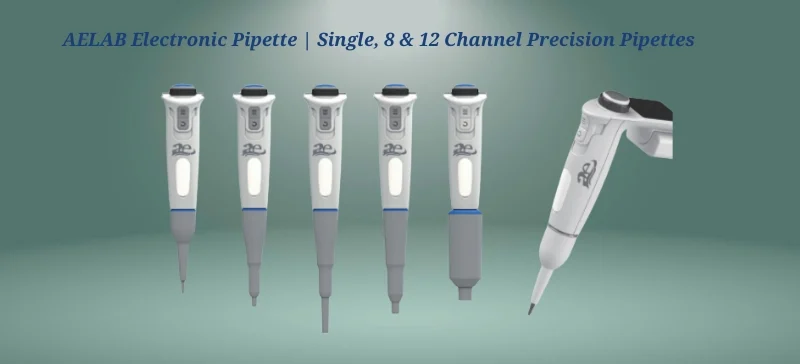
| Pipettes & Dispensers | Liquid transfer with volume precision | Sample dilutions and solution prep |
| Microwave Digestion Systems | Breaks down complex matrices | Trace metal, organic analysis |
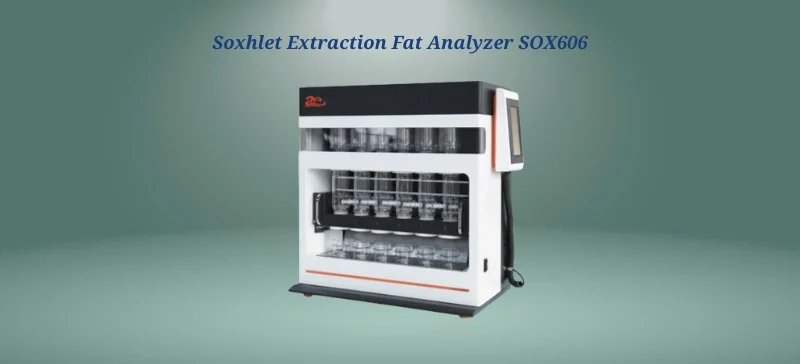
| Extraction Systems (SPE, Soxhlet) | Isolates target compounds | Toxins, lipids, pesticides |
| Filtration Units | Removes solids | Essential for HPLC, GC, and microbial testing |
| Rotary Evaporators / Nitrogen Evaporators | Solvent removal | Concentration for organic analysis |
By Sample Type
| Sample Type | Recommended Equipment | Use Case |
|---|---|---|
| Solid | Cryogenic grinder, pellet press, cutting mill | Homogenization and compression |
| Liquid | Ultrasonic bath, pipettes, stirrers | Mixing, degassing, and transfer |
| Gas | Sampling bags, vacuum pumps, GC interface | Collection and analysis of VOCs |
Best Practices for Sample Preparation
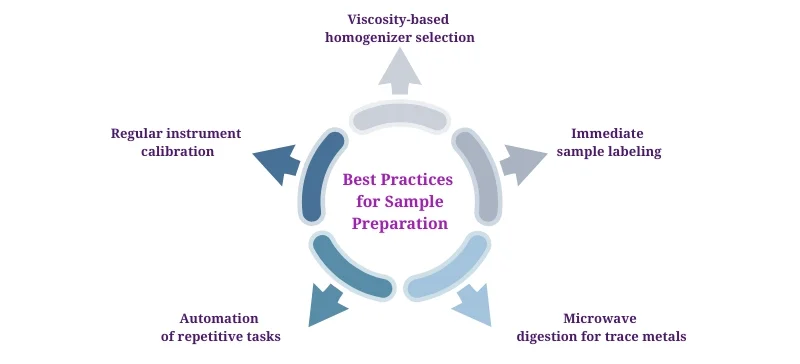
Calibrate all instruments regularly (balances, pipettes, centrifuges)
Choose homogenizers according to sample viscosity and fragility
Label samples immediately to avoid loss or contamination
Use microwave digestion for trace-level metal analysis
Automate repetitive tasks for enhanced reproducibility and throughput
Automation and Smart Technology in Sample Prep
The shift to automated sample preparation systems brings:
Consistency across large sample batches
Faster turnaround times
Minimized human error
Integrated sensors and remote monitoring
Example: AELAB’s smart digestion and homogenization systems enable labs to automate workflows while ensuring compliance with industry regulations.
Green Sample Preparation: Toward Eco-Friendly Labs
With increasing emphasis on sustainability, labs are transitioning to:
Solvent-free extraction techniques (e.g., Solid-Phase Microextraction – SPME)
Solvent recovery systems that reclaim up to 97% of used solvents
Eco-safe reagents to reduce environmental and health risks
Innovations: Microfluidics & Nanotech in Sample Prep
Nano-scale filters and extractors allow for precise separation at molecular levels
Lab-on-a-chip platforms integrate sampling, preparation, and analysis into a single microfluidic device—ideal for point-of-care diagnostics and rapid testing
Manual vs Automated Sample Preparation
| Feature | Manual | Automated |
|---|---|---|
| Speed | Moderate | High |
| Precision | Operator-dependent | Consistent |
| Cost | Low initial investment | Higher upfront cost |
| Training | Required | Minimal |
| Best For | Low-volume labs | High-throughput environments |
Conclusion: Smart Preparation Drives Scientific Success
Effective sample preparation is the cornerstone of credible, publishable, and regulatory-compliant research. From weighing and homogenizing to extracting and concentrating, the tools and techniques you choose determine the quality of your outcomes.
Investing in smart equipment, green methods, and automated workflows ensures that your laboratory not only meets today’s standards—but is future-ready for tomorrow’s scientific demands.