

Introduction
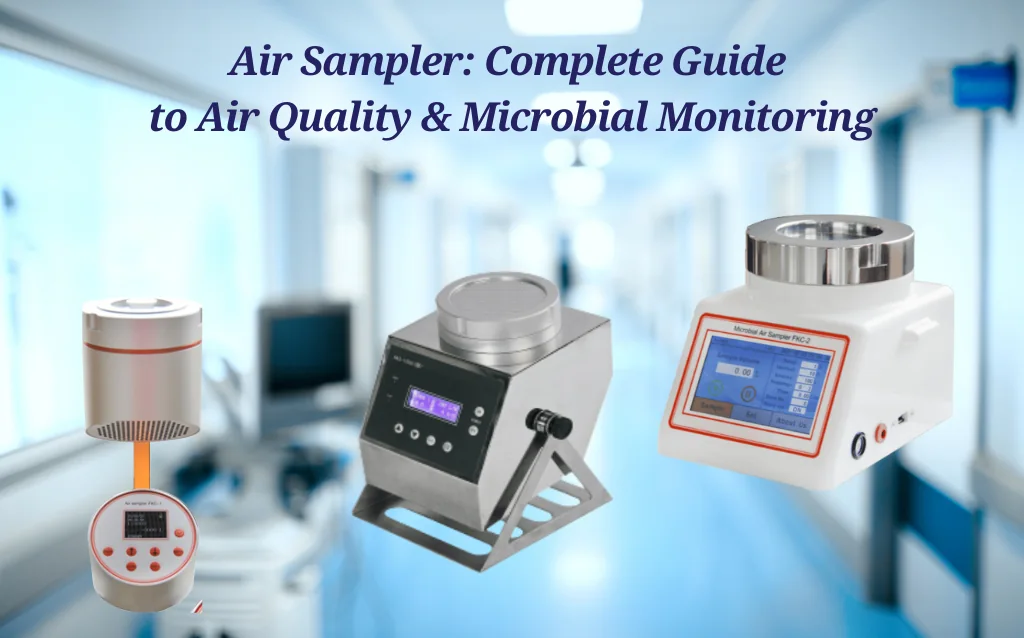
Air quality monitoring is no longer optional—it is essential. From pharmaceutical cleanrooms to hospitals, food industries, and even office buildings, controlling airborne contamination ensures safety, compliance, and product quality. One of the most powerful tools for achieving this is the air sampler.
In this comprehensive guide, we’ll explore what air samplers are, how they work, their applications, and expert tips for choosing and using them effectively.
What Is an Air Sampler?
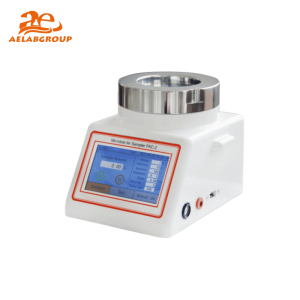
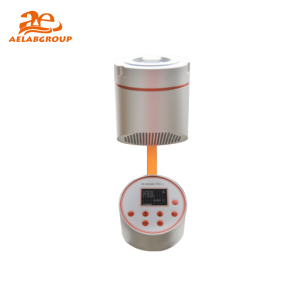
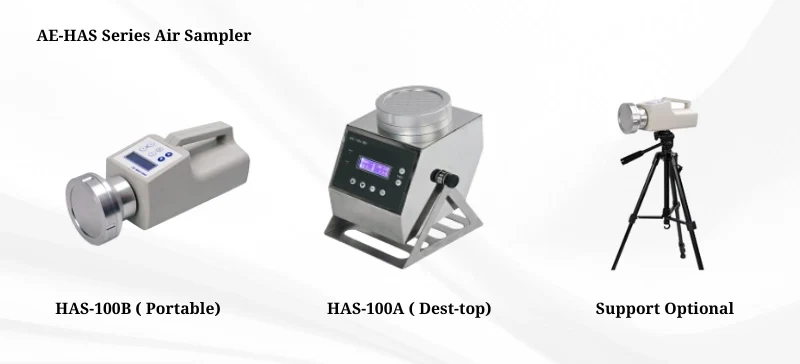
An air sampler is a specialized device designed to collect a defined volume of air within a specific time frame in order to assess air quality. Unlike passive settle plates, which rely on gravity, modern air samplers actively draw air through culture media, filters, or liquid solutions, ensuring precise detection and quantification of airborne particles, pathogens, allergens, and pollutants.
In other words , An air sampler is a device that actively collects and analyzes airborne particles or microorganisms to monitor and ensure air quality in industries, healthcare, and research environments.
By generating accurate contamination data, air samplers play a vital role in environmental monitoring, product safety, workplace protection, and compliance with regulatory standards.
Applications of Air Sampler
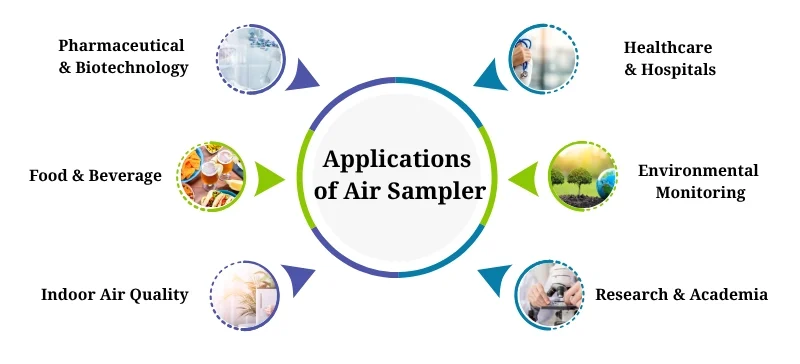
An Air Sampler is highly versatile, with applications across multiple industries:
Pharmaceutical & Biotechnology – Monitoring microbial contamination in cleanrooms (ISO 5–8), sterile filling lines, and production areas to comply with GMP, Annex 1, and ISO 14698.
Healthcare & Hospitals – Preventing infection in sensitive areas such as ICUs, operating rooms, and isolation wards.
Food & Beverage – Detecting airborne pathogens during food processing and packaging to safeguard product quality.
Environmental Monitoring – Measuring particulate matter (PM2.5, PM10), allergens, and pollutants for public health and policy decisions.
Indoor Air Quality (IAQ) – Evaluating HVAC systems and workplace environments in commercial and industrial facilities.
Research & Academia – Supporting studies on microbial ecology, environmental science, and air quality dynamics.
Why Air Sampler Is Essential
An Air Sampler is not just an instrument—it is a first-line defense against contamination. Its key benefits include:
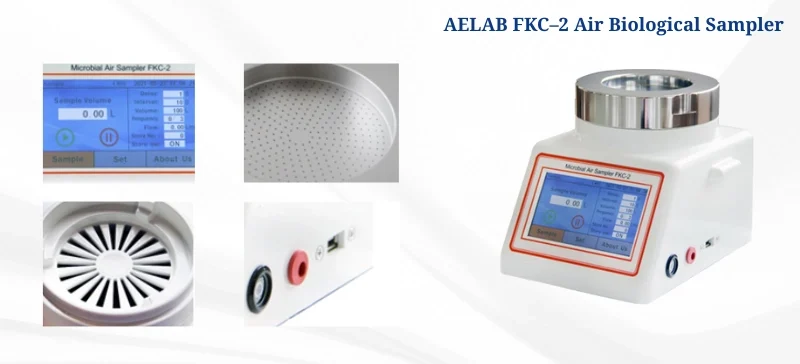
How Does an Air Sampler Work?
Although different technologies exist, the principle remains similar:
Air Intake – A pump draws a fixed volume of air.
Collection – Particles are trapped on agar, filters, or liquid impingers.
Analysis – Samples are incubated or tested in a lab for microorganisms or pollutants.
Best Practices for Air Sampling in Cleanrooms
To guarantee reliable and consistent results, follow these professional guidelines:
Verify sampler function before routine use
Use sterile pre-prepared agar plates (TSA, SDA, R2A, etc.)
Place samplers at critical points (operator workspaces, near HEPA filters, equipment surfaces)
Collect at least 1,000 liters of air per sample (ISO 14698 standard)
Incubate plates under recommended conditions (30–35°C for bacteria, 20–25°C for fungi)
Trend contamination data regularly and take corrective action upon deviations
Benefits of Using Air Sampler
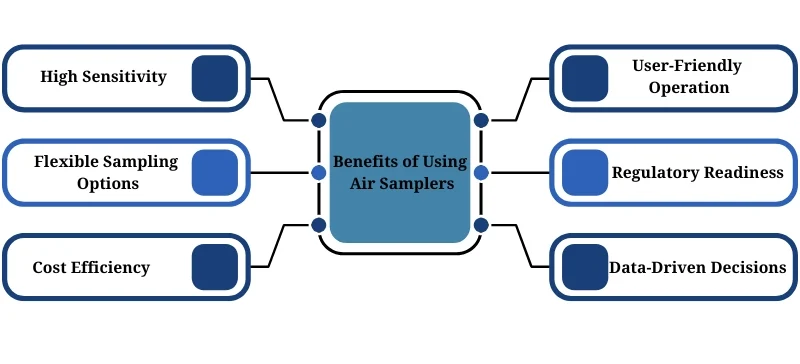
An Air Sampler delivers a wide range of advantages:
High Sensitivity – Detects ultra-low levels of contamination
User-Friendly – Compact, portable, easy to operate and calibrate
Flexible Sampling – Programmable flow rates and timing options
Regulatory Readiness – Fully compliant with ISO, FDA, GMP, and Annex 1 guidelines
Cost Efficiency – Reduces downtime with reliable contamination control
Data-Driven Decisions – Real-time monitoring and integration with quality systems
Air Sampler vs. Standard Air Quality Monitors
| Feature | Air Sampler | Air Quality Monitor |
|---|---|---|
| Detects Microorganisms | Yes | No |
| Measures Pollutants | Yes | Yes |
| Lab Analysis Possible | Yes | No |
| Real-Time Results | No | Yes |
Conclusion
Air samplers are critical guardians of clean air, safety, and compliance. From sterile pharmaceutical production to hospital patient care, they ensure that contamination risks are minimized and regulatory standards are met.
With advanced solutions from AELAB , industries can rely on accurate, validated, and user-friendly microbial monitoring systems that empower safety, compliance, and trust.
👉 Call to Action:
If air quality and contamination control matter to your business, consider upgrading to a professional AELAB microbial air sampler. Clean air means safer products, healthier environments, and a sustainable future.