

Introduction — What Is AI in Lab Technology?
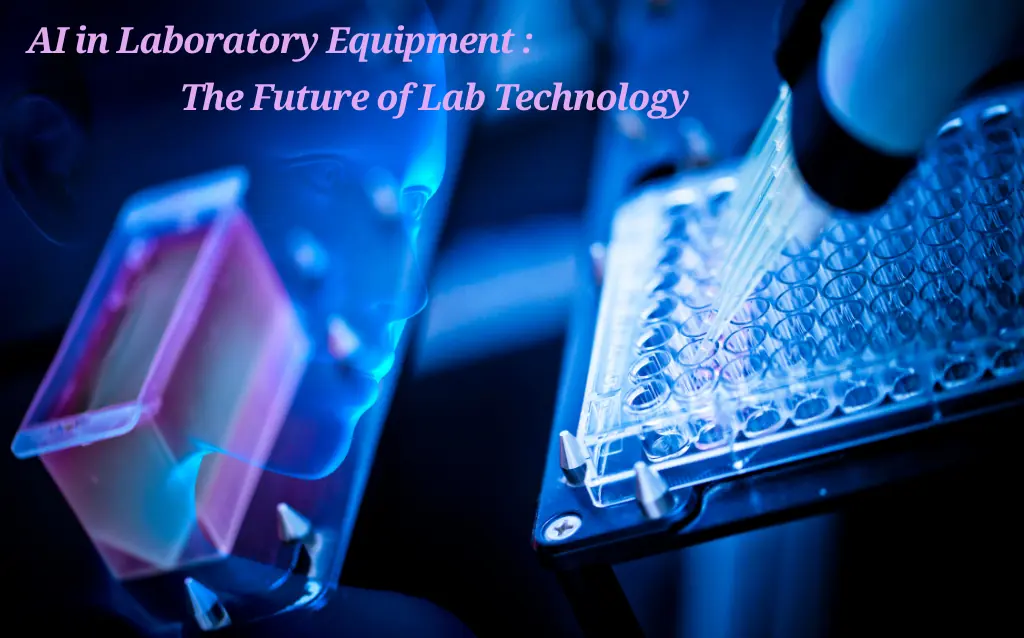
Artificial Intelligence (AI) is redefining the way laboratories operate. AI in laboratory equipment refers to the integration of machine learning, deep learning, and intelligent data analytics into scientific instruments and workflows. These systems can analyze massive datasets, recognize patterns, and even make autonomous decisions—improving accuracy, speed, and reproducibility.
In laboratory automation, AI handles tasks such as sample preparation, data analysis, and reporting automatically, minimizing human error and maximizing productivity. AI-enabled lab instruments continuously learn from data, optimizing performance over time.
Companies like AELAB, a leading supplier of laboratory equipment, are driving innovation in the field—providing advanced solutions that meet the growing demands for precision and efficiency in modern science.
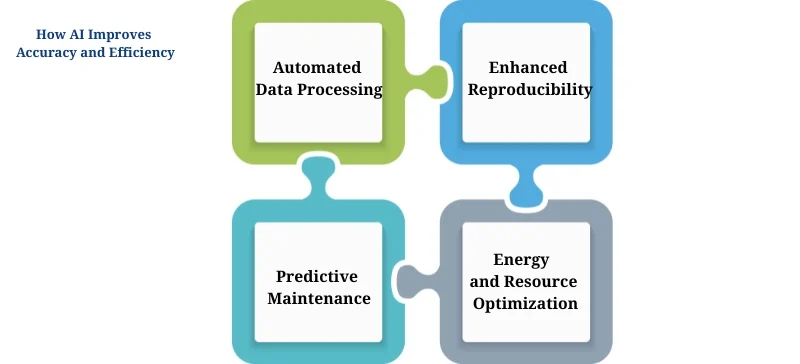
How AI Improves Accuracy and Efficiency
AI in Laboratory Equipment is transforming scientific operations by enhancing accuracy, reliability, and speed. Key benefits include:
1. Automated Data Processing
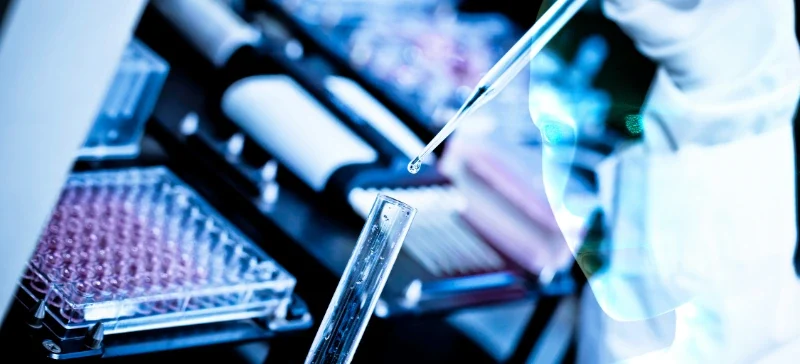
AI algorithms instantly process complex datasets from instruments such as spectrometers, calorimeters, and chromatographs. Automation ensures consistent results while eliminating errors from manual interpretation.
2. Predictive Maintenance
AI predicts when an instrument requires calibration or servicing. This proactive approach reduces downtime, extends equipment life, and ensures uninterrupted research.
3. Enhanced Reproducibility
By standardizing workflows and automating repetitive tasks, AI minimizes variability across experiments—addressing one of the biggest challenges in scientific research.
4. Energy and Resource Optimization
AI algorithms monitor reagent usage, analysis time, and power consumption, making labs more sustainable and cost-efficient.
Overall Impact: Faster diagnostics, higher throughput, and improved reliability—essential for academic and industrial research environments.
Real-World Examples of AI in Laboratory Equipment
1. ICP-OES (Inductively Coupled Plasma Optical Emission Spectroscopy)
AI enhances spectral interpretation and background correction, identifies matrix interferences, and predicts recoveries for precise quantification. This enables faster and more accurate elemental analysis, crucial for materials science, environmental testing, and food quality control.
2. NIR (Near-Infrared) Analyzers
AI-powered NIR analyzers allow real-time, non-destructive analysis. Adaptive algorithms continuously refine models using new data.
3. Calorimeters
AI automates thermal measurements and predicts reaction behavior. Advanced clustering and regression models enhance energy quantification, anomaly detection, and heat-flow predictions—supporting material science, chemical engineering, and renewable energy research.

Future of AI in Laboratory Equipment
The AI in Laboratory Equipment is moving toward fully autonomous, interconnected laboratory ecosystems. Key trends include:
Self-learning instruments that recalibrate and optimize automatically.
Cloud-integrated labs where data from multiple instruments sync in real time for unified analysis.
AI-assisted research design, where algorithms recommend optimal experiment conditions.
Generative AI for automated report generation and anomaly detection.
AI will not replace scientists—it empowers them to focus on innovation rather than repetitive tasks. The synergy between human expertise and intelligent automation represents the next great leap in laboratory science.
Comparison: Traditional vs AI-Integrated Lab Equipment
| Feature | Traditional Lab Equipment | AI-Integrated Lab Equipment |
|---|---|---|
| Accuracy | Relies on human precision | Enhanced through AI algorithms |
| Efficiency | Manual and slower | Automated workflows, faster |
| Maintenance | Reactive repairs | Predictive maintenance |
| Data Analysis | Time-consuming | Real-time insights using AI |
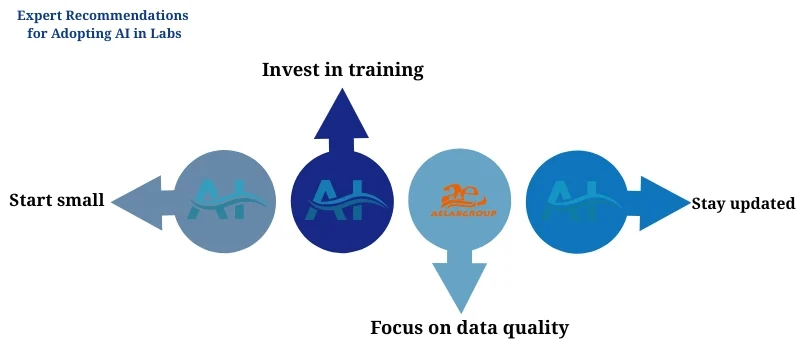
Expert Recommendations for Adopting AI in Labs
Start small: Begin with AI-enabled tools for data analysis or sample processing before full integration.
Invest in training: Ensure lab personnel understand AI workflows.
Focus on data quality: AI performance depends on high-quality datasets.
Stay updated: Leverage the latest AI advancements in lab instruments.
Conclusion
AI in laboratory equipment is no longer a concept of the future—it is actively reshaping modern laboratories. By automating complex tasks, predicting maintenance, and enhancing reproducibility, AI empowers scientists to focus on innovation and discovery.
Take the next step: Explore AELAB’s advanced laboratory instruments today and transform your lab’s efficiency, accuracy, and productivity.