Introduction
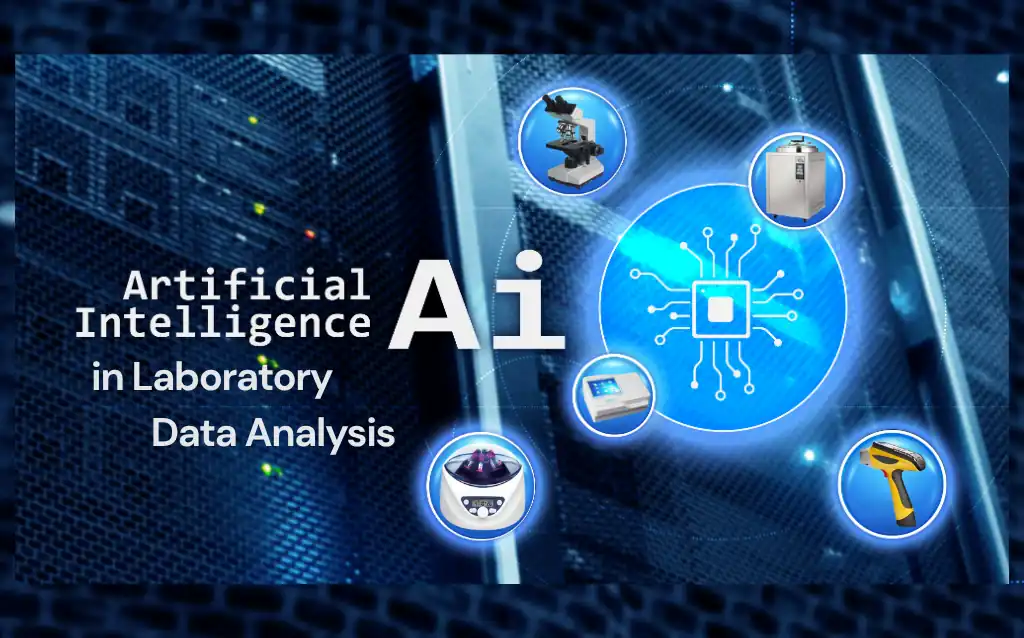
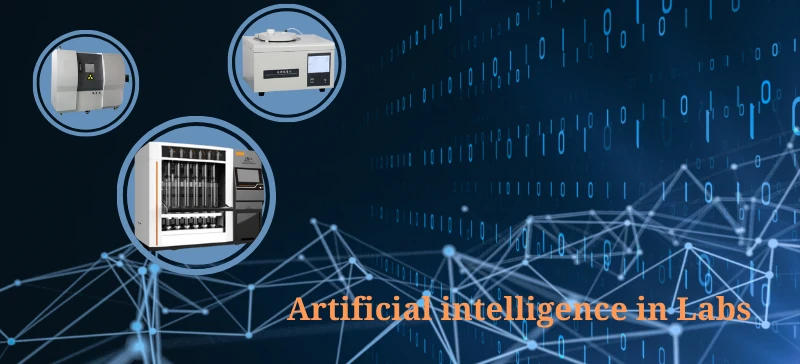
The rise of AI in laboratory data analysis is transforming how scientists handle complex and high-volume experimental data. From chemical assays to genomic sequencing, laboratories now depend on artificial intelligence to improve efficiency, accuracy, and insight generation.
Among various AI tools, ChatGPT, developed by OpenAI, plays a crucial role. By leveraging natural language processing (NLP), it can interpret, summarize, and visualize laboratory data — helping researchers make faster and more informed decisions.
Integrating advanced technologies into laboratory processes not only saves time but also improves data accuracy, minimizes human errors, and speeds up discoveries across various scientific fields.
Understanding AI in Laboratory Data Analysis
The use of intelligent algorithms and machine learning models allows laboratories to collect, refine, process, and interpret experimental results with greater efficiency.
Traditional data analysis methods often require domain expertise and advanced statistical tools, making them time-consuming and prone to inconsistencies.
With the adoption of AI-driven solutions such as ChatGPT, researchers can analyze complex datasets using natural language queries, detect hidden patterns, and generate comprehensive insights. This modern approach allows laboratories to operate more efficiently while maintaining data integrity and reproducibility.
Key Benefits of AI in Laboratory Data Analysis
1. Automating Data Cleaning and Organization
One of the main challenges in analyzing laboratory data is dealing with incomplete or inconsistent datasets. Intelligent systems can help automate this process by:
Identifying outliers and anomalies
Normalizing experimental datasets
Filling missing values intelligently
For example, ChatGPT can generate Python scripts using libraries like pandas to clean datasets, ensuring accuracy and consistency before statistical interpretation.
Benefit: Automation reduces human error and accelerates the workflow for data scientists and laboratory technicians alike.
2. Enhancing Statistical Analysis and Interpretation
AI assists in performing statistical calculations, hypothesis testing, and complex analyses. Through AI in laboratory data analysis, scientists can:
Calculate descriptive statistics and regression models
Visualize trends with suggested graphs such as scatter plots or histograms
Understand correlations between variables like enzyme activity and pH
This allows researchers to focus more on experimental insight rather than manual computation.
3. Detecting Patterns and Correlations in Experimental Data
One of the core strengths of AI in laboratory data analysis is its ability to detect patterns humans might overlook. ChatGPT can analyze repeated experiments, recognize variable relationships, and even propose new hypotheses based on subtle data trends — for example, detecting unusual peaks in mass spectrometry results.
Benefit: AI-driven pattern recognition enhances scientific discovery and innovation by revealing new insights hidden within raw data.
4. Automating Report Generation and Data Visualization
In research environments, clear reporting is as important as accurate analysis. With AI in laboratory data analysis, ChatGPT can:
Draft reports with structured sections (methods, results, discussion)
Generate visual summaries such as charts or tables
Translate raw results into easy-to-read summaries for internal communication or publications
Benefit: Scientists save time while maintaining clarity, consistency, and compliance with documentation standards.
5. Improving Decision-Making and Experimental Planning
By integrating AI in laboratory data analysis, researchers can extract actionable insights that guide smarter decision-making. AI can prioritize high-value experiments, optimize resource allocation, and propose follow-up studies.
This allows labs to maximize productivity and focus resources on experiments with the highest potential impact.
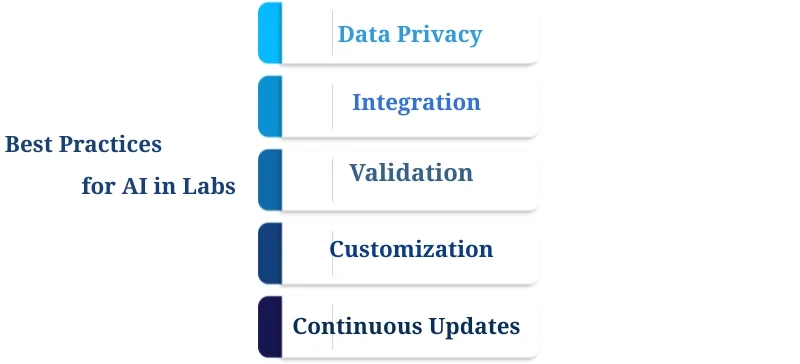
Best Practices for Implementing AI in Laboratory Data Analysis
To ensure optimal performance and ethical use of AI tools:
Data Privacy – Anonymize sensitive data before analysis.
Integration – Combine AI tools with Laboratory Information Management Systems (LIMS) for seamless data flow.
Validation – Always cross-check AI-generated results with expert review.
Customization – Fine-tune ChatGPT or similar AI models with domain-specific terminology.
Continuous Updates – Keep your AI models aligned with the latest scientific literature and statistical methods.
Challenges and Limitations of AI in Laboratory Data Analysis
While intelligent technologies in laboratory data management offer significant benefits, there are challenges to consider:
AI may misinterpret unstructured or noisy data.
It cannot perform physical experiments or measurements.
Human supervision remains essential for critical research decisions.
Tip: Treat AI as a trusted research assistant, not a replacement for human expertise.
The Future of AI in Laboratory Data Analysis
The integration of AI in laboratory data analysis is just the beginning. As algorithms grow more advanced, AI will enable real-time experimental monitoring, predictive modeling, and autonomous data-driven discovery.
Future laboratories will combine human intuition with machine precision, creating a new era of smart scientific research.
Conclusion
Modern research is undergoing a major transformation through the use of advanced artificial intelligence. From automating data cleaning and statistical analysis to producing meaningful reports, intelligent tools now enable laboratories to operate faster, more efficiently, and with greater precision.
By adopting AI-powered workflows, researchers can reduce errors, gain deeper insights, and dedicate more time to scientific discovery.
Call to Action (CTA):
Ready to elevate your lab’s data capabilities? Explore the power of AI in laboratory data analysis and discover how ChatGPT can optimize your research efficiency today.