

Introduction:
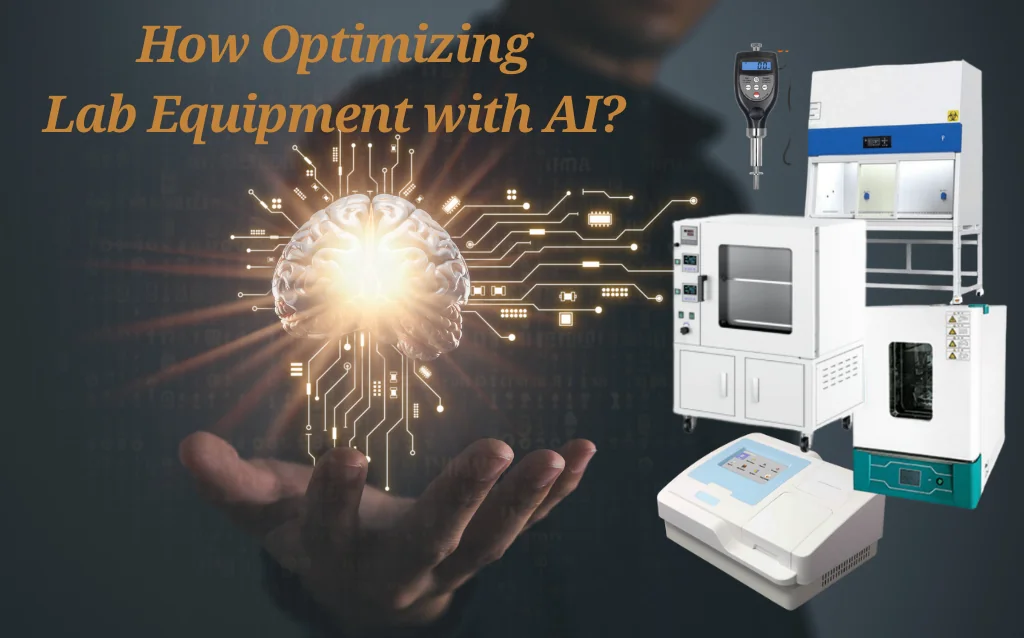
In today’s scientific environment, laboratories face increasing pressure to deliver results that are faster, more accurate, and cost-effective. One of the most effective ways to achieve this is by optimizing lab equipment with AI. By leveraging artificial intelligence, laboratories can analyze massive datasets, predict maintenance needs, automate repetitive operations, and fine-tune equipment performance with unparalleled precision.
This article explores how optimizing lab equipment with AI improves laboratory workflows, enhances productivity, and ensures your research infrastructure is future-ready.
Understanding AI in Laboratory Equipment Management
Artificial intelligence mimics human reasoning and learning, enabling machines to make data-driven decisions.
In labs, AI-powered tools — especially when integrated with Laboratory Information Management Systems (LIMS) or connected through IoT devices — collect real-time data, analyze it, and act to optimize performance.
Key Functions of AI in Labs
Predictive Maintenance: AI predicts when instruments need service, reducing downtime.
Performance Optimization: Algorithms adjust operational parameters for maximum efficiency.
Data Management: Machine learning processes large datasets to ensure accuracy.
Workflow Automation: AI handles repetitive tasks, minimizing human error.
By leveraging advanced technologies, laboratories achieve increased productivity, more reliable performance, and data-driven operational control.
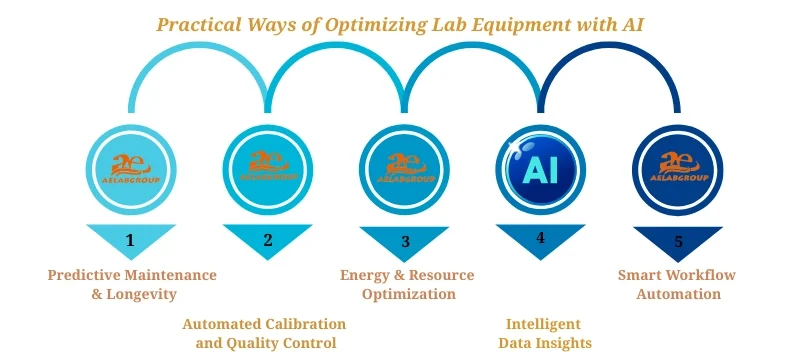
Practical Ways of Optimizing Lab Equipment with AI
1. Predictive Maintenance and Equipment Longevity
AI continuously monitors sensor data — including temperature, vibration, and pressure — to detect early signs of failure. This proactive approach ensures instruments are serviced before downtime occurs, prolonging their lifespan.
Example:
In HPLC or mass spectrometry systems, AI detects subtle deviations in pressure or flow, enabling timely interventions to maintain consistent and reliable results.
2. Automated Calibration and Quality Control
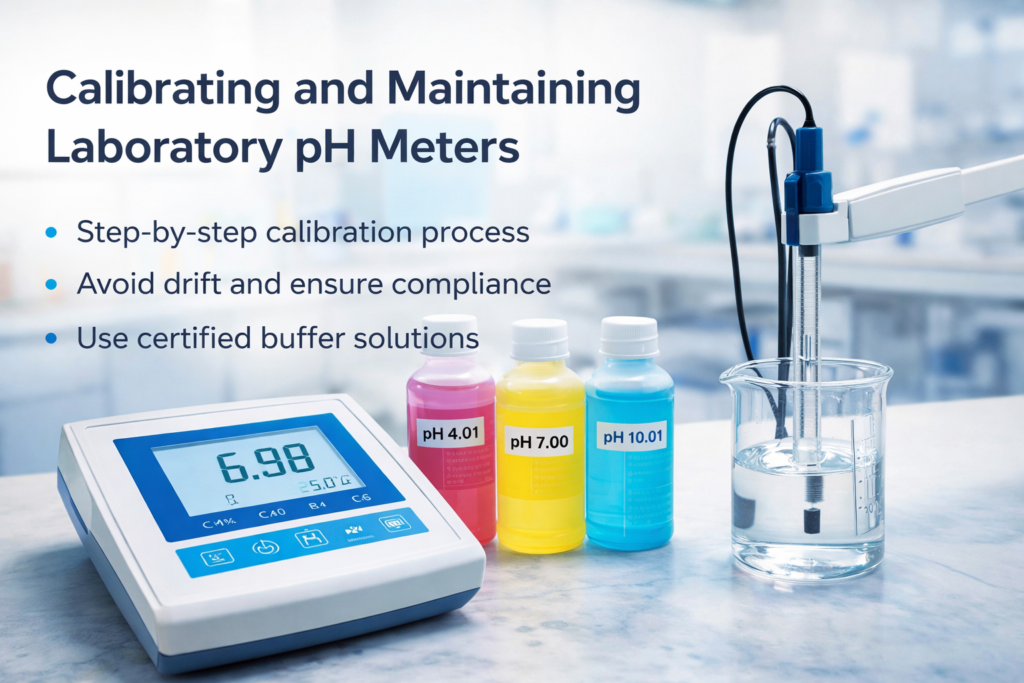
Calibration is critical for accuracy. Manual calibration is time-consuming and prone to errors.
AI-driven calibration automatically adjusts parameters based on past performance, ensuring reproducibility across experiments.
Using AI for optimizing lab equipment not only improves quality but also frees researchers to focus on core tasks.
3. Energy and Resource Efficiency
Labs consume significant energy and resources. AI analyzes usage patterns to identify inefficiencies and recommend energy-saving adjustments.
By optimizing lab equipment with AI, labs reduce operational costs and improve sustainability without compromising performance.
4. Intelligent Data Insights
AI processes large datasets to uncover hidden trends and correlations.
Researchers can leverage these insights to fine-tune experiments, enhance reproducibility, and identify workflow inefficiencies, all contributing to optimizing lab equipment with AI.
5. Workflow Automation
AI integration with LIMS, robotics, and IoT allows full workflow automation.
Repetitive tasks can be handled by AI-driven systems, minimizing human error and maximizing throughput — an essential aspect of optimizing lab equipment with AI.
Steps to Implement AI for Lab Optimization
Assess Current Infrastructure: Identify instruments that generate usable data and are compatible with AI or IoT connectivity.
Select the Right AI Platforms: Choose models or software that integrate seamlessly with existing systems.
Train the System and Team: Use historical data to train AI algorithms and educate staff on using insights effectively.
Monitor and Refine: Continuously evaluate AI’s impact on efficiency, accuracy, and cost, and refine models as data evolves.
Challenges and Solutions

Challenges:
Data privacy and cybersecurity concerns
Integration with existing infrastructure
Staff resistance to new technology
Initial investment costs
Solutions:
Implement secure AI frameworks
Collaborate with integration specialists
Provide staff training for adoption
Start small with pilot projects to demonstrate ROI
By addressing these challenges, laboratories can fully leverage optimizing lab equipment with AI for maximum benefit.
Key Benefits
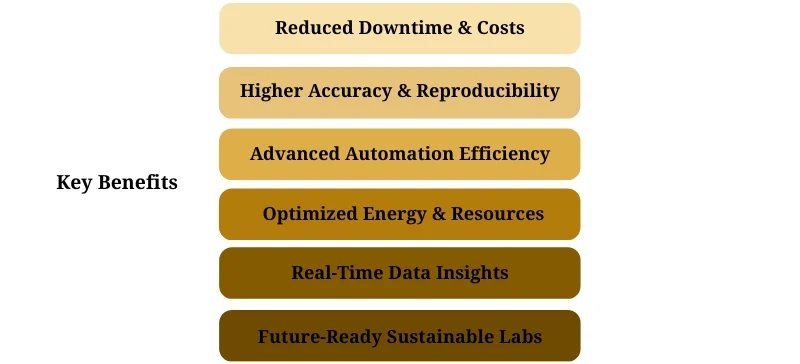
Reduced downtime and maintenance costs
Improved accuracy and reproducibility
Enhanced automation and workflow efficiency
Energy and resource optimization
Real-time data insights for informed decisions
Future-ready, sustainable laboratory operations
Conclusion: The Smart Lab Advantage
Artificial Intelligence is revolutionizing laboratory management. By optimizing lab equipment with AI, labs can achieve greater precision, reliability, and efficiency.
Whether academic, clinical, or industrial, adopting AI today ensures your laboratory is future-ready, cost-effective, and highly productive.
👉Take the next step in modernizing your lab — explore AI-compatible solutions at AELAB, where innovation meets precision.