

Introduction: Transforming Laboratory Reliability with AI
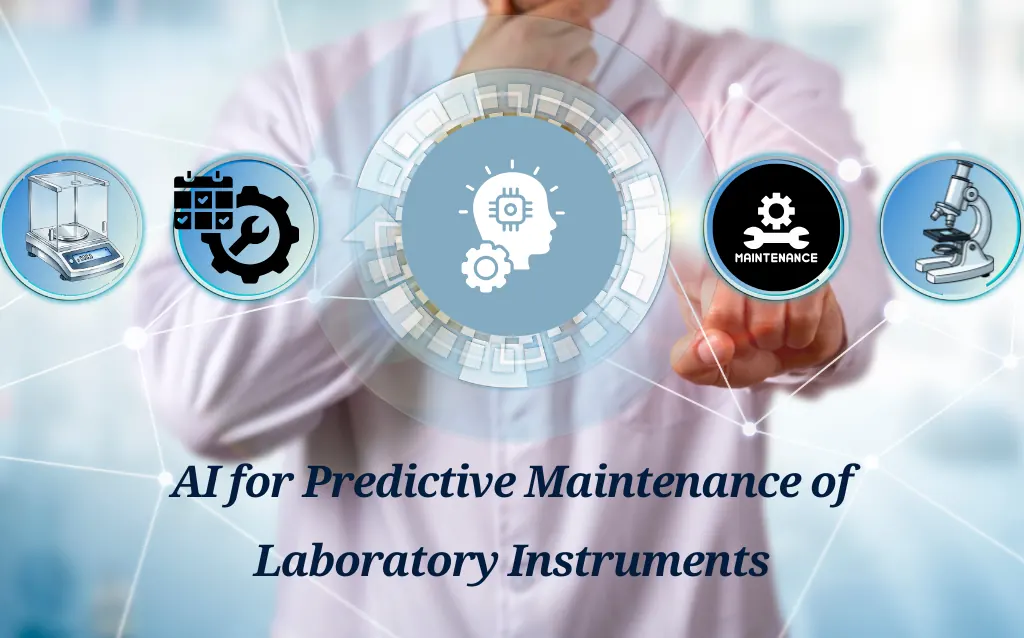
In the fast-evolving field of laboratory science, ensuring the reliability, accuracy, and performance of instruments is critical for consistent research outcomes. AI for Predictive Maintenance of Laboratory Instruments offers a revolutionary solution by helping labs anticipate equipment failures, reduce downtime, and maintain smooth workflows.
Unexpected equipment breakdowns can cause costly downtime, wasted samples, and workflow delays — all of which affect research productivity.
By integrating Artificial Intelligence (AI), Machine Learning (ML), and Internet of Things (IoT) technologies, laboratories can now predict failures before they happen, enabling proactive maintenance, cost savings, and improved operational efficiency.
With the right AI-powered maintenance strategy, laboratories can extend instrument lifespan, ensure data accuracy, and achieve sustainable productivity.
What Is Predictive Maintenance in Laboratory Settings?
Predictive maintenance (PdM) is an intelligent maintenance strategy that uses AI and data analytics to anticipate equipment failures.
Unlike reactive maintenance (fixing issues after they occur) or preventive maintenance (scheduled checkups), AI for Predictive Maintenance of Laboratory Instruments continuously monitors live data to predict when maintenance is actually needed.
In laboratories where centrifuges, chromatographs, spectrometers, and microscopes operate continuously, predictive maintenance helps detect subtle warning signs such as temperature fluctuations, vibration anomalies, or calibration drift, allowing timely intervention and uninterrupted workflows.
How AI Enhances Predictive Maintenance
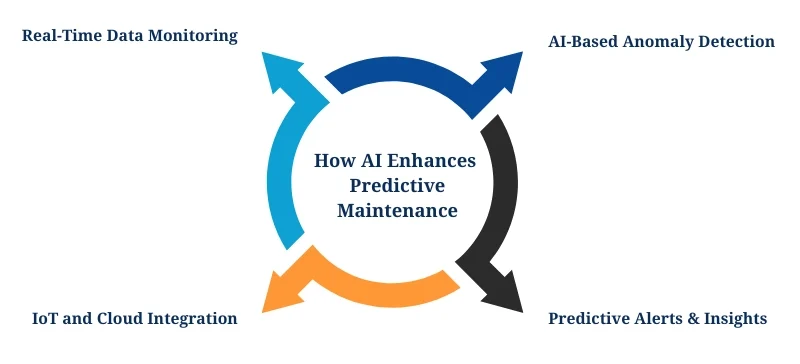
1. Continuous Data Collection and Monitoring
AI-based systems collect real-time data from sensors integrated into laboratory instruments.
Parameters such as vibration, temperature, pressure, and operational hours are constantly tracked, creating a detailed performance profile for each instrument.
This continuous monitoring lies at the heart of AI for Predictive Maintenance of Laboratory Instruments.
2. Machine Learning and Anomaly Detection
Machine learning models analyze both historical and real-time datasets to detect irregular performance patterns.
Using neural networks, time-series forecasting, and anomaly detection algorithms, AI can recognize early warning signs of potential failures—long before they disrupt research activities.
3. Predictive Analytics and Automated Alerts
When anomalies are detected, AI for Predictive Maintenance of Laboratory Instruments automatically sends alerts and provides actionable maintenance recommendations.
This data-driven insight enables lab managers to make informed decisions and schedule maintenance precisely when it’s needed.
4. Integration with IoT and Cloud Systems
By integrating IoT sensors and cloud computing, laboratories can connect all their instruments into a smart ecosystem.
This interconnected infrastructure allows AI-driven predictive maintenance to operate across multiple devices, optimizing efficiency and reducing maintenance overhead.
Applications of AI for Predictive Maintenance in Laboratories
The use of AI for Predictive Maintenance of Laboratory Instruments spans multiple applications across modern research environments:
Spectroscopy Instruments: AI detects lamp degradation and optical misalignment in spectrometers, ensuring consistent accuracy.
Chromatography Systems: Predictive algorithms track pressure and flow to identify pump wear or column blockage early.
Centrifuges and Mixers: AI analyzes vibration and rotational balance to forecast bearing wear or imbalance.
Microscopes and Imaging Systems: Predictive systems monitor focus stability and motor health for precise imaging results.
Case Insight: Laboratories using AI predictive maintenance have achieved 30% reduction in downtime and 20% lower maintenance costs, extending instrument life and improving data reliability.
Benefits of AI for Predictive Maintenance of Laboratory Instruments
Integrating AI for Predictive Maintenance of Laboratory Instruments offers measurable advantages:
- Reduced Downtime: Detect and resolve problems before they cause system failure.
- Improved Data Accuracy: Maintain calibration and ensure consistent experimental results.
- Lower Operational Costs: Prevent over-servicing and unnecessary part replacements.
- Extended Equipment Lifespan: Optimize usage patterns to minimize mechanical stress.
- Enhanced Safety: Identify hazardous anomalies early to protect personnel and assets.
- Data-Driven Insights: Support informed decisions on resource allocation and performance trends.
This AI-driven approach empowers laboratories to transition from traditional maintenance to smart, condition-based management.
Challenges and Considerations
While AI for Predictive Maintenance of Laboratory Instruments offers tremendous value, several challenges may arise during implementation:
Data Quality: Incomplete or inconsistent sensor data can affect prediction accuracy.
Integration Complexity: Legacy instruments may not support IoT connectivity.
Initial Investment: Setting up AI and IoT systems requires upfront costs.
Compliance Requirements: Labs must follow GLP and ISO standards for data handling.
How to Overcome These Challenges
Start with a pilot program focusing on critical instruments.
Partner with AI technology experts, invest in proper training, and scale up gradually as data infrastructure improves.
Predictive vs Preventive Maintenance
| Feature | Preventive Maintenance | Predictive Maintenance |
|---|---|---|
| Approach | Scheduled (time-based) | AI-driven (condition-based) |
| Efficiency | Can lead to over-servicing | Optimized and cost-effective |
| Downtime | Moderate | Minimal |
| Cost Over Time | Higher | Lower |
| Decision Basis | Manual scheduling | Real-time data and analytics |
This comparison highlights why AI for Predictive Maintenance of Laboratory Instruments offers a smarter, more sustainable path forward.
Best Practices for Successful Implementation
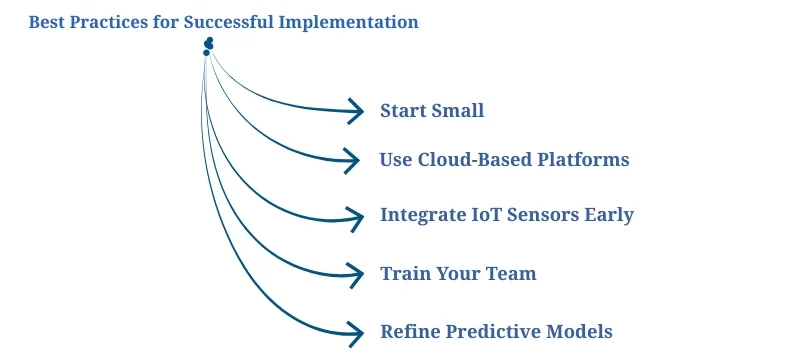
Start Small: Test AI maintenance systems on a few high-value instruments first.
Use Cloud-Based Platforms: Enable scalability and real-time data access.
Integrate IoT Sensors Early: Collect accurate and continuous performance data.
Train Your Team: Improve staff literacy in AI and data management.
Refine Predictive Models: Continuously enhance prediction accuracy through feedback loops.
Future Outlook: Smarter Laboratories with AI
The future of laboratory operations will revolve around intelligent, self-monitoring instruments.
With AI for Predictive Maintenance of Laboratory Instruments, labs are moving toward digital twins, autonomous calibration, and self-healing systems that automatically prevent failures before they occur.
This technological evolution defines the new era of Industry —a world where human expertise and AI-driven automation work together for safer, faster, and more efficient research.

Conclusion: Empowering Laboratories with AI Predictive Maintenance
The adoption of AI for Predictive Maintenance of Laboratory Instruments represents a major leap toward smarter, more efficient lab management.
By predicting and preventing equipment failures before they occur, AI empowers laboratories to maximize uptime, ensure precision, and reduce costs.
Ready to transform your lab operations?
Explore the future of intelligent laboratory maintenance with AI-powered predictive solutions that drive innovation, reliability, and scientific excellence.