


Vortex Mixer Usage: The Key to Efficient and Reliable Laboratory Mixing
In every modern laboratory, achieving consistent and reproducible results depends on one critical factor — sample homogeneity. No matter how advanced your testing instruments are, unevenly mixed samples can compromise the accuracy of your data. That’s where vortex mixer usage becomes essential.
Vortex mixers are compact yet powerful tools designed to create rapid, circular motion in liquid samples. Within seconds, they ensure complete mixing of reagents, suspensions, and biological materials. For research, diagnostics, or quality control, AELAB vortex mixers deliver the precision, speed, and consistency that today’s labs demand.
What Is a Vortex Mixer?
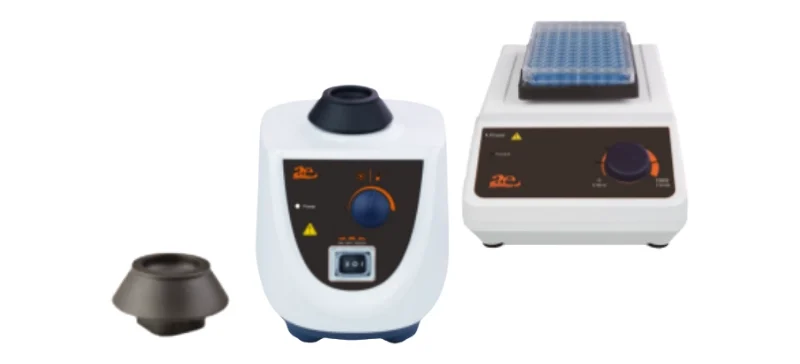
A vortex mixer (also called a vortexer) is a small benchtop device that mixes liquids by creating a vortex — a swirling motion that draws fluid downward at the center and upward along the container walls. When a test tube or vial is pressed against the mixer’s rubber head, the motor drives an orbital motion that generates centrifugal forces, resulting in thorough and uniform mixing.
How It Works
The science behind vortex mixer usage lies in orbital acceleration and shear forces. The motor’s eccentric (off-center) rotation transfers energy through the container wall, creating turbulence that disperses solutes, reagents, or particulates evenly throughout the solution. This process eliminates localized concentration gradients, ensuring true homogeneity.
Why Vortex Mixer Usage Matters for Sample Homogeneity
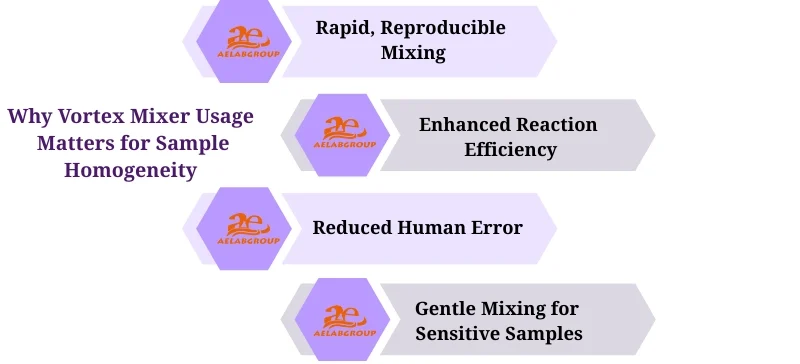
1. Rapid, Reproducible Mixing
Manual shaking or stirring can produce inconsistent results. A vortex mixer ensures reproducibility by creating uniform concentration across the entire sample. In just seconds, it achieves molecular-level mixing — ideal for analytical, biochemical, and molecular biology applications.
2. Enhanced Reaction Efficiency
Homogeneity is essential for accurate reactions in chemical or biological assays. Uneven samples can lead to partial reactions and false results. By improving solute dispersion, vortex mixer usage accelerates dissolution and reaction kinetics, leading to more reliable outcomes.
3. Reduced Human Error
Manual mixing varies between operators. With a vortex mixer, mixing conditions are standardized — ensuring repeatable, controlled, and validated results every time. This consistency aligns perfectly with Good Laboratory Practice (GLP) standards.
4. Gentle Mixing for Sensitive Samples
High-speed stirring may damage fragile biological materials such as proteins, cells, or DNA. Vortex mixers with adjustable speed controls allow users to fine-tune agitation strength to protect delicate samples while maintaining complete mixing.
Applications of Vortex Mixer Usage in Modern Laboratories
Vortex mixers are essential lab tools for achieving fast, uniform, and reliable sample mixing across various scientific applications.
| Field | Common Uses |
|---|---|
| Molecular Biology | Mixing DNA/RNA reagents, buffers, and enzyme solutions |
| Pharmaceuticals | Homogenizing suspensions, drug formulations, and excipients |
| Clinical Diagnostics | Mixing blood, plasma, or reagents for assays |
| Food & Beverage Testing | Ensuring uniform ingredient distribution and flavor consistency |
| Chemical Analysis | Blending solvents, standards, and titration solutions |
Vortex Mixer Usage vs. Magnetic Stirrer: What’s the Difference?
Vortex mixers and magnetic stirrers serve different lab needs; below, we compare their key features to help you choose the right tool for your experiments.
| Feature | Vortex Mixer | Magnetic Stirrer |
|---|---|---|
| Mixing Speed | Very high (instant vortex motion) | Moderate |
| Sample Volume | Ideal for small tubes or vials | Best for large volumes |
| Mixing Motion | Circular vortex | Rotational magnetic bar |
| Contact Type | External (through container wall) | Internal (with stir bar) |
| Best For | Rapid, small-volume homogenization | Continuous, large-scale stirring |
In short, vortex mixer usage is best suited for small-volume, fast, and reproducible mixing, while magnetic stirrers handle larger, slower mixing tasks.
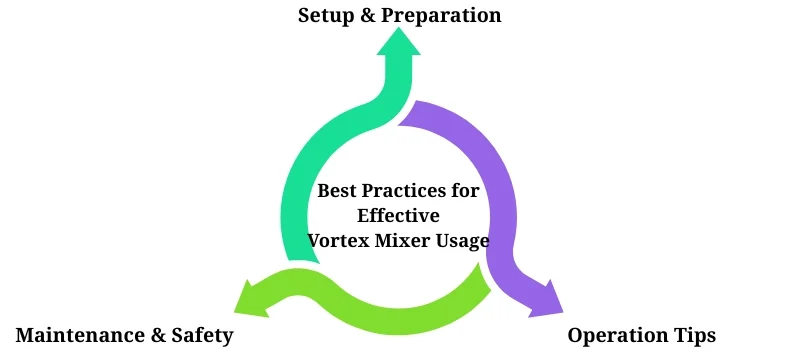
Best Practices for Effective Vortex Mixer Usage
To achieve optimal mixing results and maintain instrument performance, follow these professional tips:
Setup & Preparation
Choose the correct tube size or adapter for the head.
Ensure the tube fits snugly to prevent splashing or vibration.
For volatile or sterile samples, use capped containers.
Operation Tips
Start mixing at a low speed and gradually increase if needed.
Use short bursts for delicate samples instead of continuous mixing.
Hold tubes at a slight angle to improve pellet resuspension.
Maintenance & Safety
Place the unit on a stable, flat surface away from vibration-sensitive equipment.
Clean the mixing head regularly with mild disinfectants.
Avoid overloading the motor — follow AELAB’s recommended load capacity.
Periodically calibrate speed settings for precision-critical applications.
Advantages of AELAB Vortex Mixers
- SuperiorHomogeneity: Ensures complete and uniform mixing every time.
- Increased Efficiency: Reduces manual effort and speeds up lab workflows.
- Versatility: Compatible with various tubes, vials, and microplates.
- Compact Design: Saves bench space while delivering maximum performance.
- Durability: Built for long-term reliability and low maintenance.
Common Mistakes to Avoid During Vortex Mixer Usage
- Overfilling tubes, which can cause spillage and uneven mixing.
- Using incompatible reagents without checking chemical reactivity.
- Ignoring temperature sensitivity during prolonged vortexing.
- Failing to clean the head regularly, leading to contamination.
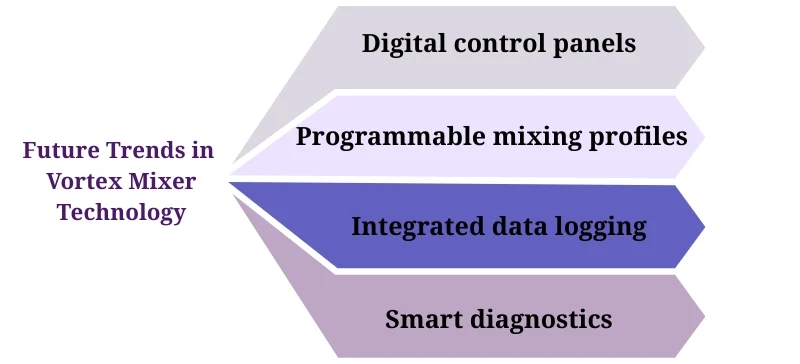
Future Trends in Vortex Mixer Technology
The next generation of vortex mixers is bringing automation, intelligence, and connectivity to the lab bench. Expect features such as:
Digital control panels with intuitive interfaces
Programmable mixing profiles for reproducible results
Integrated data logging for compliance and traceability
Smart diagnostics that monitor motor performance and usage patterns
These advancements make vortex mixer usage not only faster and more reliable but also aligned with the needs of Industry 4.0 laboratories.
Conclusion: Powering Precision Through Vortex Mixer Usage
Achieving consistent sample homogeneity is essential for reliable laboratory results, and effective vortex mixer usage plays a critical role in this process. From molecular biology to industrial testing, these mixers provide accuracy, speed, and repeatability across all experiments. With advanced control options, durable design, and smart features, vortex mixers help labs reduce manual variability and enhance overall productivity. Experience the precision and efficiency of modern vortex mixing with AELAB.