Introduction
Infrared Thermal Imaging is changing the way industries monitor, analyze, and respond to heat. This technology can detect invisible thermal energy and transform it into a highly detailed visual presentation. Whether you’re focusing on industrial safety for systems, energy loss in building inspection, or intelligent surveillance deployment, thermal infrared imaging delivers unparalleled visibility—literally and figuratively.
What Is Infrared Thermal Imaging?
This method is a non-contact technique that uses infrared technology in detecting the heat an object emits. It converts invisible thermal energy into visible thermograms, thus enabling the observation of temperature variations on surfaces in real time.
This approach is widely applied across industries—even in conditions of complete darkness, smoke, or visual blockage—because every object above absolute zero emits infrared radiation.
The Infrared Spectrum Explained
The technology operates within the infrared part of the electromagnetic spectrum, which extends beyond visible light (400–700 nm). Several key bands within this part of the spectrum exist, each for a different application:
Near Infrared (NIR): 0.75–1.0 µm
Short-Wave Infrared (SWIR): 0.9–1.7 µm
Mid-Wave Infrared (MWIR): 1–5 µm
Long-Wave Infrared (LWIR): 8–14 µm
⚠️ The 5–8 µm range is less practical because of absorption by water vapor and CO₂.
Each band is compatible with specific detector types and imaging requirements, adding to the system’s adaptability across a wide range of use cases.
How Infrared Thermal Imaging Works
This process involves four stages:
Emission: All objects emit infrared radiation based on their temperature
Detection: Sensors capture this radiation
Signal Processing: Electronic conversion into thermal data
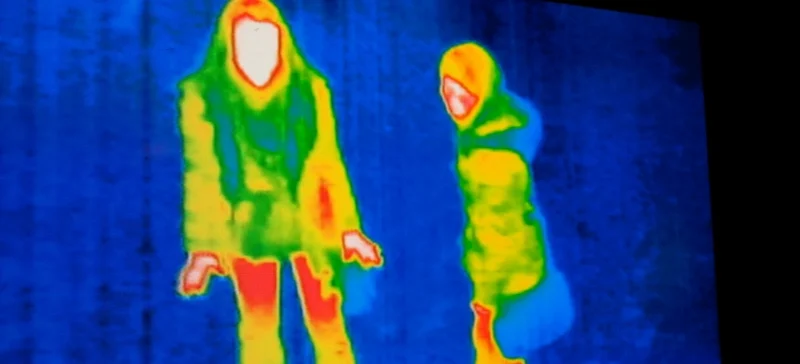
Image Creation: Visualization using thermographic color palettes:
🔴🟡 = Hot zones
🔵🟣 = Cool zones
Color mapping allows professionals to interpret surface temperature patterns with ease, powered by
Infrared Thermal Imaging software.
Practical Applications of Infrared Thermal Imaging
Industrial Maintenance
Detect overheating machinery to prevent breakdowns
Monitor electrical panels and rotating components
Reduce downtime through predictive diagnostics
Building & HVAC Inspection
Spot insulation issues, air leaks, or trapped moisture
Improve energy audits and facility management
Security & Surveillance
Identify intruders in complete darkness, fog, or smoke
Monitor borders or high-risk zones in real time
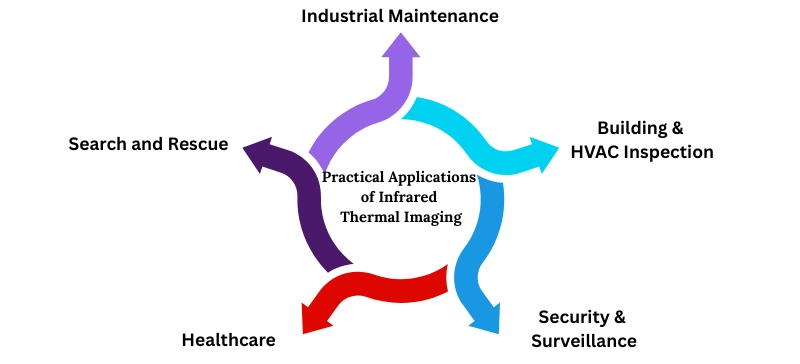
Healthcare
Search and Rescue
The Role of AI in Infrared Thermal Imaging
The combination of thermal imaging technology and artificial intelligence is transforming the landscape of automation and surveillance. With the help of advanced algorithms:
Human detection is more accurate
Anomalies are flagged automatically
Real-time alerts are issued
The system distinguishes between people and other objects (like animals)
This evolution transforms cameras into intelligent systems capable of adaptive decision-making in dynamic environments.
How to Choose the Right Device
When selecting a device, consider:
| Feature | Why It Matters |
|---|
| Resolution | Higher resolution = more image clarity |
| Thermal Sensitivity | Detects even slight temperature changes |
| Field of View (FOV) | Wide FOV is good for scanning large areas |
| Cooled vs. Uncooled | Cooled for precision; uncooled for daily use |
| Calibration | Radiometric models offer accurate measurements |
A carefully selected device guarantees dependable operation and consistent results in a variety of conditions.
Final Thoughts
This technology is more than a diagnostic tool—it’s a strategic advantage across sectors. It reveals the unseen, enabling greater efficiency, real-time insights, and safer environments.
And with AI and modern sensor advancements, thermal detection technology is evolving to become even more powerful, intelligent, and essential for the future.
Ready to Take the Next Step?
Whether you’re exploring solutions for safety, maintenance, or innovation, choosing the right tools can make all the difference.
Get in touch with our specialists today to find the system that fits your needs — or explore our expert guides to learn more.