Introduction
Pipetting is one of the most fundamental yet critical techniques in life science, clinical, pharmaceutical, and analytical laboratories. Despite its routine nature, achieving consistent Pipetting Accuracy remains a major challenge, as pipetting is still a leading source of experimental variability. Even small inconsistencies in technique can result in significant volumetric errors, poor reproducibility, and compromised data integrity.
While regular calibration and proper maintenance of pipettes are essential, real-world laboratory experience shows that operator technique is the single most influential factor affecting pipetting accuracy and precision.
This comprehensive guide from laboratory best practices provides practical, experience-based strategies to help researchers and technicians improve their pipetting performance and achieve reliable, reproducible results.
Understanding Pipetting Accuracy vs. Precision
What Is Pipetting Accuracy?
Accuracy refers to how close the dispensed volume is to the intended target volume.
Example: Dispensing 100 µL and delivering 99.9 µL → high accuracy
Dispensing 100 µL and delivering 95 µL → low accuracy
What Is Pipetting Precision?
Precision describes how consistent repeated dispenses are over time, regardless of accuracy.
Repeatedly dispensing 95 µL → high precision, low accuracy
Large variation between dispenses → low precision
🔬 Important insight:
A well-calibrated pipette may deliver precise volumes, but accurate results depend heavily on correct handling and technique.
This guide covers 12 essential, science-backed tips to improve Pipetting Accuracy, from proper technique and tip selection to temperature control and liquid handling methods, helping laboratories achieve more reliable and reproducible results.
1. Choose the Right Pipette and Compatible Tips to Improve Pipetting Accuracy
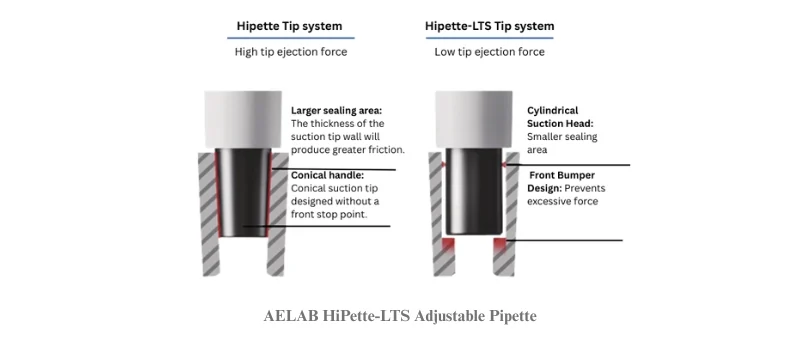
Using high-quality pipette tips specifically designed for your pipette model is essential. Poor-quality or incompatible tips can compromise the seal between the pipette and tip, leading to:
Air leakage
Volume loss
Reduced reproducibility
Best Practice
✔ Always use manufacturer-recommended system tips, such as those validated for AELAB pipetting systems, to ensure optimal fit and performance.
2. Pre-Wet the Pipette Tip (A Simple but Powerful Step)
Pre-wetting involves aspirating and dispensing the sample liquid at least three times before the actual transfer.
Why Pre-Wetting Matters
Increases humidity inside the tip
Reduces evaporation
Stabilizes the air cushion
Improves volume consistency
Skipping this step often results in under-dispensing, especially during the first pipetting cycle.
3. Work at Temperature Equilibrium to Maintain Pipetting Accuracy
Pipetting accuracy is highly sensitive to temperature differences between the pipette, tips, liquid, and surrounding environment. Thermal expansion or contraction of air inside the tip can significantly alter delivered volumes.
Recommendations
Allow reagents and equipment to equilibrate to room temperature
Avoid excessive hand contact with the pipette body
Store the pipette on a stand between uses
🌡 Temperature consistency is a cornerstone of reliable liquid handling.
4. Control Tip Immersion Depth
Correct immersion depth is critical, especially for low-volume pipetting.
Optimal Immersion Depth
2–3 mm below the liquid surface for small volumes
❌ Too shallow → air aspiration
❌ Too deep → excess liquid clinging to the outside of the tip
Excessive immersion can significantly increase volumetric error.
5. Improving Pipetting Accuracy by Using Correct Pipetting Angles
Incorrect angles can multiply volumetric inaccuracies.
Proper Technique
Aspiration: Hold the pipette vertically (90°)
Dispensing: Use a slight angle (~45°) and touch the tip to the vessel wall
This ensures smooth liquid release and minimizes residual droplets.
6. Use Smooth and Consistent Speed to Improve Pipetting Accuracy
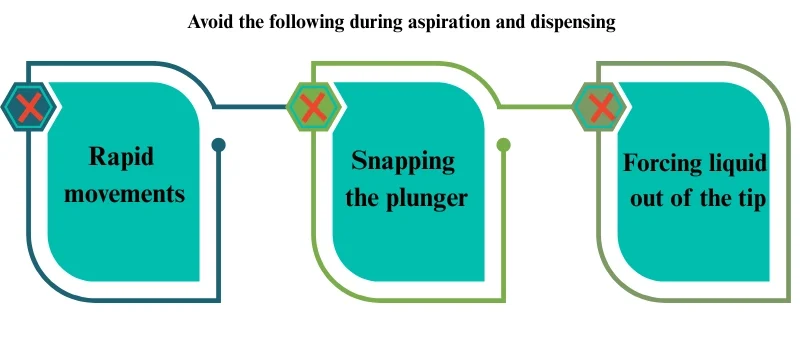
Apply steady, controlled pressure to the plunger during both aspiration and dispensing.
Avoid:
Rapid movements
Snapping the plunger
Forcing liquid out of the tip
🔁 Consistency in speed = higher precision and reproducibility
7. Pause After Aspiration to Improve Pipetting Accuracy
After aspirating the liquid, pause for 1–2 seconds before removing the tip from the liquid.
This pause allows:
Full liquid stabilization
Proper pressure equalization
Reduced evaporation effects
A small pause can make a measurable difference in accuracy.
8. Select Forward or Reverse Pipetting Based on the Liquid
Forward Pipetting
Best for:
Aqueous solutions
Buffers
Standard laboratory reagents
Reverse Pipetting
Recommended for:
Viscous liquids
Volatile solvents
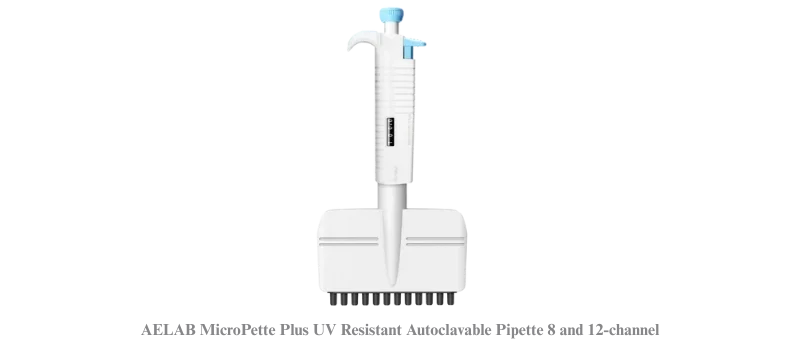
Reverse pipetting improves precision by reducing evaporation and liquid retention, though it may slightly over-deliver if not properly controlled.
9. Handling Viscous and Volatile Liquids Correctly
Viscous Liquids (e.g., glycerol)
Pipette slowly
Pause before completing aspiration and dispensing
Use reverse pipetting
Volatile Liquids (e.g., ethanol, acetone)
Always pre-wet tips
Minimize delay between aspiration and dispensing
Prefer reverse pipetting
10. Proper Touch-Off and Blow-Out Technique
Touch the pipette tip gently against the vessel wall
Depress the plunger fully to the blow-out stop
💧 The remaining droplet is part of the target volume and must be transferred to ensure accuracy.
11. Prevent Cross-Contamination to Maintain Pipetting Accuracy
To protect both samples and equipment:
Use a new tip for each transfer
Employ filter (barrier) tips for sensitive applications (PCR, cell culture)
Clean the pipette exterior regularly
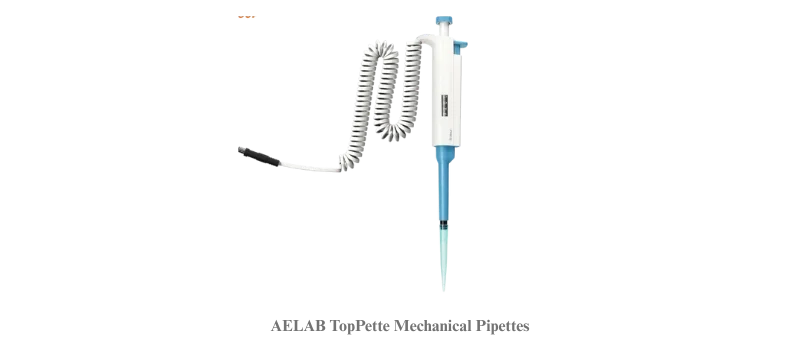
These steps also extend the lifespan of AELAB pipettes and maintain internal integrity.
12. Ergonomics and Long-Term Performance
Repeated pipetting can lead to fatigue, strain, and long-term injury—factors that directly impact consistency.
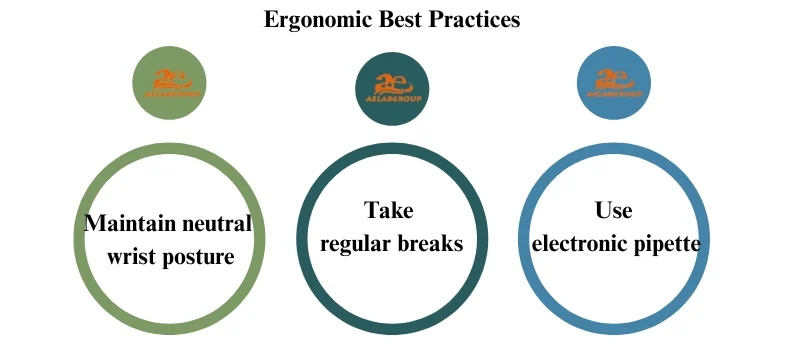
Ergonomic Best Practices
Maintain neutral wrist posture
Take regular breaks
Use electronic pipettes for repetitive or high-throughput workflows
Electronic pipettes provide motor-controlled dispensing, reducing user fatigue and improving precision over long sessions.
Conclusion: Pipetting as a Core Element of Scientific Quality
Accurate and precise pipetting is the foundation of reliable laboratory data. By combining proper technique, thoughtful equipment selection, environmental awareness, and regular maintenance, researchers can significantly reduce experimental error and improve reproducibility.
Mastering pipetting is not just a technical skill—it is a critical component of scientific credibility and data quality, and a standard upheld by professional laboratories .
Call to Action (CTA)
Looking to elevate your laboratory performance?
Explore AELAB’s professional resources on pipetting best practices, calibration standards, and laboratory excellence.
Need expert guidance or training?
Contact AELAB specialists for tailored solutions and hands-on support.