Microbial (viable) air samplers capture airborne microorganisms onto agar plates for incubation and colony counting (CFU/m³). This guide explains how viable air sampling works, which features matter most in cleanrooms, where these instruments are used, and how to choose the right model. If you’re comparing options from a manufacturer or supplier, start with the recommended AELAB models below and open each product page to view full specifications.
Browse the models below, then open each product page for detailed specifications, photos, videos, and inquiry options.
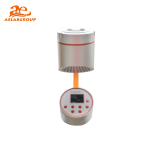
Designed for routine viable air monitoring in cleanrooms and controlled environments
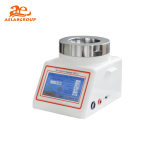
Portable microbial air sampling option for routine monitoring and lab/field workflows
On this page
A microbial (viable) air sampler is an instrument used to collect living microorganisms from air onto a growth medium—typically a Petri dish with agar. After sampling, the plate is incubated and colonies are counted to estimate viable contamination levels. Results are commonly reported as CFU/m³ (colony forming units per cubic meter) and used to support environmental monitoring programs in controlled areas.
Many cleanroom microbial air samplers use an impactor head. Air is drawn through precision holes, and viable particles impact onto the agar surface. After incubation, colonies are enumerated to quantify microbial concentration and support trending, investigations, and quality decisions.
Set the sampling volume or time according to your SOP.
Collect the sample onto an agar plate using the sampler’s impactor head.
Incubate the plate and count colonies to determine CFU.
Trend results over time and investigate excursions when needed.
A professional microbial air sampler should deliver repeatable collection and be practical for routine monitoring routes and qualification work. When comparing models, focus on:
Stable flow control: helps maintain consistent sampling conditions and repeatable results.
Impactor head design: hole patterns that reduce colony overlap and improve counting accuracy.
Consumable compatibility: supports standard agar plates and common media choices.
Portability: battery operation, manageable weight, and easy transport between rooms.
Cleanability: surfaces suitable for routine disinfection prior to sampling.
Documentation support: clear run parameters (volume/time) for reliable records.
Viable air sampling is widely used in controlled and hygiene-sensitive environments where airborne microbial control is critical:
Microbial air samplers provide viable results that support quality decisions and operational control:
Viable confirmation: measures living microorganisms (not just particle counts).
Actionable results: supports investigations, root cause analysis, and CAPA activities.
Standard workflows: integrates with incubation and colony counting practices.
Operational clarity: improves confidence in controlled-zone monitoring programs.
Choose a sampler that matches your environment, SOP, throughput needs, and handling requirements:
If you are selecting between AELAB models, start at Recommended AELAB Models and open each product page for full specifications.
A consistent sampling workflow improves data quality and makes trending more reliable:
Q1: What does CFU/m³ mean in viable air sampling?
A: CFU/m³ stands for Colony Forming Units per cubic meter. It is the standard unit used to report viable microbial concentration in air based on incubated colony counts and the sampled air volume.
Q2: How is a microbial air sampler different from a particle counter?
A: Particle counters measure non-viable particles in real time, while microbial air samplers capture viable organisms onto agar for incubation and counting. Many facilities use both because they support different monitoring goals.
Q3: How do I choose sampling locations and volumes?
A: Follow your SOP and risk assessment. Locations and volumes typically align with critical operations, airflow patterns, and historical trends. Qualification studies often use broader coverage than routine monitoring.
Q4: What causes colony overlap and why does it matter?
A: High microbial load or an unsuitable impactor design can cause colonies to merge on agar, reducing counting reliability. Choosing appropriate sampling volumes and a well-designed head improves count integrity.
Q5: Do microbial air samplers require routine verification?
A: Yes. Verification frequency and methods depend on internal quality procedures and expectations for controlled environments, typically focusing on flow stability and overall performance checks.
Content reviewed internally for technical accuracy. Always follow your site SOP, risk assessment, and applicable regulatory guidance.