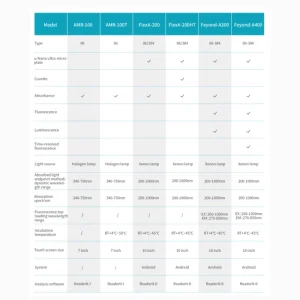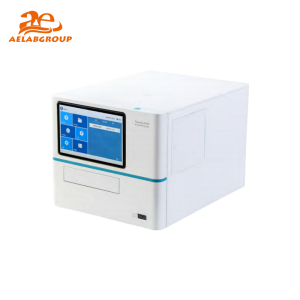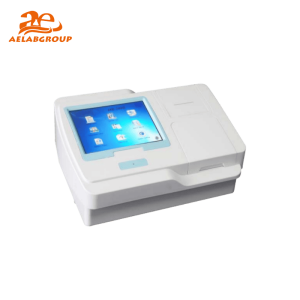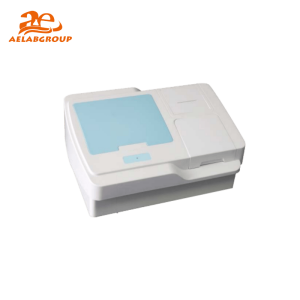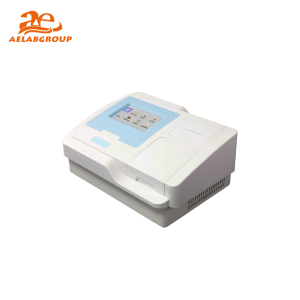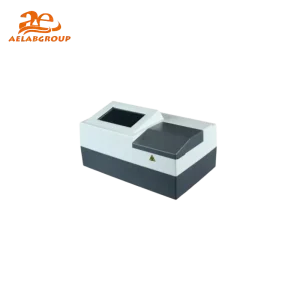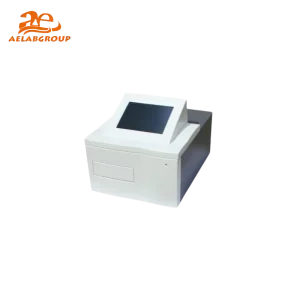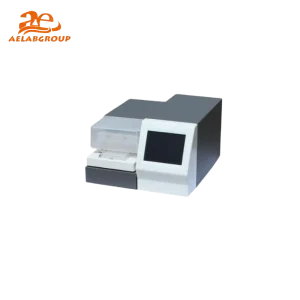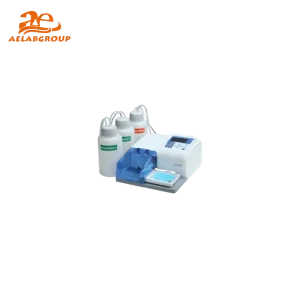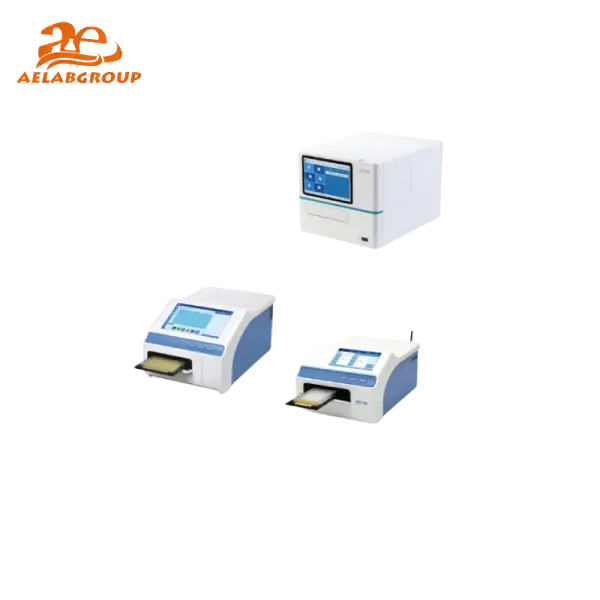
Model :AMR-100,AMR-100T,FlexA-200HT,Feyond-A300,Feyond-A400
The AELAB Microplate Reader series offers precise, high-throughput detection of absorbance, fluorescence, and luminescence signals across 96 to 384-well plates. Ideal for research labs and diagnostics, these readers ensure fast, reliable results with advanced technology and user-friendly Android operation.

Need Help with This Product?
A Microplate Reader is a laboratory instrument used to detect and quantify biological, chemical, or physical reactions in microtiter plates, typically containing 96, 384, or 1536 wells. It measures absorbance, fluorescence, luminescence, or other optical signals across the wells, enabling high-throughput analysis of samples such as enzymes, nucleic acids, or cell cultures. Widely used in research, drug discovery, and diagnostics, microplate readers provide fast, accurate, and reproducible results in various assays.
✅ How It Works? 🔬
The AELAB Microplate Reader detects optical signals generated by biological or chemical reactions within microtiter plate wells. Light from halogen or xenon lamps passes through or excites samples, and detectors measure absorbance, fluorescence, or luminescence. Data is processed by integrated software to quantify analytes with precision, enabling quick assessment of multiple samples simultaneously.
✅ Advantages 💡
Multi-mode detection (absorbance, fluorescence, luminescence) for versatile assay compatibility
Supports standard 96- and 384-well plates for scalable throughput
Advanced temperature control for consistent assay conditions
Intuitive Android interface with touch screen for ease of use
High sensitivity and wide spectral range for diverse applications
Robust build and reliable performance for long-term lab use
✅ Recommended Models by Use Case 🔍
Educational Labs: AMR 100, AMR 300T — simple absorbance-based assays
Research Centers: Flexx-200 and Flexx-200HT — fluorescence and absorbance with temperature control
Quality Control Departments: Feyond-A300, Feyond-A600 — multi-mode detection with advanced features and high throughput
✅ Ideal For 🧪
Biochemical and enzymatic assays
Drug discovery and pharmacological research
Cell culture analysis and viability tests
Environmental and food safety testing
Diagnostic laboratories and clinical research