Overview
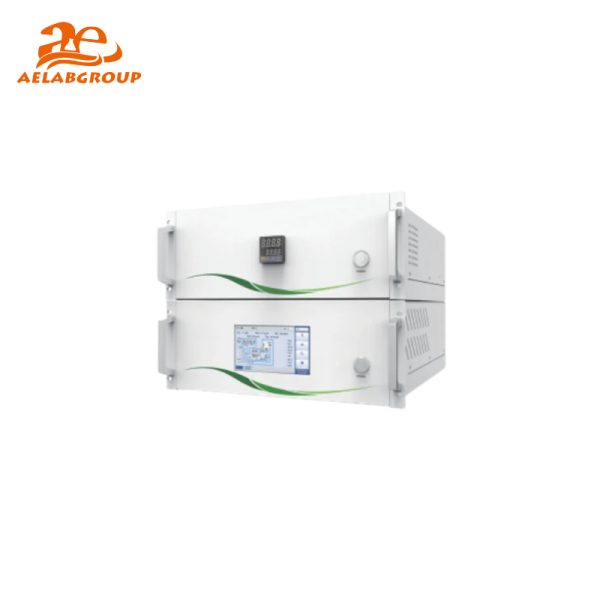
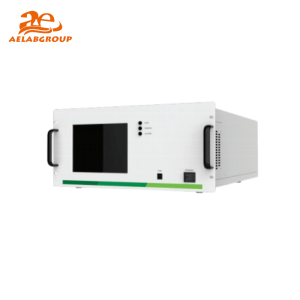
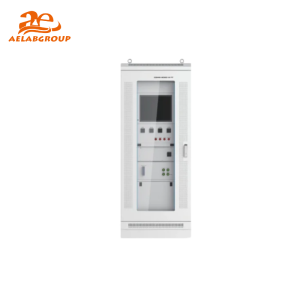
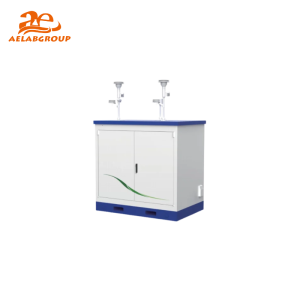
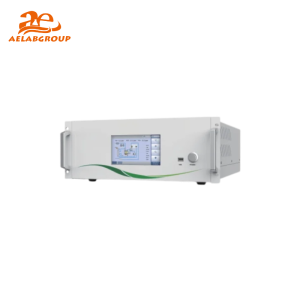
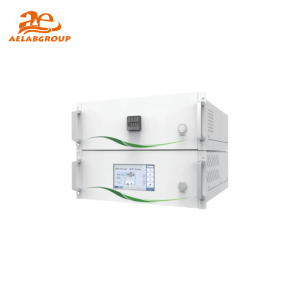
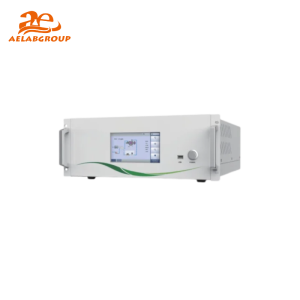
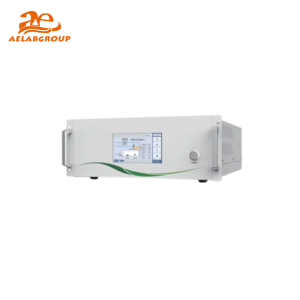
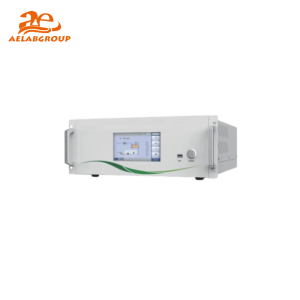
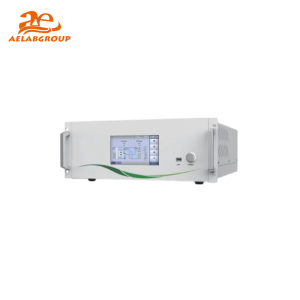
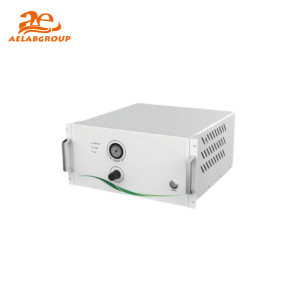
The AELAB AQMS-650 NH₃ Analyzer is designed for continuous ammonia gas quantification in environmental, agricultural, and industrial air monitoring systems. It employs chemiluminescence detection for precise and stable measurement of NH₃ and NOx concentrations, enabling compliance verification and emission assessment across a wide range of atmospheric conditions.
⚙ Design & Construction
The AQMS-650 features a dual-channel analytical design that allows independent measurement of ammonia and nitrogen oxides. The instrument incorporates a high-temperature quartz converter for gas conversion, a low-drift optical detection system, and a large LCD interface for simplified operation. Compact dimensions and robust construction make it suitable for both laboratory and outdoor continuous monitoring installations.
🔬 Working Principle / Testing Method
The AELAB AQMS-650 NH₃ Analyzer operates based on the chemiluminescence reaction between nitric oxide and ozone. Ambient air samples containing ammonia pass through a quartz converter heated to approximately 1000 °C, converting NH₃ into NO. The resulting NO reacts with ozone to produce light, which is detected and quantified by a photomultiplier tube. This process provides a highly sensitive and selective measurement of ammonia concentration, ensuring minimal cross-interference and excellent repeatability.
💡 Key Advantages
- Independent measurement of NH₃ and NOx for enhanced analytical precision.
- Quartz converter ensures complete conversion and stable chemiluminescence response.
- Low detection limit (<0.4 ppb) suitable for trace ammonia analysis.
- Automatic system diagnostics with alarm and event logging.
- Energy-efficient electronics and minimal maintenance requirements.
- Large onboard data storage for extended unattended operation.
🔗 Connectivity & Integration
The AQMS-650 supports RS232, RS485, and Ethernet communication protocols, allowing integration into laboratory data networks, emission control systems, and centralized monitoring platforms. Analog and relay outputs are available for automated process control and alarm triggers. Optional software interfaces enable remote calibration, real-time trend visualization, and cloud-based data archiving.
🧠 Model Insight
The AELAB AQMS-650 is available in multiple configurations tailored to specific application domains: the standard model for routine environmental NH₃ assessment, the industrial version with Ethernet output for emission networks, and the research-grade variant featuring extended data logging and advanced converter control. All models maintain identical precision and compliance with international air monitoring standards.
🧪 Testing Applications
- Ambient air quality monitoring and ammonia emission control.
- Industrial process exhaust and fertilizer manufacturing assessment.
- Environmental protection and agricultural gas emission studies.
- Regulatory compliance in air pollution and emission reporting.
- Atmospheric chemistry and nitrogen compound research laboratories.
Compliance & Quality Assurance
The AELAB AQMS-650 NH₃ Analyzer complies with US EPA and EN measurement standards for trace ammonia detection. Each instrument undergoes factory calibration, thermal stability validation, and drift testing to ensure precision and reproducibility. AELAB’s ISO 9001-certified production process guarantees consistent quality and reliable performance in long-term environmental deployments.