Overview
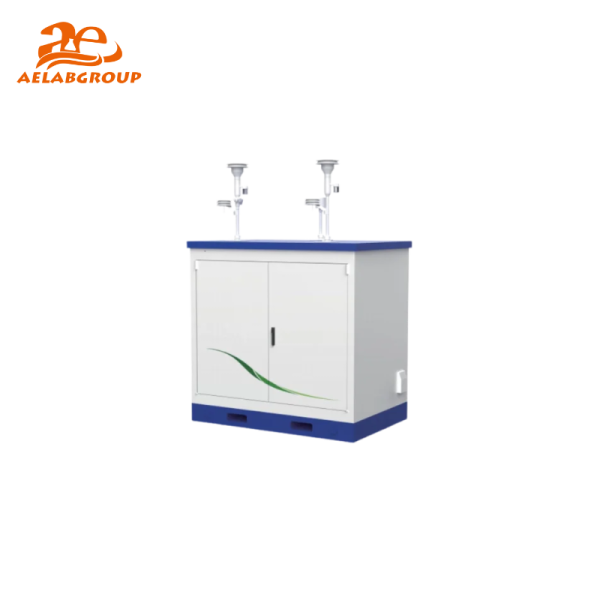
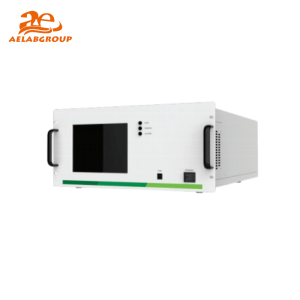
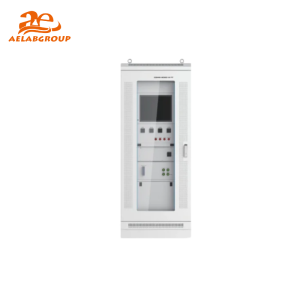
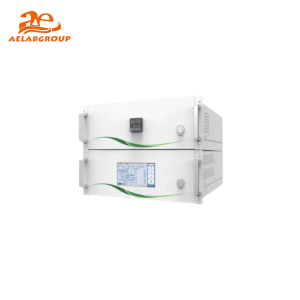
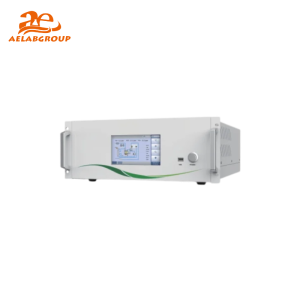
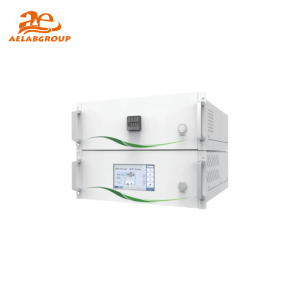
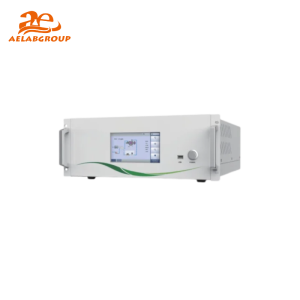
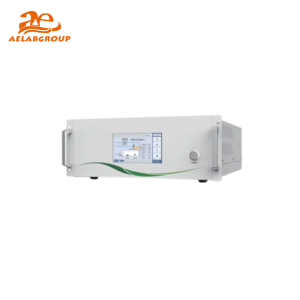
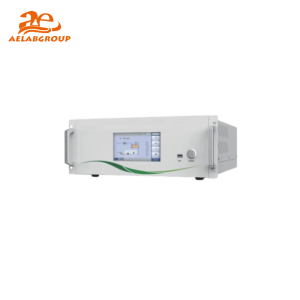
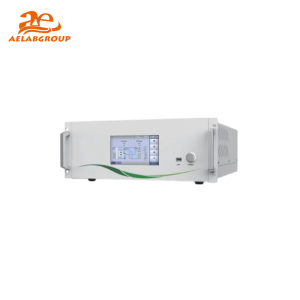
The AELAB AQMS-1000M Air Quality Monitoring System is a compact, fully automatic environmental monitoring unit designed for continuous multi-parameter air analysis. It quantifies key atmospheric pollutants such as PM₂․₅, PM₁₀, SO₂, NO₂, CO, and O₃, and can be configured to measure meteorological parameters like temperature, humidity, wind speed, and pressure. Its integrated design provides stable, real-time data for environmental protection agencies, smart city networks, and industrial monitoring stations.
⚙ Design & Construction
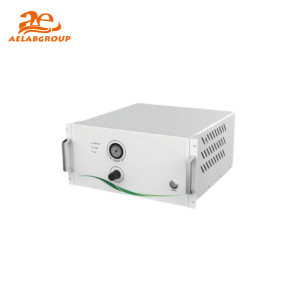
The AQMS-1000M is engineered with a modular measurement architecture that combines particulate and gas analyzers within a climate-controlled housing. The system features a high-power industrial air conditioning unit to maintain internal stability under variable ambient conditions, minimizing measurement drift. The robust enclosure is rated for outdoor use and designed for ease of maintenance and deployment in fixed or mobile installations.
🔬 Working Principle / Testing Method
The AELAB AQMS-1000M employs multiple analytical methods: electrochemical sensors for NO₂, SO₂, CO, and O₃; optical particle measurement for PM₂․₅ and PM₁₀; and optional beta-ray attenuation for high-precision particulate mass detection. Air is continuously sampled through an inlet manifold, conditioned, and analyzed by internal modules that transmit digital data to the central control processor. Results are automatically averaged, logged, and transmitted to remote servers or cloud-based monitoring platforms.
💡 Key Advantages
- Simultaneous multi-parameter detection of key atmospheric pollutants.
- Temperature-controlled enclosure ensures minimal environmental interference.
- Integrated software platform for centralized data management and calibration.
- Compact modular system ideal for fixed or mobile deployment.
- Operates in extreme climates from -30 °C to 50 °C and up to 95% RH.
- Network-ready with RS232, RS485, and Ethernet connectivity.
🔗 Connectivity & Integration
The AQMS-1000M supports seamless integration into environmental data networks via standard communication protocols. Remote access enables users to view real-time pollutant data, conduct diagnostics, and generate analytical reports. The built-in monitoring platform allows direct RS232/RS485/Ethernet communication with environmental databases, cloud servers, or national air quality control centers.
🧠 Model Insight
The AELAB AQMS-1000M can be configured as a standard model for municipal and industrial air quality networks, or as an enhanced version with full meteorological integration for academic and research-based environmental analysis. Its low detection limits, modular design, and automatic calibration routines make it an efficient choice for long-term environmental surveillance.
🧪 Testing Applications
- Urban air pollution monitoring and public health surveillance.
- Industrial emission and compliance verification.
- Environmental impact assessment and source apportionment.
- Research on atmospheric chemistry and urban climatology.
- Integration in smart city environmental sensor grids.
- Portable or stationary deployment by environmental agencies.
Compliance & Quality Assurance
The AELAB AQMS-1000M Air Quality System complies with international US EPA and EN standards for ambient air quality measurement. Each unit undergoes factory calibration, reproducibility testing, and environmental endurance trials to ensure long-term accuracy. The system supports traceable calibration gases and is manufactured under ISO 9001-certified processes for quality and reliability.