

I.Introduction
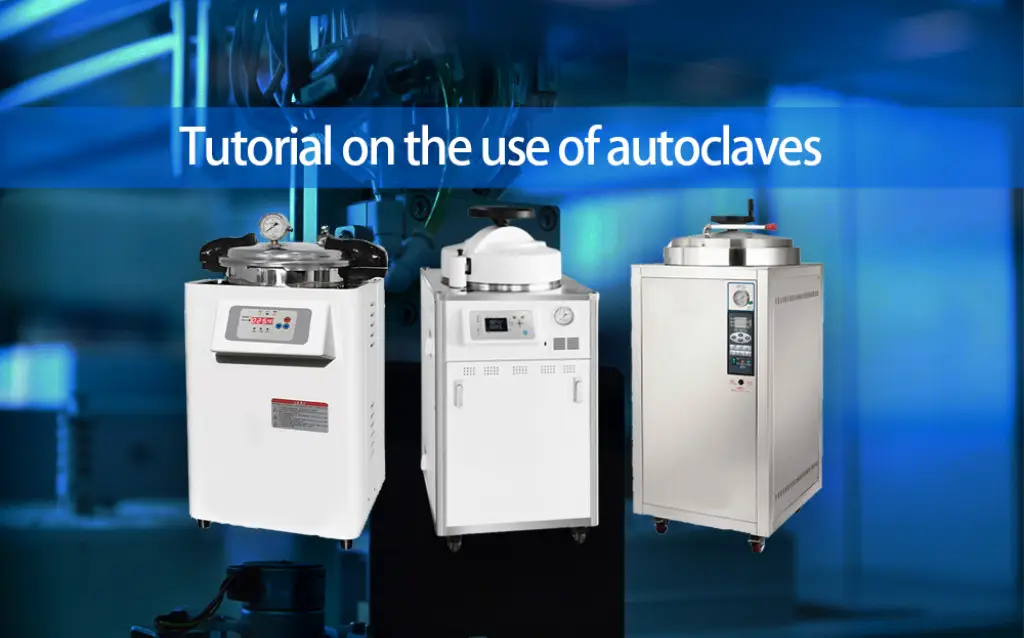
High-pressure steam sterilizer, commonly known as autoclave, which is mainly through the high temperature and high pressure of water vapour to achieve the effect of sterilisation of a common equipment, mainly divided into two types of portable and vertical high-pressure steam sterilizers, because of its high sterilization efficiency, strong penetration capacity and other advantages and is widely used in the biomedical industry, food industry and other fields.
II. Product Showcase
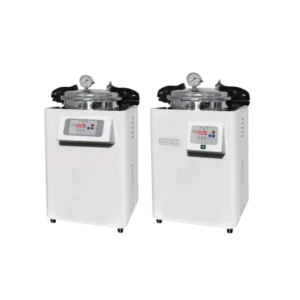
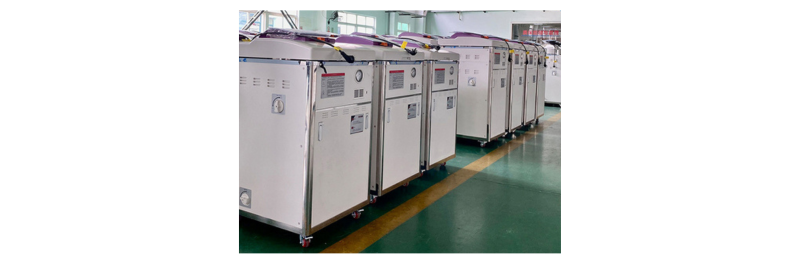
Portable Pressure Steam Sterilizer
AE-P series
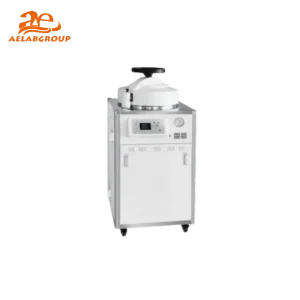
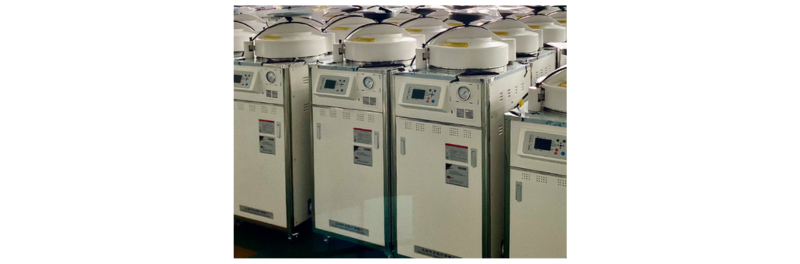
Vertical Pressure Steam Sterilizer
AE-V Series
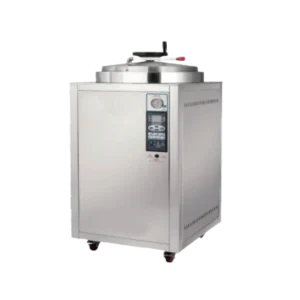
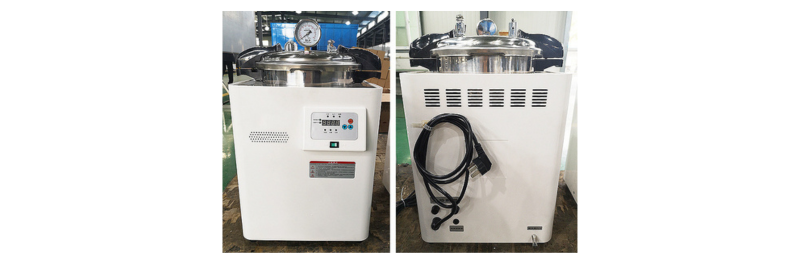
Vertical Pressure Steam Sterilizer
AE-V Series
III. Process of use
- Before use, observe whether the water level line of the exhaust bottle is between the highest water level line and the lowest water level line, if too much, you need to drain in a timely manner (Note:AE-VD30/VD50/VD75autoclave has an automatic exhaust function, if the drain can be directly to the sewer when the exhaust bottle of the water level line is higher than the highest water level line can be automatically discharged, convenient and quick);
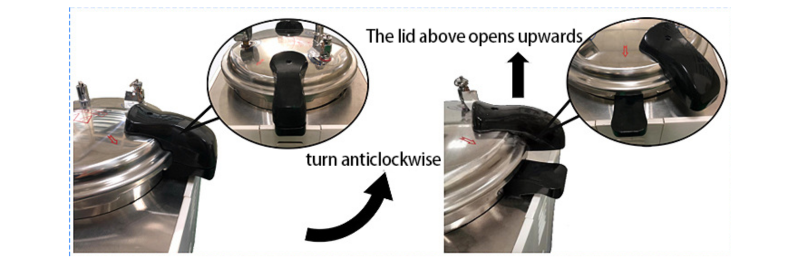
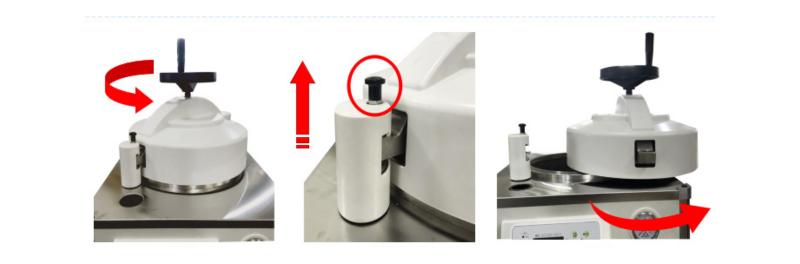
- Turn on the power supply, open the lid counterclockwise, black handle upward, hand-held lid right to open the lid, into the items to be high-pressure, close the lid, tighten the handwheel until the door has been closed to the indicator light can be;
- Open the lid of the water injection port, and open the side of the water valve, add pure water to the standard water level light can be; if you choose the automatic exhaust mode function, can be added to the high water level light just light can stop; add water after the completion of the lid of the water injection port, close the side of the water valve;
- Select the temperature, the small triangle pointed out that the temperature mode is the selected temperature, F key for automatic setting (click set, temperature: up and down keys for plus or minus, left and right keys for displacement; and then press the setup key that is the time to set up; and then press the setup can be saved);
- Reservation: set the start time of sterilisation, and then press start, start button flashes that is set successfully, can be set at the time of their own start (reservation function is more convenient, but generally not recommended, it is best to use directly more secure);
- Mode selection key can be switched back and forth on the regular and automatic exhaust (generally choose the automatic exhaust function);
- After the completion of the settings, press the start button, the sterilisation process is open, the start button light lock, the temperature reaches 50 ℃ or more, the interlocking light (Note: Once the procedure is started, it is not allowed to move the handwheel in the middle of the sterilisation, otherwise it will result in the start of the interlocking device, the end of the sterilisation can not be opened after the cover; in addition, the sterilization process can not be cut off, such as power outages will also be the start of the interlocking device);
- After the end of sterilisation, the panel will display the word ‘END’, and will show the temperature, the pressure gauge will show the current pressure, when the temperature is below 60 ℃, the pressure is zero before you can open the lid;
- Remove the items, turn off the power (Note: AE-VD30/VD50/VD75type autoclave steam steriliser has another exhaust valve, usually do not have to open, unless you select the conventional mode and the need for rapid pressure relief can be opened).
Ⅳ. Precautions
- High-pressure end of the need to wait for the pressure gauge pressure drops to zero, the temperature is lower than 60 ℃ before opening the lid;
- Autoclave steam steriliser water needs to be pure water, so as to avoid the formation of scale;
- The items should not be placed too much, to leave a certain gap to ensure that the sterilisation effect;
- Before use, we must pay attention to whether the water level line is in the prescribed range, but also pay attention to whether the water level line of the exhaust cylinder is in line with the norms;
- Autoclave steam steriliser needs to be cleaned regularly so as not to affect the sterilisation effect;
- Remember to loosen the cap when sterilising liquids;
- In order to ensure that the sterilisation effect as far as possible, it is recommended that the best will be sterilised contaminated waste and consumables sterilisation kettle dedicated to avoid mixing the two.