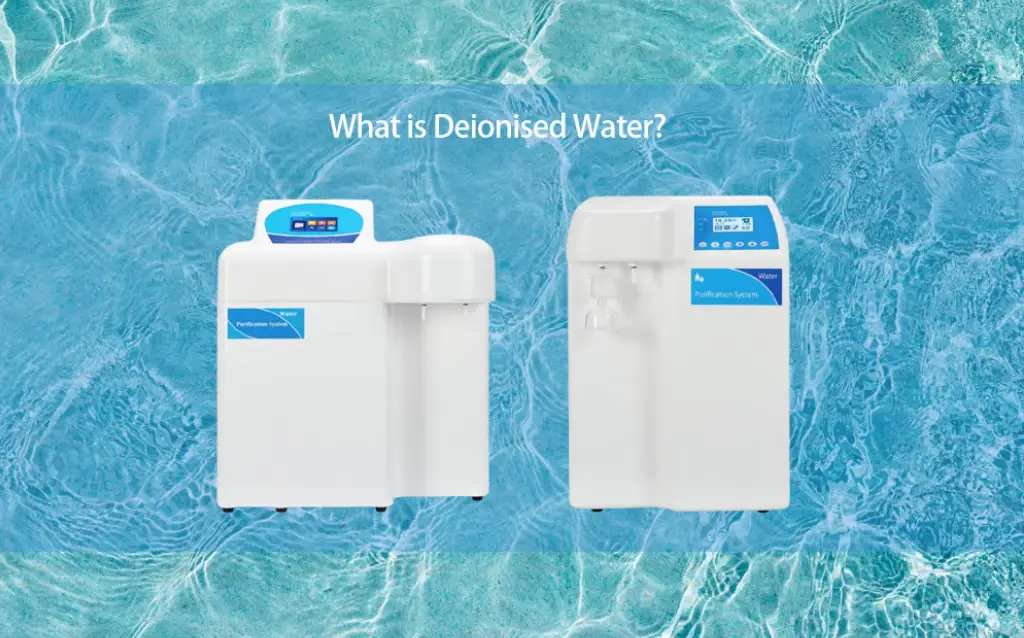
What is Deiozised Water?
Deionized water, also known as DI water or demineralized water, is water that has had most or all ions removed, including minerals like calcium, magnesium, and sodium. This purification process involves passing water through a system containing positively and negatively charged resin beads that attract and remove charged particles, resulting in chemically pure water. Due to its unique properties, deionised water is widely used across various industries and applications.
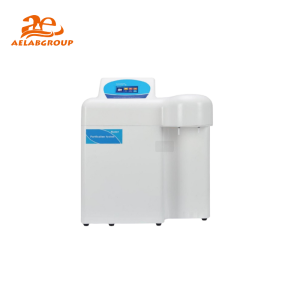
Deionized water system Classic-Q 15
How is Deionized Water Produced?
Several methods are employed to produce it, including:
- Ion Exchange (IX): Water passes through beds of resin beads that exchange ions from the water with hydrogen and hydroxyl ions, resulting in purified water.
- Electrodeionization (EDI): This process combines ion exchange with electricity to enhance purification, pushing ions through membranes to effectively remove contaminants.
- Reverse Osmosis (RO): Often used in conjunction with deionization, RO utilizes a semi-permeable membrane to remove impurities, further enhancing the water’s purity before additional deionization.
Applications of Deionized Water
General Lab Applications
Deionised water serves as an effective cleaning agent for laboratory equipment. Its high purity means that contaminants are more easily attracted to the water, and it leaves no residue, ensuring the reliability of experimental results.
Clinical Biochemistry
Ions in water can lead to numerous issues in biochemical applications, impacting the reliability of results and immunoassays. Using DI water eliminates these problems and allows for accurate data collection.
Electrochemistry
Thanks to its low conductivity, deionised water is ideal for electrochemical applications, preventing ions in the water from interfering with signals and ensuring precise measurements.
Cell Tissue Cultures
Maintaining low ion concentrations is crucial in cell culture techniques, as certain ions can be cytotoxic to various cell types. This minimizes contamination, enhancing the reliability and accuracy of results.
Immunochemistry
In immunochemistry, maintaining a consistent pH balance is vital. Ions can disrupt this balance, affecting processes like fluorescence and absorption. The use of deionised water helps avoid these disruptions.
Molecular Biology
Deionised water is perfect for molecular biology applications. Negatively charged molecules can mimic the charge of DNA, interfering with catalytic processes. In electrophoresis, the presence of ions can affect overall concentration levels and disrupt the pH balance.
Mass Spectrometry
In mass spectrometry, using pure water is essential to avoid interference with analyses and results. Deionised water is invaluable in these applications, as ions and other contaminants can affect sampling and standards.
Spectrophotometry
Spectrophotometry measures the amount of light absorbed by a solution to determine the concentration of a substance. Ions absorb light and can skew results; therefore, deionised water is used to prevent this interference.
Benefits of DI Water
Using deionised water in your applications provides several advantages:
- High Purity: DI water is virtually free of impurities.
- Low Conductivity: The removal of ions results in low conductivity.
- Non-Corrosive: It will not react with metals, protecting your equipment.
- Non-Contaminating: It can dilute solutions without introducing contaminants.
- Easy to Produce: The production process for deionised water is straightforward and efficient.
Is Deionized Water Safe to Drink?
You can drink deionised water safely, but it might not be the best choice for regular consumption. It lacks essential minerals like calcium and magnesium, tastes flat, and may still contain uncharged contaminants, such as bacteria or viruses. Therefore, it is better to use a home filtration system that retains beneficial minerals for drinking water.
Why Choose Our product?
As a supplier of deionised water machines, we are committed to providing high-quality systems designed to meet your purification needs. Our machines offer:
- Superior Purity: Achieve high levels of purity for your applications.
- Low Maintenance: Designed for ease of use and longevity.
- Versatility: Suitable for various industries, from laboratories to manufacturing.
Investing in our deionised water machines ensures reliable access to pure water, enhancing the quality and safety of your products. Choose us for your deionised water solutions and gain a competitive edge in your industry.
deionized water formula
Deionized water (DI water) is water that has had its ions removed, typically using ion exchange resins. Its chemical formula is the same as regular water, H₂O, since the process of deionization removes dissolved salts and other charged particles but does not change the molecular structure of water itself.
No, they are not the same, though both are types of purified water:
- Deionized Water (DI Water): Deionization removes ions (charged particles) from the water using ion exchange resins, which target impurities like calcium, magnesium, sodium, chloride, and sulfate. However, it may not remove organic compounds, bacteria, or viruses effectively.
- Distilled Water: Distillation involves boiling water and then condensing the steam back into a liquid, which removes a broader range of impurities, including ions, organic compounds, and microorganisms. This makes distilled water generally purer, but the process is more energy-intensive.
In summary, deionized water focuses on removing ions, while distilled water removes a wider array of impurities.