Automatic Melting Point Meters: Enhancing Accuracy and Efficiency in Complex Sample Analysis
Automatic melting point meters are indispensable tools for accurate and efficient analysis of complex materials. Their advanced features, such as customizable heating rates, video technology, and compliance with international standards, make them essential for professional laboratory use.
Importance of Melting Point Determination
Melting point determination is essential for analyzing complex samples, particularly in industries like pharmaceuticals, chemicals, and food production. Traditional methods often struggle with complex samples, but automatic melting point meters provide precise and efficient results by combining advanced features such as high-resolution displays, video observation, and PID temperature control.
Key Features
Automatic melting point meters, like those from AELAB, offer several advanced features:
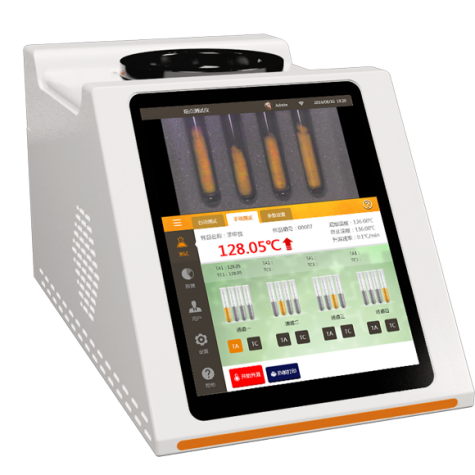
- High-Resolution Displays: Clear visualization of phase transitions, with colorful touch screens DMP-800 DMP-600 that enhance user experience.

- Video Recording: Integration of video technology allows real-time observation and replay of the melting process.
- Customizable Heating Rates: Adjustable temperature increase speed from 0.1 to 10°C/min, accommodating a wide range of sample types.
- Sample Capacity: Ability to test up to 3 samples at once, with temperature ranges up to 400°C.
- Microscope Lenses: High-resolution lenses ensure clear observation during the melting process.
- Safety Features: Built-in cooling fans and fully closed furnace bodies ensure user safety during testing.
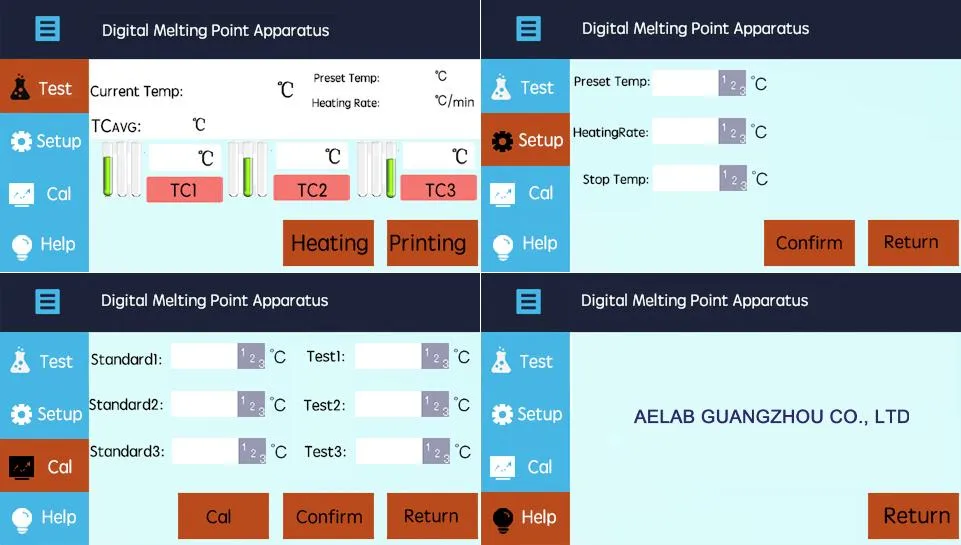
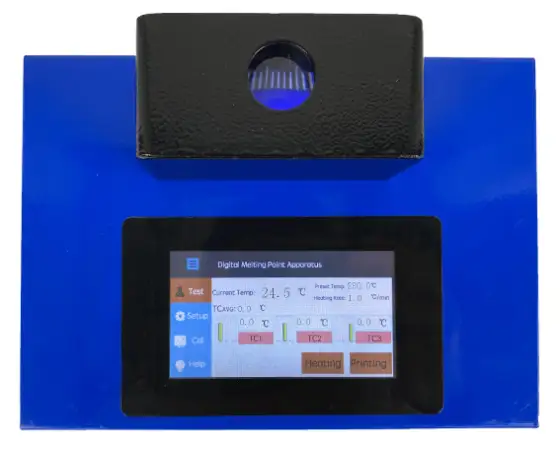
Here is a comparison of the technical specifications for the DMP-100 and DMP-200 models:
| Specification | DMP-100 | DMP-200 |
|---|---|---|
| Temperature Range | Room Temperature to 400℃ | Room Temperature to 350℃ |
| Cooling Function | Built-in cooling fan | No |
| PC Software | Included PC software | No |
| Resolution | 0.1℃ | 0.1℃ |
| Temperature Increase Speed | 0.1℃-10℃ (Infinitely adjustable, 100 temperature points) | Same |
| Temperature Control Method | PID control, fully closed furnace body | Same |
| Accuracy | ±0.4℃ (below 250℃), ±0.7℃ (above 250℃) | Same |
| Repeatability | ±0.3℃ at 0.1℃/min | Same |
| Display | FTF High Solution Color Touch Screen | Same |
| Output | RS232 interface | Same |
| Sample Tube Size | Outer diameter: φ1.6mm, Inner diameter: φ1.2mm | Same |
| Voltage | 100V-240V, 50Hz-60Hz | Same |
| Power | 100W | Same |
| Size | 250mm x 250mm x 150mm | Same |
| Weight | 1.5kg | Same |
Applications
These devices are widely used across industries like pharmaceuticals, chemicals, and food production. They are essential for research and quality control, especially in determining material purity and testing both organic and inorganic substances.
Addressing Challenges in Complex Samples
Complex samples often present unique challenges, such as broad melting ranges and impurities. Automatic melting point meters address these challenges by:
- Providing precise heating rates to manage complex melting transitions.
- Reducing human error through automated data analysis and video monitoring, offering both automatic and manual testing modes.

Learn more:Top 10 Ultra-Precise Instruments for Advanced Analytical Labs
Standards and Calibration
Automatic melting point meters adhere to international standards like USP and European Pharmacopeia. Models such as AELAB’s DMP series ensure compliance with FDA and GLP standards, with features like high storage capacity (up to 128GB) and multiple data interfaces (USB, RS232, Wi-Fi). Regular calibration ensures precision and guarantees reliable, reproducible results.
Technical Specifications
The AELAB melting point devices feature temperature ranges from room temperature to 400°C, with a resolution of 0.1°C, ensuring high accuracy and repeatability. Power consumption is around 100W, and the voltage range is 100V-240V, making them suitable for global usage. Devices also offer RS232 output interfaces for easy data transfer.