

Measuring the Concentration of Food Additives with UV-VIS Spectrophotometry
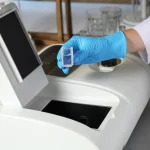
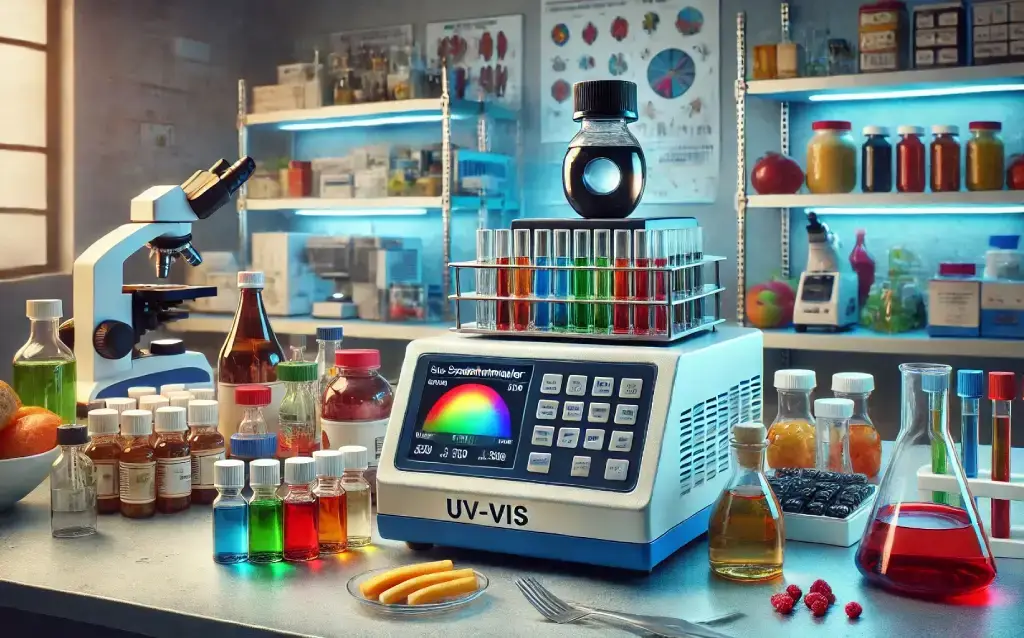
UV-VIS Spectrophotometry for Food Additive Measurement has become a crucial analytical technique in the food industry. This method ensures the precise measurement of food additives, preservatives, and nutrients, guaranteeing safety and compliance with regulatory standards. Widely used for food analysis, it supports both quality control and safety for consumers.
Importance of UV-VIS Spectrophotometry in Food Testing
UV-VIS spectrophotometry is widely used due to its ability to detect and quantify a wide range of organic and inorganic compounds that absorb ultraviolet and visible light. This technique ensures both high accuracy and efficiency. It enables food manufacturers to perform rapid, cost-effective testing, which is essential for maintaining food quality and meeting regulatory standards. For example, UV-VIS spectrophotometry can test food colorants, preservatives, contaminants, and essential nutrients in a wide variety of food and beverage products.

Applications of UV-VIS Spectrophotometry in Food Additive Analysis
Quantification of Additives and Preservatives
Food additives and preservatives, such as sodium benzoate and potassium sorbate, show distinct absorbance peaks in the UV spectrum, making them measurable by UV-VIS spectrophotometry. By analyzing specific wavelengths, food scientists ensure that these substances stay within safe limits. This ensures product safety and fosters consumer trust.

Detection of Food Contaminants
UV-VIS spectrophotometry can detect contaminants like heavy metals and pesticides. This helps ensure that food products meet food safety regulations, which is especially critical for products requiring strict quality control, such as dairy, infant formulas, and bottled beverages.

Nutrient and Color Analysis
This method also quantifies nutritional components such as vitamins and proteins. Additionally, it analyzes color stability in products like juices and sauces. By monitoring these parameters, manufacturers can maintain consistent quality during food production.
Recommended Instruments for Food Testing
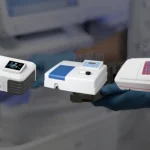
To meet the advanced needs of food testing labs, selecting the right UV-VIS spectrophotometer is essential. Instruments like the F96Pro offer high precision and efficient data output options tailored for food analysis. This device features customizable wavelength settings and robust data storage, ensuring consistent and accurate measurements for both routine testing and detailed analysis.
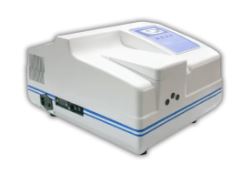
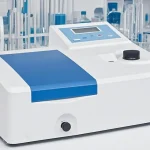
Another highly effective option is the AE-S70 UV-VIS Spectrophotometer, which provides enhanced sensitivity for low-concentration analyses in food testing. With its single beam spectrophotometer design and stable optics, this instrument offers a UV range from 190 to 1100 nm and a VIS range from 320 to 1100 nm, ensuring high wavelength accuracy and resolution. Its automated calibration feature and compatibility with various software solutions streamline the testing process, making it ideal for laboratories focusing on high-throughput analysis. The device’s robust performance and precise data output also make it suitable for general quantitative analysis, offering an efficient and reliable tool for food safety and quality control.

AE-S70 UV-VIS Spectrophotometer
Optimizing Food Safety: AELab Products for Accurate Food Additive Testing
For accurate food additive measurement, AELab offers specialized UV-VIS spectrophotometers that enhance food safety analysis:
- F96Pro The F96 Pro is optimized for high-precision measurements. Its customizable wavelength settings and robust data storage make it ideal for both detailed analysis and routine quality control, ensuring reliable results in food testing labs.
- AE-S70 UV-VIS Spectrophotometer, The AE-S70 offers high-precision absorbance measurements with a wavelength range of 190-1100 nm, ideal for accurate food additive analysis. With robust wavelength and photometric accuracy, along with a user-friendly interface, it ensures consistent, reliable results for routine quality control and detailed assessments in food testing labs.
UV-VIS Spectrophotometry for Food Additive Measurement
UV-VIS spectrophotometry is a critical tool in modern food testing. It provides reliable and cost-effective solutions for measuring additives, contaminants, and nutrients. As food safety regulations tighten, advanced spectrophotometers will help manufacturers ensure compliance, maintain quality, and ultimately protect consumer health and trust.