

Gloss Meters: Digital or Analog? Which One Offers Better Accuracy?
In today’s manufacturing and quality control environments, gloss meters play a crucial role in evaluating the visual appeal and quality of surfaces. Whether you’re in the automotive, packaging, or cosmetics industry, choosing the right gloss meter is essential. But with many options available, you may wonder: digital or analog gloss meters? Which one is better for your needs? This article will break down the advantages and limitations of each, helping you make an informed decision.
What is a Gloss Meter?
A gloss meter is an instrument designed to measure the gloss or reflectivity of a surface. It helps determine the surface quality by measuring how much light is reflected from the material. The device provides readings in Gloss Units (GU), with 0 GU representing a completely matte surface (no reflection) and 2000 GU signifying a perfectly glossy or mirror-like finish.
Digital vs. Analog Gloss Meters: Key Differences
1. Measurement Methodology
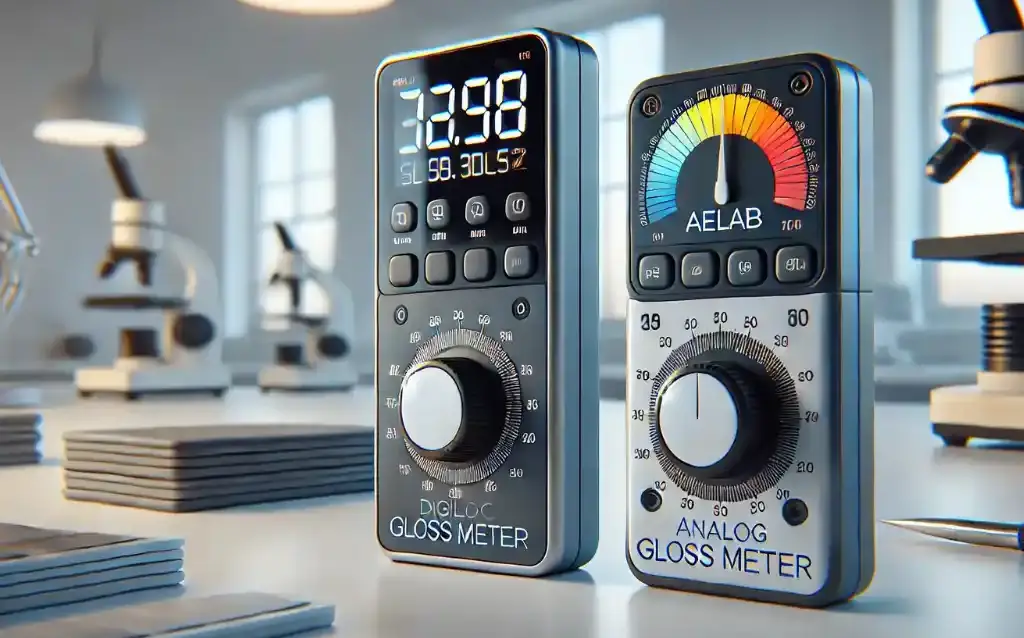
- Digital Gloss Meters: Digital meters use a photodetector to measure the amount of light reflected from the surface and display the result as a numerical reading. These meters often feature high precision and are capable of offering multiple measurement angles, such as 20°, 60°, and 85°, which can improve accuracy based on the type of gloss being measured.
- Analog Gloss Meters: Analog meters, on the other hand, use a moving needle to indicate the gloss level on a calibrated scale. The needle fluctuates based on the light reflected from the surface, giving a visual representation of the gloss measurement. While they offer a continuous scale, analog meters can be challenging to read accurately, especially in low-gloss environments.
2. Precision and Readability
- Digital Meters: Digital gloss meters are known for their precision, providing exact readings with decimal values. They often allow for higher repeatability, especially in professional environments where consistency is key. Many digital meters also include features like averaging, where the meter will display the mean gloss reading over a set period, reducing human error and offering more reliable results.
- Analog Meters: Analog meters typically offer less precision, displaying readings in whole Gloss Units (GU) without decimal places. While they can provide a general sense of the gloss level, interpreting minor fluctuations or small variations can be difficult, particularly on high-gloss surfaces. However, they offer the advantage of real-time feedback, allowing the user to observe changes as the needle moves.
3. Ease of Use
- Digital Meters: Digital gloss meters are user-friendly with intuitive displays and additional features such as auto-calibration, data logging, and multiple measurement modes (e.g., fast or slow modes). These meters are ideal for users who need quick, accurate results without manual calculation.
- Analog Meters: Analog gloss meters require more manual effort in reading the results, particularly in fluctuating measurements. While they are simple to use, they require a bit more focus and patience, especially when trying to determine subtle differences in gloss level. Additionally, some users may find it difficult to consistently read the needle position in real-time.
4. Durability and Reliability
- Digital Meters: Digital meters are generally built with advanced electronics that make them durable and reliable for continuous usage in professional settings. However, their battery life can be a consideration, and they may require periodic calibration to maintain accurate results.
- Analog Meters: Analog meters tend to be more mechanically durable since they have fewer electronic components. However, their calibration may drift over time, requiring manual adjustments to maintain accuracy. Analog meters are less prone to electronic malfunctions but may not withstand harsh environments as well as digital meters.
Which Gloss Meter Should You Choose?
If you are leaning towards a digital gloss meter, there are several excellent options available in the market. Among them, AELAB stands out for its precise, versatile, and reliable gloss measurement solutions.
AELAB Gloss Meters: Precision and Versatility for Every Need
For those seeking high-precision and versatile gloss meters, AELAB offers a range of models designed for various applications. Below are five key products from AELAB that ensure reliable and accurate gloss measurements:

These products and more, by AELAB combine precision, ease of use, and durability, providing industries with reliable gloss measurement solutions.
Conclusion: Choosing the Right Gloss Meter for Your Needs
When deciding between a digital or analog gloss meter, it ultimately depends on your specific application and preferences. If you need high accuracy, reliability, and modern features such as averaging and multiple measurement angles, a digital gloss meter will be your best option. On the other hand, if you prefer a traditional, analog approach with continuous feedback, an analog gloss meter could suit your needs, especially in situations where you need to visually monitor fluctuations in gloss levels.
Choosing the right gloss meter will help ensure that your products maintain the desired visual quality and meet industry standards. With options from AELAB, both digital and analog enthusiasts can find the perfect tool for their gloss measurement needs, ensuring optimal results every time.

Read more:What is a Melting Point Device?