


What Are the Density Measurement Instruments in Labs?
Density measurement is a crucial physical property used in various scientific and industrial applications. Accurately measuring the density of liquids, solids, and gases is essential in fields like chemistry, material science, food processing, and pharmaceuticals. Several instruments are used in laboratories for density measurement. These density measurement instruments provide precise and reliable results. Here’s an overview of the most commonly used density measurement tools in labs.
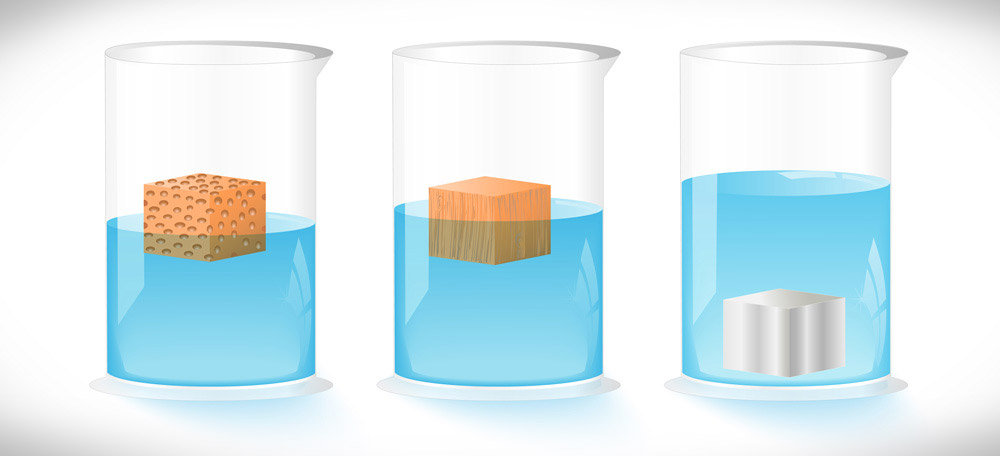
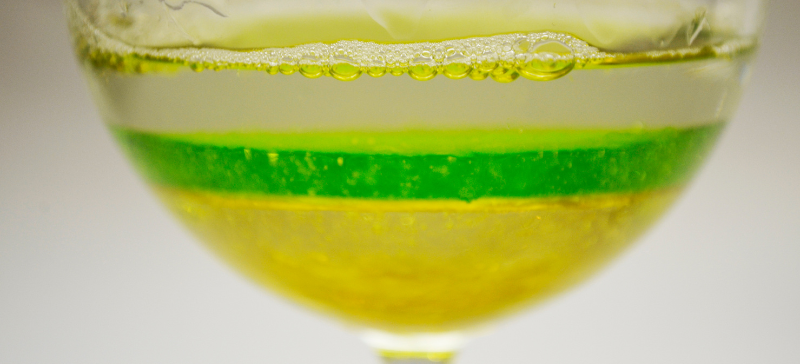
Figure 1: Behavior of Objects with Different Densities in Liquids
This figure illustrates how objects with different densities behave in a liquid. Objects with lower density than the liquid float, while those with higher density sink. This phenomenon follows Archimedes’ Principle, which states that a submerged object experiences an upward buoyant force equal to the weight of the liquid it displaces.
Hydrometers
A hydrometer is one of the oldest and simplest instruments used to measure the density of liquids. It works on Archimedes’ principle, where an object submerged in a liquid experiences an upward buoyant force equal to the weight of the displaced liquid. The hydrometer consists of a glass body with a bulb and a cylindrical stem. When placed in a liquid, it floats, and the scale on the stem indicates the density of the sample.
Hydrometers are affordable and easy to use but require careful temperature control and a relatively large sample volume. They are often used to measure the density of liquids like milk, alcohol, and sugar solutions.
Pycnometers
A pycnometer is a precise instrument used to measure the density of liquids or powders. It consists of a glass flask with a stopper and is typically used to determine the density of non-volatile liquids. To use a pycnometer, the operator first weighs the empty flask. Next, the operator fills the flask with a sample and records the new weight. The density is then calculated using the following formula:
Density=Weight of sample Volume of flask\text{Density} = \frac{\text{Weight of sample}}{\text{Volume of flask}}
Pycnometers provide accurate results but require careful handling, temperature control, and skilled operators. They are commonly used in laboratories for measuring the density of liquids, including oils, fuels, and chemicals.
Hydrostatic Balances
A hydrostatic balance is an advanced instrument based on Archimedes’ principle. It measures the density of solid objects by comparing their weight in air and in a liquid, typically water. The object is suspended on a balance, and the apparent weight loss when submerged in the liquid is used to calculate its volume.
Hydrostatic balances are highly precise and are commonly used in research laboratories and industries where accurate density measurements are essential. However, these instruments are expensive, time-consuming, and require skilled operators for proper use.
Digital Density Meters
The digital density meter is a modern and highly efficient instrument that uses the oscillating U-tube method to measure the density of liquids and gases. In this method, a U-shaped tube is excited to oscillate at a certain frequency, which changes based on the density of the sample inside. By measuring the frequency of oscillation, the instrument can calculate the density of the sample.
Density measurement instruments play a crucial role in accurately measuring the density of liquids, solids, and gases, which is essential for applications across various industries, including chemistry, material science, and pharmaceuticals.
They require only small sample volumes (1–2 mL) and offer excellent temperature control and viscosity correction. Modern versions, such as those based on the Pulsed Excitation Method, provide even more accurate results, especially for samples with high viscosity or fluctuating temperatures.
Viscosity and Density Meters
Some modern density meters, such as those used in pharmaceutical and chemical laboratories, combine viscosity and density measurements. These instruments are ideal for high-precision applications where users need to monitor both properties simultaneously. By using oscillation principles and advanced sensors, they offer highly accurate readings even for complex fluid systems, including those with high viscosity.
Importance of Accurate Density Measurement
Accurate density measurement is critical in many laboratory processes. For example:
- In pharmaceuticals, knowing the density of a liquid helps in determining the correct dosage and consistency.
- In food processing, density helps in ensuring uniformity and quality.
- In material science, the density of materials affects their properties and performance.
Factors to Consider in Density Measurement
When choosing a density measurement instrument, you should consider several factors:
Sample Type
Different instruments are more suited for liquids, solids, or powders. Choose the instrument based on the physical state of your sample.
Precision
If you require high precision, digital density meters or hydrostatic balances are the best choices.
Temperature Control
Temperature can significantly affect density. Instruments with built-in temperature regulation or compensation are ideal for accurate measurements.
Sample Volume
Some instruments require larger sample volumes, while others need only a few milliliters.