

What Is Chromatography? Principle and Application
Chemists use chromatography techniques as vital methods to separate and analyze complex mixtures in chemical analysis. These techniques depend on the different affinities of the components in a mixture towards a stationary phase and a mobile phase. We will explore various chromatography techniques, their principles, applications, and how modern scientific fields utilize them in this article.
What is Chromatography?
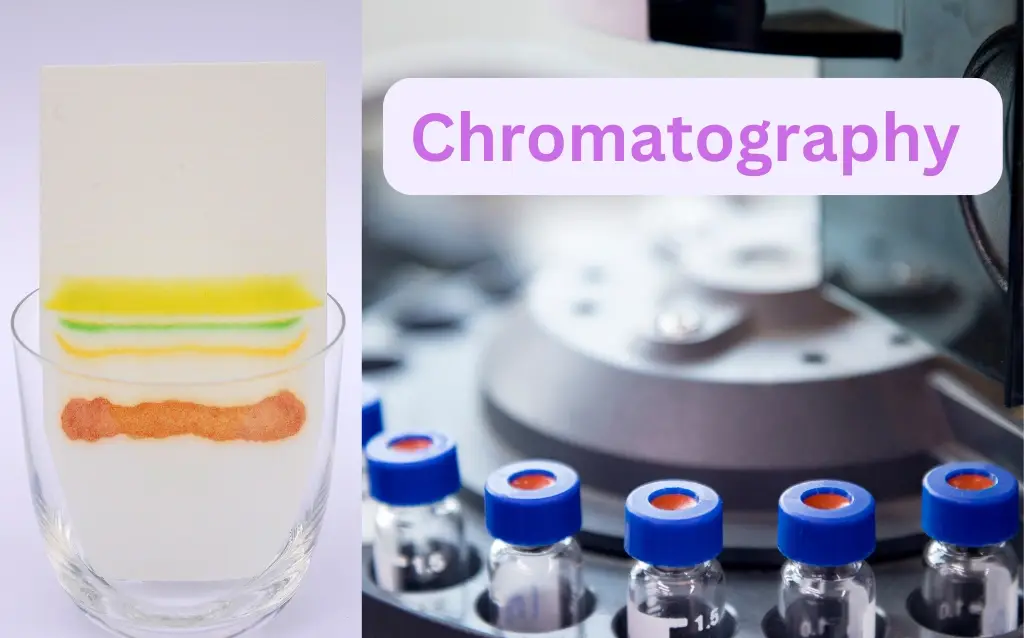
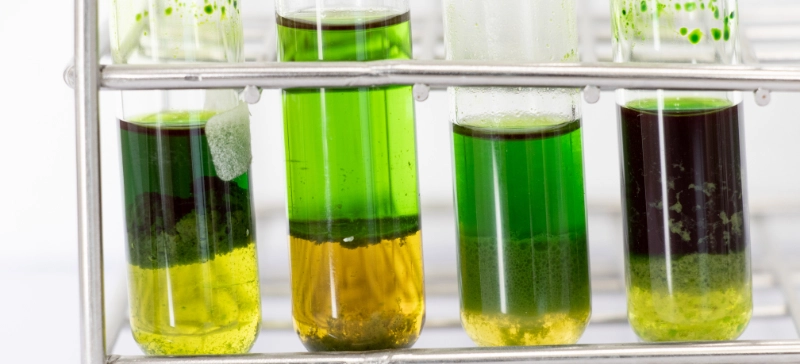
Chromatography refers to a family of laboratory techniques used for separating mixtures. The fundamental principle behind these techniques is the interaction between the components of the mixture and two phases: a stationary phase (typically solid or liquid) and a mobile phase (liquid or gas). As the mixture moves through the stationary phase, the components travel at different speeds, causing them to separate.
Learn more : Gas Chromatography: Techniques, Applications, and Key Concepts
Types of Chromatography Techniques
There are various types , each suited to different applications. Some of the most commonly used techniques include:
Thin Layer Chromatography (TLC)
A simple and fast technique used to separate small amounts of compounds. The stationary phase is typically silica or alumina, and the mobile phase is usually a liquid solvent.
High-Performance Liquid Chromatography (HPLC)
A powerful technique for the separation of liquid mixtures under high pressure. Researchers widely use it in chemical, pharmaceutical, and environmental analysis.
Gas Chromatography (GC)
This technique is used for separating and analyzing compounds that can be vaporized. It is commonly used for volatile compounds.
Ion-Exchange Chromatography
Used to separate ions and polar molecules based on their charge. It is particularly useful in biochemistry for purifying proteins and nucleic acids.
Size-Exclusion Chromatography (SEC)
Separates molecules based on size. Larger molecules pass through the column faster than smaller molecules, making it ideal for purifying proteins and polymers.
Principles Behind Chromatography Techniques
The working principle of chromatography techniques revolves around differential interaction with the stationary phase .The stationary phase attracts the components in the sample mixture with varying degrees of affinity, causing them to move at different speeds when the mobile phase applies.
Adsorption
Molecules adhere to the surface of the stationary phase.
Partitioning
Molecules separate based on their solubility in the mobile phase versus the stationary phase.
Size Exclusion
Molecules separate based on their size, with smaller molecules moving slower than larger molecules.
Ion Exchange
Scientists separate components based on their charge, where oppositely charged ions bind to the stationary phase.

Learn more : Gas Chromatography vs Liquid Chromatography: Comparative Analysis and Use Cases
Applications of Chromatography Techniques
Chemical Analysis
Chromatography is used to analyze the composition of complex mixtures, such as those found in food, pharmaceuticals, and environmental studies.
Purification
It plays a crucial role in purifying compounds, particularly in biochemistry for isolating proteins, nucleic acids, and other biomolecules.
Quality Control: This method is commonly employed in the pharmaceutical industry to verify the purity and quality of drugs.
Forensic Science
It is used to analyze substances found at crime scenes, such as drugs and toxins.
Environmental Monitoring
Chromatography is effective for detecting pollutants and contaminants in air, water, and soil.
Benefits of Chromatography Techniques
High Sensitivity and Accuracy
They can separate even the smallest components in a mixture, ensuring accurate results.
Versatility
Different types of chromatography techniques can apply to a wide range of sample types.
Reproducibility
Chromatography methods produce consistent and reliable results, making them ideal for both research and industrial applications.
All-in-One Smart Isocratic System High Performance Liquid Chromatography LC-80

High Performance Liquid Chromatography K2025

Conclusion
Chromatography techniques play an essential role in various fields, including chemistry, biology, and environmental science. Whether you’re analyzing complex mixtures or purifying biomolecules, chromatography provides reliable, efficient, and precise solutions. With continued advancements, chromatography techniques are becoming even more effective, making them indispensable tools in modern scientific research.