

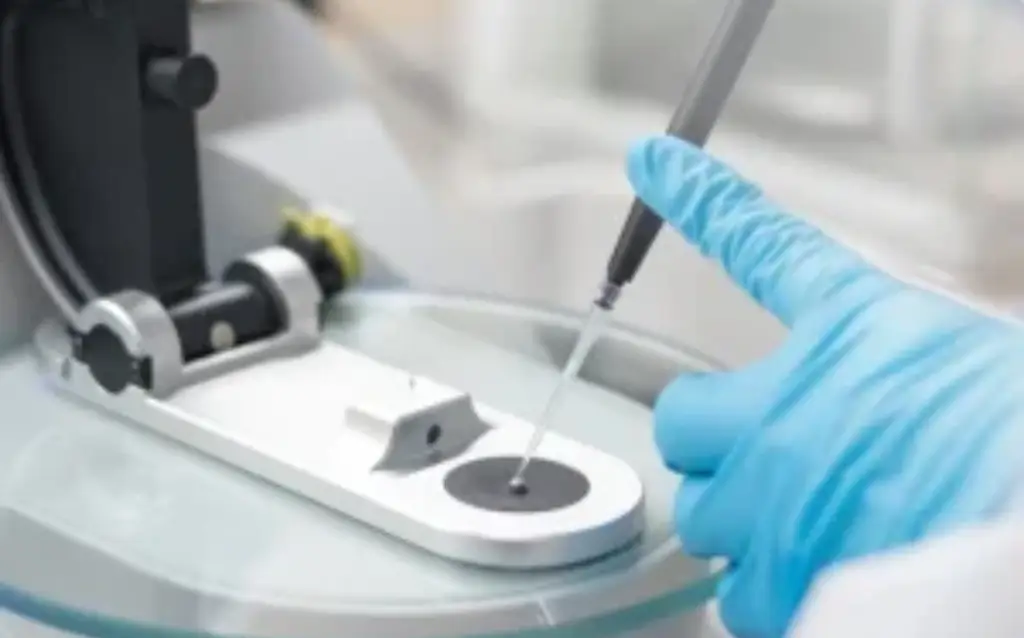
1. Introduction to Fluorometers
What is a Fluorometer?
A fluorometer is an instrument used to measure the intensity and wavelength of fluorescent light emitted from a sample after it has been excited by light of a specific wavelength. This tool is critical in various scientific fields such as molecular biology, environmental monitoring, and pharmaceuticals.

Learn more : Biological Safety Cabinets: Types, Functions, and Key Considerations for Buyers
The Role of Fluorometers in Scientific Research
Fluorometers play a pivotal role in research by enabling the quantification and analysis of molecular interactions, protein expressions, nucleic acids, and environmental contaminants. Their high sensitivity and specificity make them indispensable for detecting low levels of analytes in complex samples.
Principles Behind Fluorometry: Understanding Fluorescence
Fluorescence occurs when a molecule absorbs light at one wavelength and re-emits it at a longer wavelength. Fluorometers measure this emitted light to gain insights into molecular behavior, structural changes, and interactions in various research applications.
2. Types of Fluorometers
Benchtop Fluorometers: High Precision for Lab Work
Benchtop fluorometers provide high precision for controlled laboratory experiments. They are ideal for quantitative analysis, offering reliable data for routine laboratory work, such as DNA, RNA, and protein quantification.
Portable Fluorometers: Flexibility for Field Research
Portable fluorometers offer flexibility, allowing scientists to perform fluorescence measurements outside the lab. These instruments are typically lightweight and easy to use, making them suitable for environmental studies and field-based research.
Handheld Fluorometers: Quick and Efficient Measurements
Handheld fluorometers are compact and user-friendly. They enable rapid and accurate measurements, particularly for quick field testing or when working with small sample volumes.
Qubit Fluorometer vs. Other Models: Key Differences
While some fluorometers are designed for general laboratory use, the Qubit fluorometer, for example, is specialized for DNA, RNA, and protein quantification. Its unique features, such as minimizing contamination effects, distinguish it from other models.
3. How Fluorometer Work
The Physics of Fluorescence: Excitation and Emission
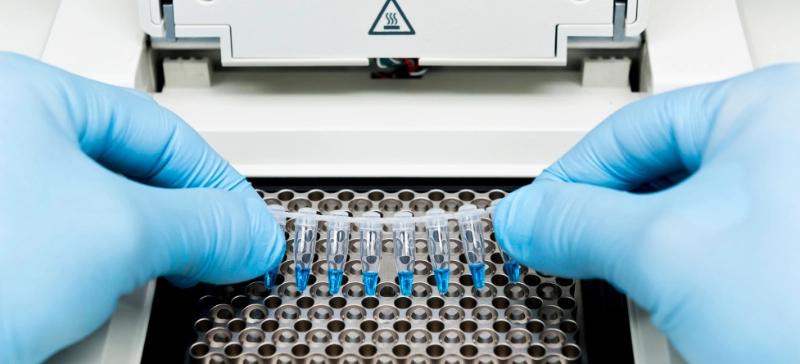
Fluorometers work by exposing a sample to light of a specific wavelength, exciting the molecules in the sample. The molecules then emit light at a longer wavelength, which the fluorometer detects. The intensity and wavelength of this emission provide valuable information about the sample’s properties.
Detectors and Filters in Fluorometers: Ensuring Accurate Measurements
Fluorometers utilize photodetectors to measure the emitted light. Filters or monochromators are used to isolate the specific emission wavelength of interest, ensuring that only the desired fluorescence is detected.
Role of Monochromators and Filters in Signal Precision
Monochromators and optical filters are essential in fluorometers for controlling the wavelength of light that passes through the sample. These components ensure the accuracy and specificity of fluorescence measurements by minimizing interference from other wavelengths.
Fluorescence Lifetime and Sensitivity: Understanding Measurement Techniques
Fluorometers also measure the fluorescence lifetime, which refers to the time the molecule stays in an excited state before returning to the ground state. This can provide insights into molecular environments and interactions. Sensitivity, achieved through advanced detectors, is key to measuring low-intensity fluorescence from dilute samples.
4. Applications of Fluorometers
In Molecular Biology: DNA, RNA, and Protein Quantification
Fluorometers widely quantify nucleic acids and proteins in biological samples. By measuring the fluorescence emitted by specific dyes, fluorometers enable precise and sensitive analysis of DNA, RNA, and protein concentrations.
In Environmental Studies: Monitoring Water Quality and Contaminants
Fluorometers are commonly used in environmental studies for water quality monitoring. They can detect pollutants and toxins, such as heavy metals or oils, by measuring the fluorescent signals they emit when excited by certain wavelengths.
In Pharmaceuticals: Drug Screening and Quality Control
In pharmaceutical research, fluorometers are used for drug screening, ensuring that new compounds interact correctly with biological targets. Fluorometric methods also play a critical role in quality control by detecting impurities or contaminants in drug products.
In Medical Research: Diagnostics and Cellular Analysis
Fluorometers are employed in medical diagnostics to analyze cell viability, protein expression, and other biomarkers. These tools are crucial for understanding disease mechanisms, drug responses, and cellular behavior in vitro.
In Industrial Applications: Quality Control and Manufacturing
Fluorometers are integrated into industrial quality control systems, where they are used to monitor product consistency, check for contaminants, and ensure high-quality manufacturing standards.
In Education and Research: Laboratory Use for Basic Science
Fluorometers provide an essential tool for scientific education and basic research. They are often used in laboratories for teaching students the principles of fluorescence and to demonstrate a variety of molecular biology techniques.
Learn more : Muffle Furnace: Applications, Features, Benefits, and How to Choose the Right One for Laboratory and Industrial Use
5. Understanding the Key Features of Fluorometers
Excitation Channels and Emission Spectra: Customizing Your Measurements
Fluorometers allow users to select different excitation and emission wavelengths based on the specific properties of the analytes. This flexibility enables precise customization of experiments to meet the requirements of diverse research applications.
Sensitivity and Specificity: How Fluorometers Achieve Accurate Results
Fluorometers achieve high sensitivity by minimizing background noise and maximizing signal detection. Their specificity is enhanced by using tailored filters and detectors to focus on the emission wavelengths relevant to the analyte of interest.
Integration with Microplate Readers: Expanding Your Research Capabilities
Many fluorometers can be integrated with microplate readers, enabling high-throughput screening and automated data collection. This feature is especially useful in large-scale research projects and pharmaceutical testing.
6. Selecting the Right Fluorometer for Your Research Needs
Key Factors to Consider: Sensitivity, Versatility, and Sample Size
When choosing a fluorometer, researchers must consider factors such as sensitivity (to detect low levels of fluorescence), versatility (to handle different sample types), and sample size (for large-scale analysis or small sample volumes).
Choosing Between Single-Mode and Multi-Mode Fluorometers
Single-mode fluorometers are ideal for specific applications, while multi-mode fluorometers offer greater versatility by enabling a range of assays, such as absorbance, fluorescence, and luminescence, all in one device.
Budget Considerations: Affordable vs. Premium Options
While premium fluorometers offer advanced features and greater accuracy, affordable options can still provide excellent performance for routine applications. Budget-conscious researchers should balance cost with the specific capabilities required for their experiments.
7. Fluorometer Calibration and Maintenance
Proper Calibration Techniques for Accurate Results
To ensure accuracy, researchers must calibrate fluorometers using known standards.. Regular calibration checks prevent measurement drift and ensure the reliability of results over time.
Maintaining Your Fluorometer: Cleaning and Troubleshooting Tips
Proper maintenance, including cleaning the sample compartment and ensuring that all optical components are free from dust, is crucial for optimal performance. Troubleshooting common issues, such as inconsistent readings, is part of regular fluorometer care.
Understanding Calibration Curves and Standard Graphs in Quantification
Calibration curves, based on known concentrations of analytes, are used to quantify unknown samples. These curves ensure that fluorometers provide accurate and reproducible results by comparing the fluorescence intensity of the sample to a standard.
8.Fluorometers by Aelab: High-Precision Instruments for Accurate Quantification
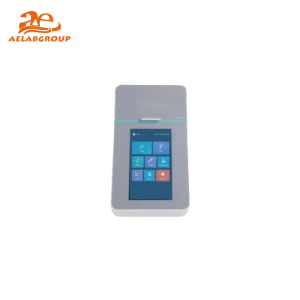
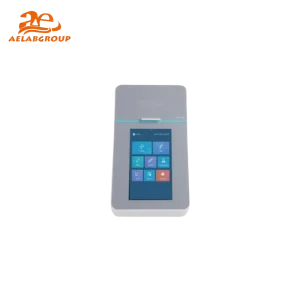
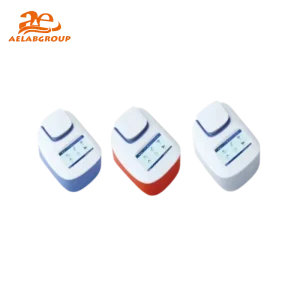
Fluo-200: Sensitive and Efficient Quantification
The Fluo-200 fluorometer provides high-sensitivity analysis of DNA, RNA, and proteins, offering rapid and accurate quantification with a low detection limit for researchers.
Fluo-800: Enhanced Throughput with Simultaneous Sample Detection
The Fluo-800 model improves efficiency by enabling simultaneous detection of up to 8 samples, making it ideal for high-throughput research and precise analysis of nucleic acids and proteins.
FD-100: Fluorescent Immunoassay Technology for Low-Concentration Detection
The FD-100 utilizes fluorescent immunoassay technology, providing high sensitivity and specificity for detecting low-concentration bioactive compounds, including DNA, RNA, proteins, and hormones.
Fluo-100: Dual-Channel Measurement for Versatile Applications
The dual channels of the Fluo-100 fluorometer enable researchers to quickly and accurately quantify DNA, RNA, and proteins, which is essential for various research applications requiring high sensitivity and precision.

9. FAQs about Fluorometers
What is the Difference Between a Fluorometer and a Spectrophotometer?
While both instruments measure light, a fluorometer detects emitted fluorescence, whereas a spectrophotometer measures the intensity of transmitted light.
How Does a Fluorometer Measure Fluorescence?
A fluorometer measures fluorescence by exposing a sample to a specific excitation wavelength and detecting the light emitted at a longer wavelength.
What Are the Advantages of Using Fluorometers in Research?
Fluorometers offer high sensitivity, specificity, and versatility, making them invaluable tools in molecular biology, environmental science, and medical diagnostics.
10. Conclusion
The Future of Fluorometry: New Trends and Technological Advances
Advances in fluorometry include the integration of portable systems, improved sensitivity, and the development of more versatile instruments capable of handling complex assays.
Why Fluorometers Are Essential for Modern Scientific Research
Fluorometers are integral to research across multiple scientific disciplines, enabling precise measurements that drive innovations in medicine, environmental science, and biotechnology.