

Introduction
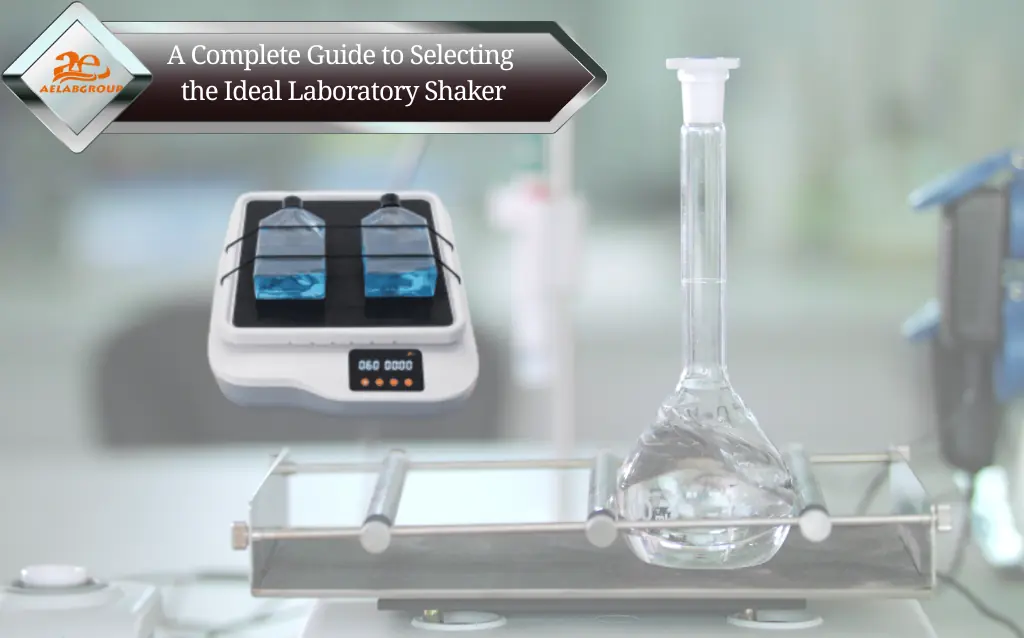
Laboratory shakers are indispensable tools in modern research, offering precise and uniform mixing, agitation, and in some cases, incubation of samples. Used extensively in fields like biology, chemistry, pharmacology, and environmental science, the right shaker can dramatically improve the accuracy, reproducibility, and efficiency of your experiments. With numerous shaker types and features available, selecting the most suitable model can be challenging. This guide offers a complete overview of laboratory shakers, including their types, applications, key selection criteria, and top manufacturers.
A Brief History of Laboratory Shakers
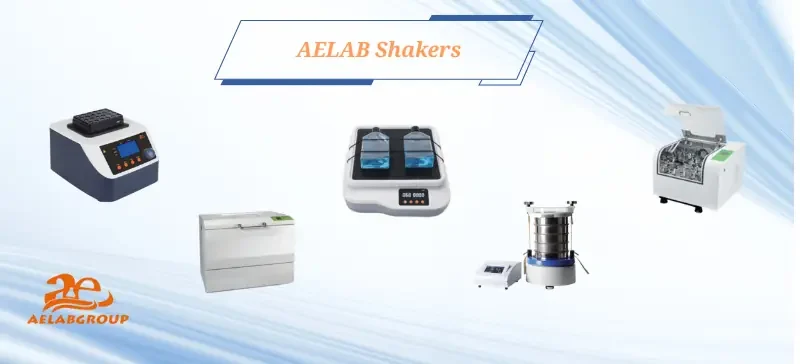
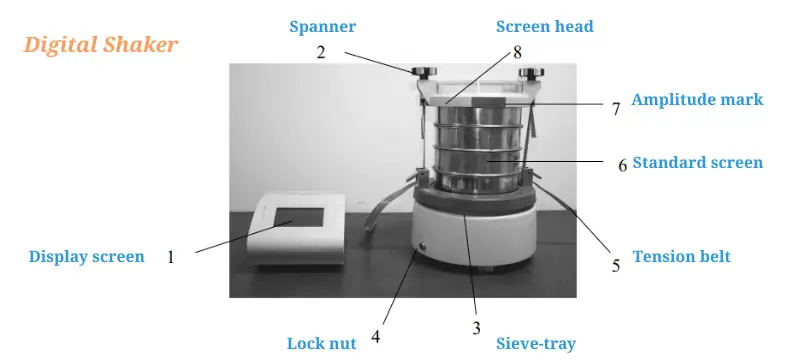
Early laboratory agitation methods were manual or relied on simple mechanical tools. In 1917, Richard Stringham patented the first heated shaker to ease the manual workload. By the 1940s, developments such as coated magnetic stir bars improved inert mixing. Today, AELAB introduces advanced digital shakers with programmable settings and improved environmental resistance .
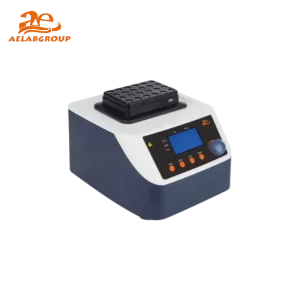
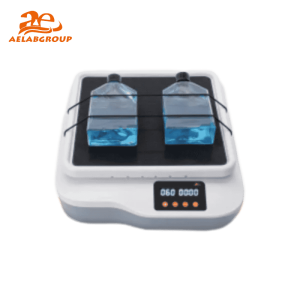
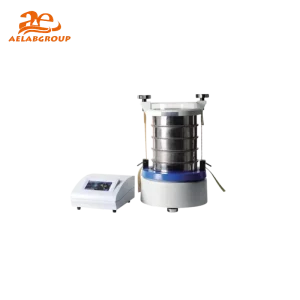
Types of Laboratory Shakers and Their Applications
| Shaker Type | Motion | Key Features | Typical Applications |
|---|---|---|---|
| Orbital Shaker | Circular | Adjustable speed, incubator-compatible | Cell culture, gel staining, general mixing |
| Reciprocating Shaker | Linear (back-and-forth) | Adjustable stroke and speed | DNA extraction, blotting, hybridization |
| Rocking Shaker | Tilt around central axis | Gentle wave motion, angle-adjustable | Blood mixing, hybridization, fragile samples |
| 3D (Waving) Shaker | Orbital + tilt | Slip-resistant, enhanced mixing | Suspension cultures, solvent extraction |
| Vortex Mixer | Rapid circular whirlpool motion | Compact, high-speed, small-volume friendly | Tube mixing, cell suspension, reagent dispersion |
| Incubating Orbital Shaker | Circular + temperature controlled | Uniform temperature and motion | Bacterial/protein culture, long-term incubation |
| Platform Shaker | Variable (depends on design) | Large surface area, customizable platforms | General applications across various vessel types |
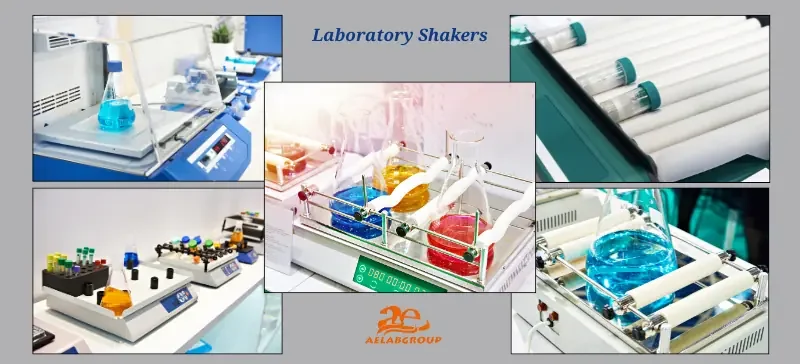
Key Factors to Consider When Choosing a Shaker
1. Application Type
Match the shaker’s motion to your experiment:
Orbital/3D: Ideal for cell suspension cultures.
Reciprocating: Better for DNA/protein extraction.
Rocking: Suited for blotting and gentle hybridization.
Vortex: Best for rapid mixing of small volumes.
2. Vessel Type and Capacity
Determine the types (flasks, microplates, tubes) and number of vessels needed. Some shakers support loads up to 68 kg and have interchangeable platforms for flexibility.
3. Temperature Requirements
For protocols requiring specific temperatures (e.g., 37°C for bacterial growth), an incubating or refrigerated shaker is essential.
4. Environmental Resistance
For use in CO₂ incubators or humid environments, choose corrosion-resistant models such as the OHAUS Extreme Environment Shaker.
5. Control and Safety Features
Modern shakers may include:
Overload protection
Imbalance detection
Visual and audio alarms
Microprocessor control for speed and temperature
Touchscreen or easy-clean user interface
Essential Features in Advanced Shakers
Brushless, maintenance-free motor
Triple-eccentric counterbalanced drive
Precise speed (±1 rpm) and temperature (±0.5°C) control
Programmable multi-step operation
Wide timer range (up to 999 hours)
High load capacity (16–68 kg)
Energy-efficient and CO₂/humidity resistant models
Ergonomic and user-friendly design
-300x300.webp)

Common Use Case Recommendations
| Application | Recommended Shaker | Reason |
|---|---|---|
| Cell Culture (Suspension) | Orbital, 3D | Ensures uniform suspension and oxygenation |
| Cell Culture (Adherent) | Gentle Orbital | Minimizes disturbance to cells |
| Blotting | Linear (Reciprocating) | Promotes even reagent distribution |
| Hybridization | Rocking, 3D | Ensures complete membrane coverage |
| Solution Mixing | Orbital | Versatile and widely compatible |
| Powder Dissolution | Orbital, Vortex | Effective and quick homogenization |
| Gel Staining/Destaining | Orbital, Linear | Ensures consistent exposure to reagents |
| Extraction Procedures | 3D, Linear | Enhances contact between solvent and sample |
| Blood Sample Mixing | Rocking | Gentle mixing to prevent hemolysis |
| Small Volume Reactions | Vortex | Efficient for single-tube tasks |
| Long-term Incubation | Incubating Orbital | Stable temperature and consistent agitation |
Safety Tips for Laboratory Shaker Use
Always operate with the platform securely installed.
Keep hands, hair, and loose clothing away from moving parts.
Use personal protective equipment (PPE).
Do not exceed shaker’s load or speed capacity.
Turn off the shaker immediately if overheating or unusual noise occurs.
Avoid flammable materials on non-explosion-proof models.
Regularly inspect and clean for optimal performance.
Conclusion
Selecting the right laboratory shaker requires a deep understanding of your experimental needs, from motion type and temperature control to vessel compatibility and safety requirements. By aligning your shaker choice with your protocols and choosing a trusted manufacturer, you ensure consistent, reproducible, and efficient laboratory operations. Whether you’re upgrading your lab or building it from scratch, investing in the right shaker is a cornerstone of reliable research.