

Introduction
Single vs Double Beam Spectrophotometers are widely used in modern laboratories spanning pharmaceuticals, life sciences, education, and environmental monitoring. These essential analytical instruments measure the absorbance of light at specific wavelengths, offering critical insights into a sample’s chemical composition, concentration, and overall purity.
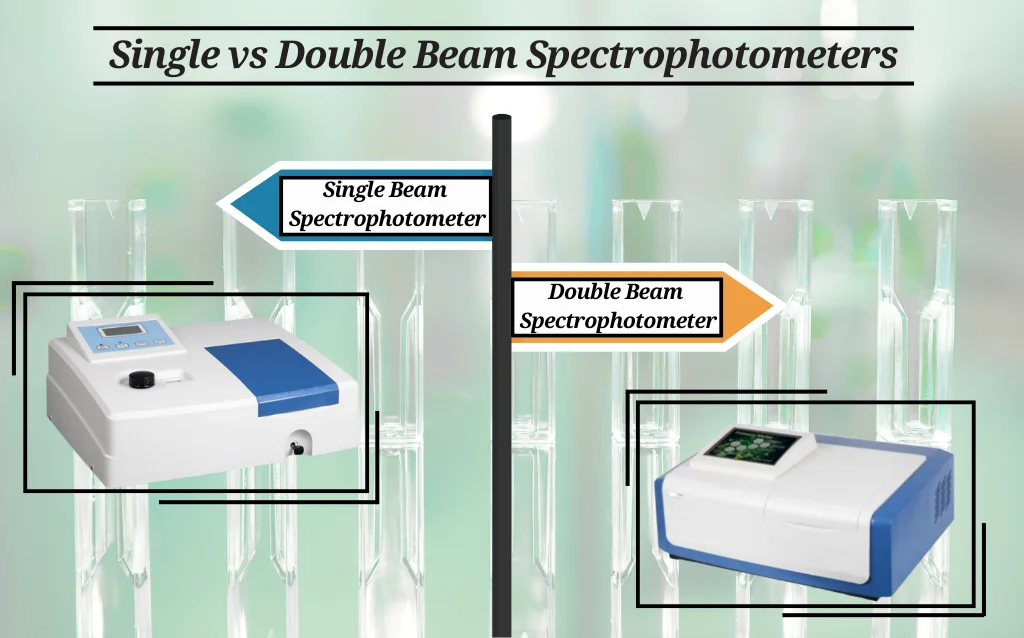
When choosing between Single vs Double Beam Spectrophotometers, understanding their structural and functional differences is crucial. Although both types serve a similar analytical purpose, they vary in optical design, measurement precision, and ideal use scenarios.
In this guide, we’ll break down the core differences, advantages, disadvantages, and recommended applications—so you can confidently choose the spectrophotometer that best suits your lab’s goals.
How Does a Spectrophotometer Work?
At its core, a spectrophotometer analyzes how much light a sample absorbs. Here’s the basic working principle:
A light source emits a broad spectrum of light.
This light passes through a cuvette containing the sample.
The sample absorbs part of the light; the rest is transmitted.
A detector measures the intensity of transmitted light.
The instrument calculates absorbance based on the difference between incident and transmitted light.
Every substance has a unique absorption spectrum, making spectrophotometry an effective technique for both qualitative and quantitative analysis.

What Is a Single Beam Spectrophotometer?
How It Works
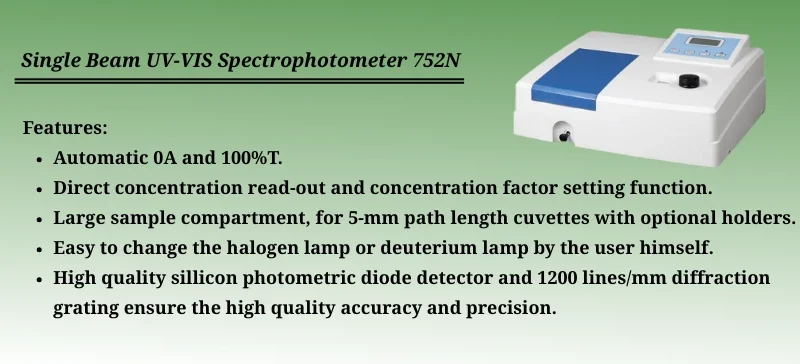
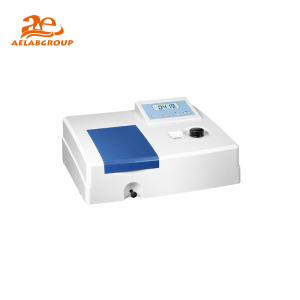
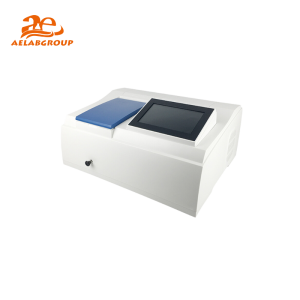
A single beam spectrophotometer uses one light path. The device first measures a reference (blank) solution, then the blank is replaced with the sample. The absorbance is calculated by comparing the two measurements.
Advantages
Lower Cost: Simpler optical system means reduced purchase and maintenance costs.
High Sensitivity: Since light isn’t split, energy throughput is maximized.
Compact & Portable: Ideal for fieldwork, small labs, and educational use.
Limitations
Manual Handling Required: Users must manually alternate between blank and sample cuvettes.
Less Stability: Susceptible to lamp fluctuations, drift, and environmental changes.
Slower Operation: Measurements are done one at a time.
What Is a Double Beam Spectrophotometer?
How It Works
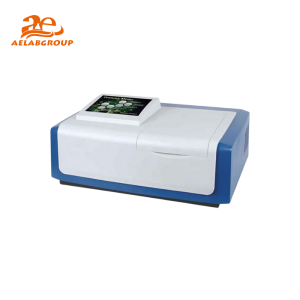
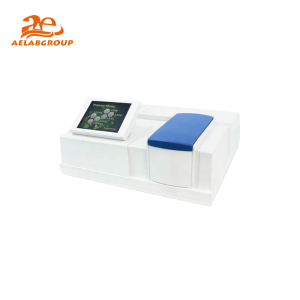
Double beam spectrophotometers split the light into two paths: one beam passes through the sample, and the other through the reference. Both beams are detected simultaneously and compared in real-time.
Advantages
Greater Accuracy: Simultaneous measurement ensures better reproducibility and precision.
Excellent Stability: Compensates automatically for lamp intensity variations and signal drift.
Time-Efficient: No need for manual blanking between measurements.
Wider Wavelength Range: Ideal for UV-VIS analysis (typically 190–1100 nm).
Limitations
Higher Cost: Complex design and additional components make them more expensive.
Larger Size: Requires more bench space and occasional advanced maintenance.
Side-by-Side Comparison Table
| Feature | Single Beam | Double Beam |
|---|---|---|
| Light Path | Single (one cuvette at a time) | Dual (sample and reference simultaneously) |
| Accuracy | Moderate | High |
| Stability | Susceptible to drift | Automatically compensated |
| Measurement Speed | Slower (manual switching) | Faster (real-time) |
| Calibration | Frequent | Minimal |
| Cost | Lower | Higher |
| Best For | Education, basic analysis | Research, pharma, QA/QC labs |
How to Choose Between Single vs Double Beam Spectrophotometers for Your Lab
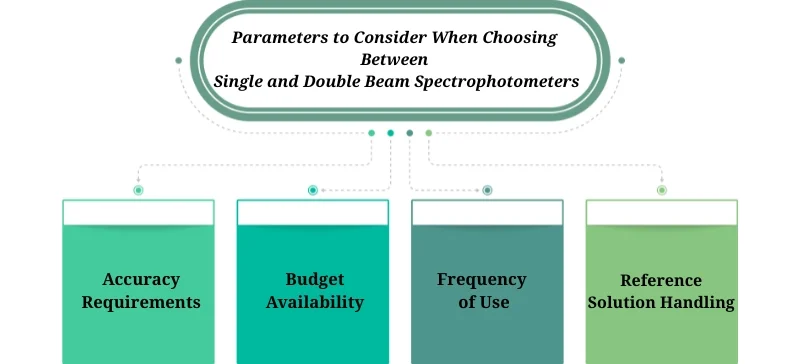
Choosing the right model from Single vs Double Beam Spectrophotometers depends on several key factors.
1. Accuracy Requirements
Need high precision for regulated or sensitive experiments? → Choose double beam.
Doing routine or educational tasks? → Single beam may suffice.
2. Budget Availability
Working with limited funds? → Single beam is more cost-effective.
Want long-term precision and automation? → Invest in a double beam model.
3. Frequency of Use
High-throughput lab? → Double beam saves time and effort.
Occasional or one-off testing? → Single beam is suitable.
4. Reference Solution Handling
If blank solutions are hard to replicate consistently, double beam offers better reliability.
If blanking is easy and stable, single beam can still perform well.
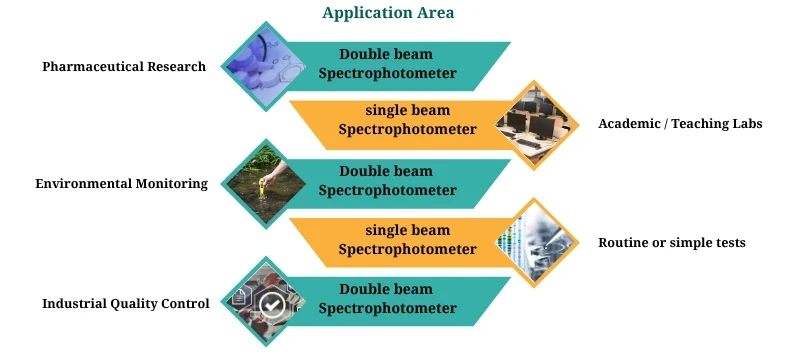
Use Case Recommendations for Single vs Double Beam Spectrophotometers
| Application Area | Recommended Spectrophotometer |
|---|---|
| Academic / Teaching Labs | Single Beam |
| Pharmaceutical Research | Double Beam |
| Environmental Monitoring | Double Beam |
| Industrial Quality Control | Double Beam |
| Routine or simple tests | Single Beam |
Conclusion: Single vs Double Beam Spectrophotometers
Understanding the differences between Single vs Double Beam Spectrophotometers is essential for selecting the right instrument for your laboratory needs. While single beam models offer affordability and simplicity for basic applications, double beam spectrophotometers provide enhanced accuracy, stability, and efficiency for advanced research and quality control. By aligning your choice with your specific requirements—such as budget, precision, and throughput—you can ensure optimal performance and reliable results in your lab.
Take the Next Step with AELAB
Need help choosing the ideal spectrophotometer?
Contact our experts today or Browse AELAB models now to find your perfect match.