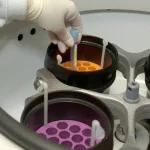
Introduction: Precision Meets Preservation
In the world of modern scientific research, especially in fields like molecular biology, pharmaceuticals, and clinical diagnostics, maintaining sample integrity is paramount. The laboratory refrigerated centrifuge offers a powerful solution by merging two essential technologies: centrifugation and refrigeration. This combination ensures high-accuracy separation while protecting temperature-sensitive materials from thermal degradation.
In this guide, we’ll dive deep into how refrigerated centrifuges work, their components, key benefits, applications, and expert tips to help you choose the right model for your lab.
What Is a Refrigerated Centrifuge?
A refrigerated centrifuge is a laboratory instrument that separates components of a sample based on their density using high-speed rotation while simultaneously maintaining a controlled low temperature (typically between -10°C and +40°C). This is especially important for preserving biological molecules such as proteins, enzymes, nucleic acids, and cell structures that are heat-sensitive.
How Does a Refrigerated Centrifuge Work?
Step-by-Step Working Principle:
Sample Preparation & Loading
Temperature Regulation
Centrifugation Process
The rotor spins at high speed, generating centrifugal force.
Denser components move outward; lighter ones stay near the center.
Safety & Monitoring
Deceleration & Sample Retrieval
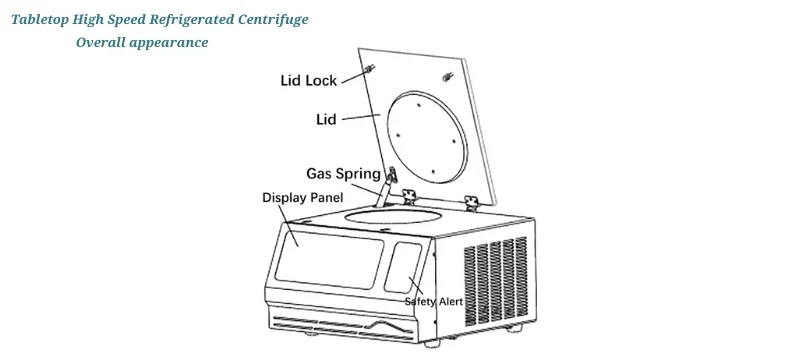
Core Components of a Refrigerated Centrifuge
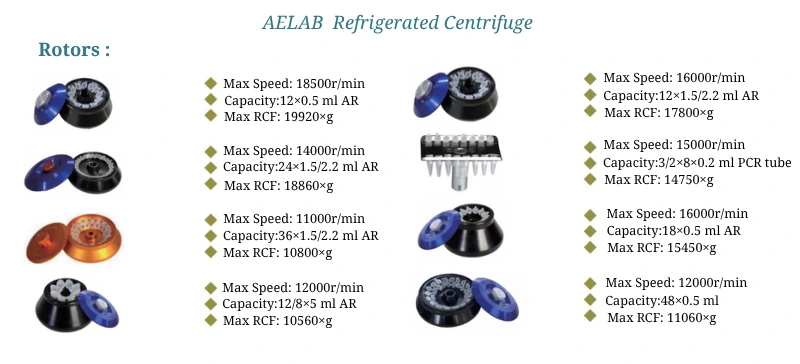
Rotor Types
Fixed-Angle Rotors: Ideal for rapid pellet collection.
Swing-Out Rotors: Suitable for density gradient separation.
Vertical Rotors: Used in ultracentrifugation.
Refrigeration System
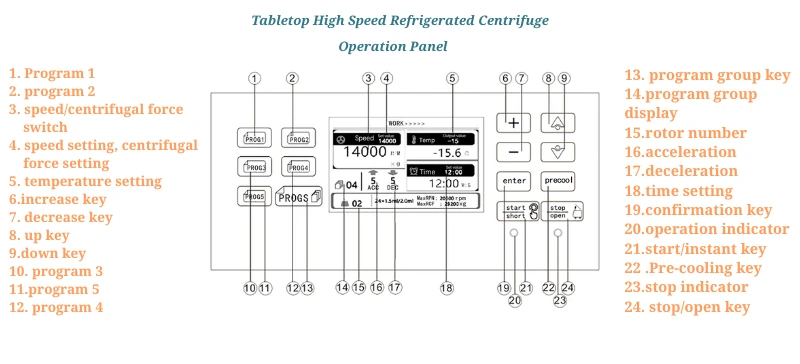
Control Panel
Drive Mechanism
Insulated Chamber
Safety Features
Types of Refrigerated Centrifuges
By Speed:
Low-Speed Centrifuges
Up to 6,000 RPM – Ideal for blood, urine, and simple separations.
High-Speed Centrifuges
Up to 25,000 RPM – Suitable for virus isolation, organelle separation.
Ultracentrifuges
Up to 150,000 RPM – Used for purification of macromolecules and nanoparticles.
By Capacity:
Microcentrifuges
Handle small sample volumes (1.5–2 mL tubes).
Benchtop Centrifuges
Mid-capacity models for routine lab use.
Floor-Standing Centrifuges
High-capacity systems for large-scale operations.
Key Features to Look for When Buying
| Feature | Why It Matters |
|---|
| Speed & RCF | Determines separation capability |
| Temperature Range | Ensures sample preservation |
| Rotor Compatibility | Enables flexibility across applications |
| Programmability | Improves accuracy and repeatability |
| Noise & Vibration Control | Enhances user comfort |
| Safety Systems | Prevents accidents and sample loss |
| Brand Reputation | Ensures access to support and replacement parts |
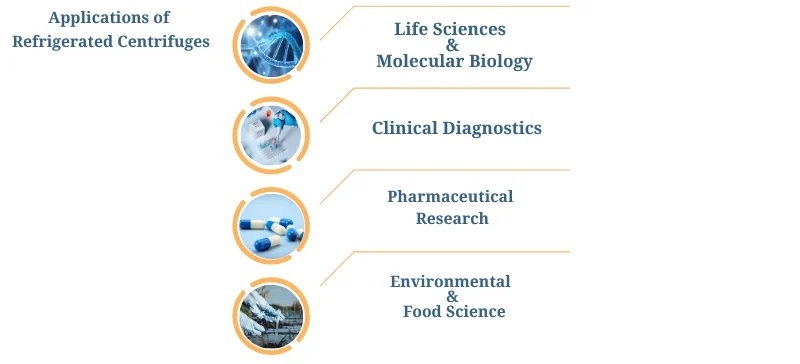
Applications of Refrigerated Centrifuges
Life Sciences & Molecular Biology
Clinical Diagnostics
Pharmaceutical Research
Environmental & Food Science
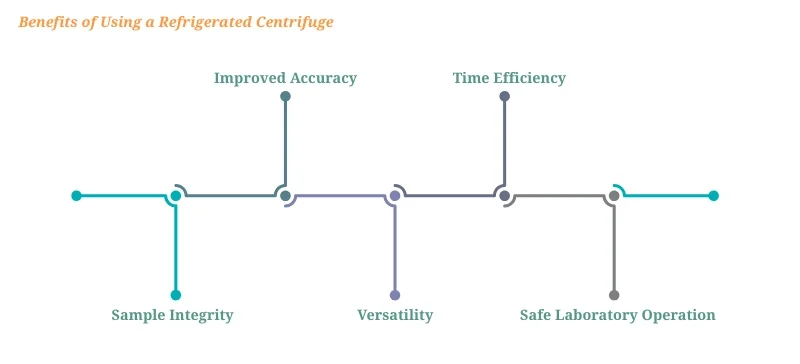
Benefits of Using a Refrigerated Centrifuge
Sample Integrity
Maintains biochemical activity by preventing heat-induced degradation.
Improved Accuracy
Stable speeds and temperatures lead to reproducible, high-quality results.
Versatility
Compatible with a wide range of rotors, tubes, and experimental protocols.
Time Efficiency
Allows fast, high-volume processing while minimizing manual intervention.
Safe Laboratory Operation
Built-in safety features protect both users and sensitive materials.
Maintenance Tips & Best Practices
Regular Maintenance
Clean rotor and chamber after each use.
Inspect seals and rotors for wear or corrosion.
Verify temperature sensors and system calibration.
Best Practices
Always pre-cool the unit for sensitive samples.
Balance all tubes properly before spinning.
Use the correct rotor type for each procedure.
Train lab staff on operational and safety protocols.
Troubleshooting Common Issues
| Problem | Solution |
|---|
| Temperature Fluctuation | Check refrigerant levels and evaporator |
| Rotor Vibration | Rebalance tubes or inspect drive system |
| Power Failure | Verify electrical connections and circuit integrity |
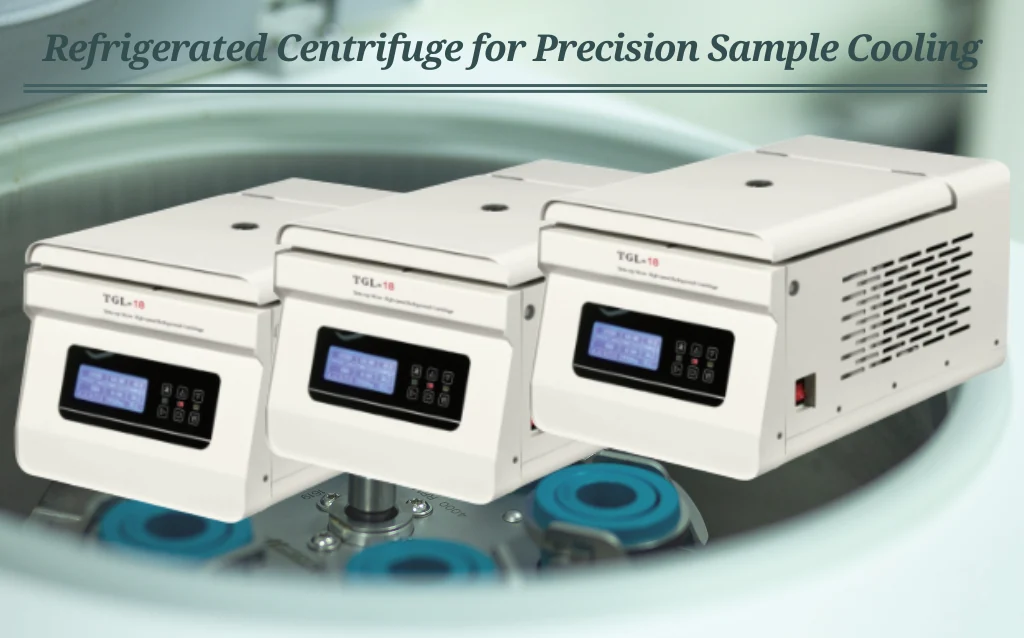
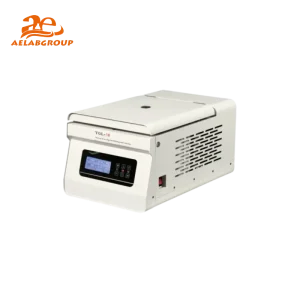
AELAB Micro High-Speed Refrigerated Centrifuge TGL-18
Conclusion: A Must-Have Tool for Precision Labs
The refrigerated centrifuge is more than just an advanced version of a basic centrifuge — it’s a critical asset for any lab dealing with temperature-sensitive materials. From ensuring sample stability to supporting advanced separation techniques, this tool enhances both workflow efficiency and research quality.
Need Help Choosing the Right Model?
Contact AELAB’s technical experts today for personalized recommendations.