

What Is a Pipette?
Laboratory professionals use a pipette as a fundamental tool to accurately measure and transfer small volumes of liquids. Its precision and versatility make it indispensable in scientific research, chemistry, biology, and various other fields. Understanding the different types of pipettes and their applications is crucial for effective laboratory work.
Types of Pipettes
-
Manual Pipettes
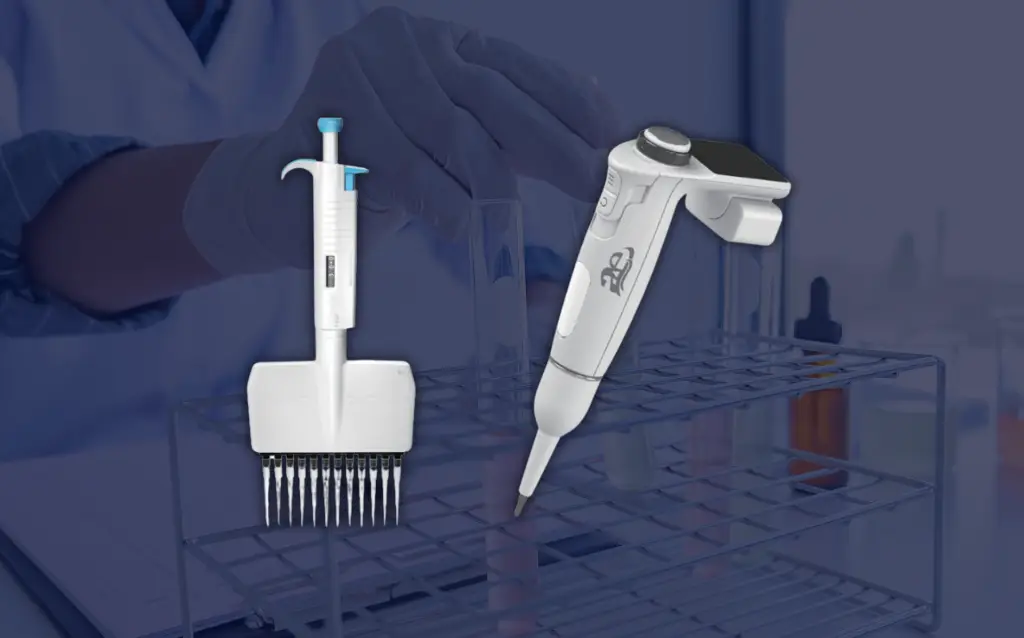
- Air Displacement Pipettes: These are the most common type of manual pipettes. They work by creating a vacuum that draws liquid into a disposable tip. The volume is set by adjusting a dial or knob on the pipette. Air displacement pipettes are known for their accuracy and are often used in applications requiring precise liquid handling.
- Positive Displacement Pipettes: Unlike air displacement pipettes, positive displacement pipettes have a piston that directly contacts the liquid. This type is particularly useful for handling viscous or volatile liquids, as it eliminates the air cushion that can cause inaccuracies in measurements.
-
Automatic Pipettes
- Electronic Pipettes: These pipettes automate the dispensing process, reducing manual effort and enhancing precision. Electronic pipettes often come with programmable functions, allowing users to set multiple dispensing volumes and speeds. They are ideal for repetitive tasks and complex protocols, improving efficiency and reducing operator error.
- Multichannel Pipettes: Designed for high-throughput applications, multichannel pipettes can dispense liquid into multiple wells simultaneously. They are commonly used in applications such as plate assays, where multiple samples need to be processed at once. These pipettes are available in both manual and electronic versions.
Applications of Pipettes
Pipettes are essential in various laboratory applications, including:
- Chemical Analysis: Accurate measurement and transfer of reagents are crucial for chemical experiments and reactions. Pipettes ensure that precise amounts of chemicals are used, which is vital for reproducibility and accuracy.
- Biological Research: In molecular biology, pipettes are used for tasks such as DNA extraction, PCR preparation, and cell culture. Precision is critical in these applications to ensure reliable results.
- Clinical Testing: Pipettes play a significant role in clinical laboratories for tasks such as blood sample analysis, urine tests, and other diagnostic procedures. They help maintain consistency and accuracy in test results.
- Pharmaceutical Industry: In drug development and quality control, pipettes are used for preparing and testing pharmaceutical compounds. Accurate pipetting is essential for ensuring the efficacy and safety of medications.
Choosing the Right Pipette
Selecting the right pipette for your laboratory tasks is crucial for achieving accurate and reliable results. The choice depends on several factors including the volume of liquid to be handled, the type of liquid, and the specific requirements of your application. Here are some key considerations to guide you in choosing the right pipette:
1. Volume Range
Pipettes come in various volume ranges to accommodate different liquid handling needs. It is essential to select a pipette that is designed to handle the volume you typically work with. Using a pipette within its optimal range ensures accuracy and precision. For example:
- Micropipettes: Ideal for very small volumes, typically ranging from 0.1 µL to 10 µL.
- Standard Pipettes: Suitable for volumes ranging from 10 µL to 1,000 µL.
- Macropipettes: Used for larger volumes, exceeding 1,000 µL.
2. Type of Liquid
The physical properties of the liquid being pipetted can influence your choice:
- Aqueous Solutions: Air displacement pipettes are suitable for most aqueous solutions as they provide high accuracy and precision.
- Viscous or Volatile Liquids: Positive displacement pipettes are better for viscous or volatile liquids as they prevent inaccuracies caused by the air cushion in air displacement pipettes.
3. Application Requirements
Different applications may require specific pipetting features:
- High-Throughput Tasks: For applications like plate assays where multiple samples need to be processed simultaneously, a multichannel pipette can significantly improve efficiency.
- Repetitive Tasks: Electronic pipettes are ideal for tasks that involve repetitive pipetting, as they reduce manual effort and minimize the risk of repetitive strain injuries.
- Complex Protocols: For protocols that require variable volume dispensing or multiple steps, electronic pipettes with programmable functions can enhance accuracy and efficiency.
4. Ergonomics and Comfort
Since pipetting can be a repetitive task, ergonomics is an important consideration to prevent strain and fatigue:
- Lightweight Design: Choose a pipette that is lightweight and comfortable to hold.
- Ease of Operation: Look for features such as a smooth plunger action, easy volume adjustment, and minimal tip ejection force.
5. Compatibility with Tips
Check that the pipette is compatible with the tips you intend to use. Using incompatible tips can cause inaccuracies and increase the risk of contamination.
- Universal Tips: Many pipettes work with universal tips, offering a cost-effective and convenient option.
- Manufacturer-Specific Tips: Some manufacturers recommend their branded tips, specifically designed to ensure optimal performance with their pipettes.
6. Calibration and Maintenance
Regular calibration and maintenance are essential for maintaining the accuracy and reliability of your pipette:
- Ease of Calibration: Choose a pipette that allows easy calibration, preferably with in-house calibration options.
- Maintenance Requirements: Consider the ease of disassembly and cleaning, especially if you work with hazardous or sticky substances.
7. Budget
While cost should not compromise the quality of your pipette, it’s important to choose an option that fits within your budget:
- Cost-Effective Options: There are high-quality pipettes available at various price points. Evaluate the features and durability to find the best value for your investment.
- Long-Term Investment: Consider the longevity and reliability of the pipette. Investing in a more durable and precise pipette can save costs on frequent replacements and recalibrations.
Maintenance and Calibration
Users must perform regular maintenance and calibration to ensure the accuracy and reliability of pipettes. They should clean and check manual pipettes periodically, while recalibrating electronic pipettes as needed to maintain precision. By taking proper care, users can extend the lifespan of the pipette and ensure consistent performance.
In summary, pipettes are versatile and essential tools in the laboratory, used for precise liquid measurement and transfer. Understanding the different types of pipettes and their applications can greatly enhance the accuracy and efficiency of laboratory work. Whether using a manual or automatic pipette, proper maintenance and calibration are key to achieving reliable results.