
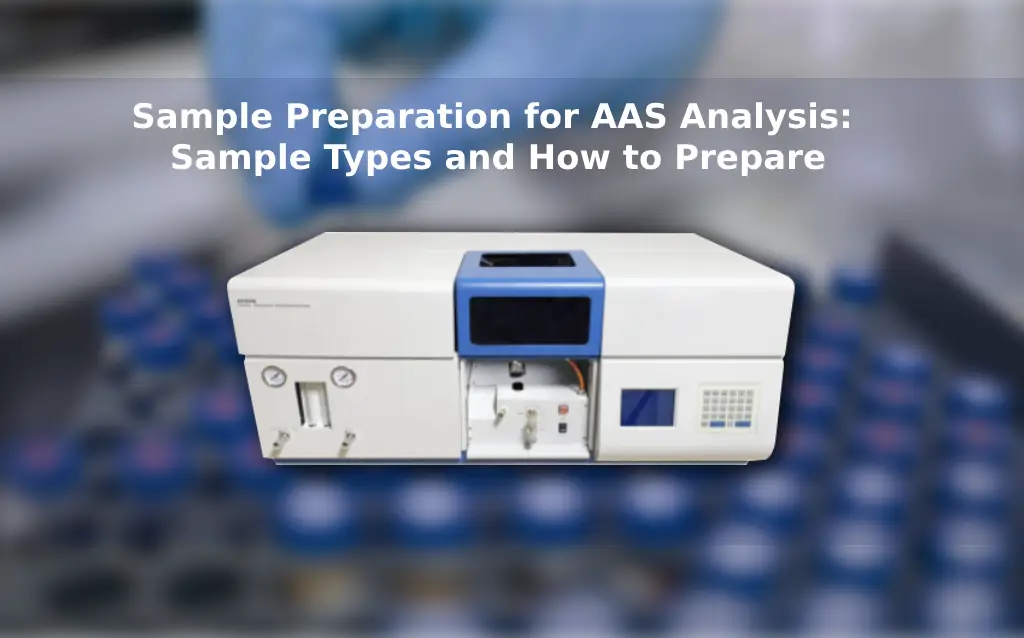
Sample Preparation for AAS Analysis: Sample Types and How to Prepare
Atomic Absorption Spectroscopy (AAS) is a highly precise method for analyzing trace elements in diverse materials. Its accuracy depends largely on effective sample preparation, a crucial step that minimizes interferences and maximizes measurement precision. This article explores the main sample types, preparation techniques, common challenges, and introduces three advanced AELAB products that streamline AAS analysis.
Types of Samples for AAS Analysis
Atomic Absorption Spectroscopy (AAS) relies on the interaction of light and matter at specific wavelengths to analyze diverse sample types. Whether dealing with solid, liquid, or gaseous samples, AAS leverages energy transitions in atoms to precisely identify and quantify elements. These energy transitions, illustrated in Figure 2, form the foundation for preparing and analyzing samples in AAS.

Figure 1:“Electron energy transitions illustrate how atoms absorb light at specific wavelengths, which forms the scientific foundation of Atomic Absorption Spectroscopy (AAS).”
Fundamentals of AAS
Atomic Absorption Spectroscopy (AAS) operates on the principle of light absorption by free atoms in a gaseous state. When a sample is atomized, its atoms absorb light at specific wavelengths corresponding to the energy transitions between electron levels. These transitions, as shown in Figure 1, are unique to each element and form the basis for quantitative analysis in AAS. By measuring the intensity of absorbed light, the concentration of elements in the sample can be determined with high precision and sensitivity.
1. Solid Samples
Solid samples include metals, soils, and biological tissues. These samples often require dissolution or transformation into liquid forms.
- Techniques for Preparation:
- Acid Digestion: Strong acids like nitric acid dissolve solid matrices effectively.
- Microwave Digestion: Accelerates digestion through controlled heating.
- Fusion: Converts tough samples into molten phases for dissolution.
2. Liquid Samples
Liquids such as water, beverages, and chemical solutions are easier to handle but may require specific pre-treatments.
- Techniques for Preparation:
- Filtration: Removes particulates to avoid clogging atomizers.
- Dilution: Brings samples within the detection range.
- Acidification: Stabilizes samples and prevents metal precipitation.
3. Gaseous Samples
Gases are less commonly analyzed but can provide valuable data.
- Techniques for Preparation:
- Trapping and Pre-Concentration: Collects and concentrates trace elements.
- Gas-Liquid Chromatography (GLC): Separates components for better analysis.

Figure 2:“Electron energy transitions represent the absorption of light by atoms at specific wavelengths. This principle forms the basis of elemental analysis in AAS.”
Challenges in Sample Preparation
Contamination
Contamination from reagents, containers, or handling can distort results. Use high-purity reagents and clean environments to minimize this issue.
Matrix Interferences
Complex matrices can skew results. Matrix modifiers and dilution reduce these effects.
Incomplete Digestion
Insufficient digestion leaves elements unavailable for analysis. Microwave digestion often resolves this issue effectively.
Calibration Errors
Accurate calibration ensures reliable results. Use reference standards to validate and maintain instrument accuracy.
Advanced AELAB Products for AAS Analysis
AELAB offers innovative solutions to streamline sample preparation and analysis:
- ICP-AES Spectrometer 4820/4850 Metals Analyzer: This analyzer provides precise elemental analysis with advanced argon circulation technology. It is ideal for detecting metals like iron and copper, offering high sensitivity while reducing gas consumption.
- AELAB Double Beam 1 Lamp Turret Atomic Absorption Spectrophotometer: Designed for industrial and research applications, this spectrophotometer features a robust optical system and efficient atomization. It ensures accurate calibration and reliable performance for demanding tasks
3.Round Type Microwave Digestion System MWD Series: This system accelerates sample preparation with precise temperature and pressure controls. Its safety features, including automated monitoring, make it ideal for preparing samples for AAS and ICP-MS analyses.
These products enhance efficiency, safety, and accuracy in elemental analysis, making them indispensable tools for modern laboratories.
Practical Tips for Optimized AAS Analysis
- Always pre-treat samples to minimize matrix effects and contamination.
- Maintain clean lab practices and use high-quality reagents.
- Validate methods with certified standards to ensure data accuracy.
- Use advanced tools like AELAB products for simplified workflows and superior outcomes.

Learn More:Comparative Analysis of Detection Sensitivity in Heavy Metals: ICP-MS vs. ICP-OES
Conclusion
Proper sample preparation is the cornerstone of successful AAS analysis. By understanding the nuances of different sample types and employing the right preparation techniques, users can achieve accurate and reproducible results. Advanced equipment, like AELAB’s spectrometers, further streamlines processes, making AAS a reliable tool for diverse analytical needs.