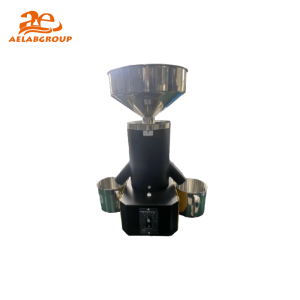
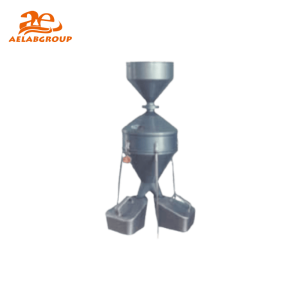
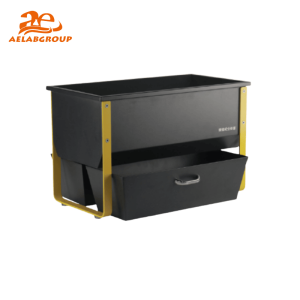
AELAB | Agricultural Testing Instruments | Divider
Laboratory Dividers play a vital role in optimizing space, safety, and focus within modern scientific environments. From university research facilities to pharmaceutical labs, these dividers enable organized, contamination-free, and distraction-minimized workspaces. Compact yet powerful, the Laboratory Divider is the unsung hero of lab design, ensuring smooth workflow and compliance with safety standards.
A Laboratory Divider is a structural or portable partition used to separate work areas, define zones, and improve safety in laboratories. Available as portable panels, glass or acrylic screens, or curtain-based barriers, these dividers are chemical-resistant, easy to clean, and fully modular. They enhance organization, protect personnel, and maintain hygienic conditions in shared or specialized research environments.
| Feature | Details |
|---|---|
| Material Options | Tempered glass, acrylic, polycarbonate, or PVC |
| Dimensions | Customizable height and width (typically 1–2 m high) |
| Mobility | Optional casters or fixed mounting brackets |
| Safety Compliance | Meets OSHA, ANSI, and biosafety standards |
| Surface Finish | Anti-microbial and chemical-resistant coating |
| Compatibility | Integrates with lab benches, outlets, and ventilation systems |
| Acoustic Rating | Optional noise-reduction panels available |
| Fire Resistance | Available in fire-rated materials for high-safety zones |
| Aspect | Laboratory Divider | Permanent Lab Wall |
|---|---|---|
| Flexibility | High — easily reconfigured | Low — fixed installation |
| Cost | Lower investment | Higher construction cost |
| Installation Time | Quick setup (hours) | Takes weeks or months |
| Maintenance | Easy to clean or replace | Requires renovation |
| Ideal Use | Shared, modular, or educational labs | Dedicated single-purpose labs |
Q: What materials are best for laboratory dividers?
A: Tempered glass and polycarbonate are ideal for visibility and chemical resistance, while PVC or anti-static curtains suit ESD-sensitive or flexible environments.
Q: Are portable laboratory dividers safe for use around sensitive instruments?
A: Yes, when properly grounded and made of non-conductive, static-resistant materials, they are safe for sensitive analytical equipment.
Q: How often should dividers be cleaned?
A: Cleaning frequency depends on lab activity; generally, dividers should be disinfected daily in biosafety or clinical settings.
Q: Can dividers contribute to noise reduction?
A: Yes, certain models use acoustic panels or sound-dampening materials to minimize background noise in busy lab environments.