

Introduction to Colorimeter vs Spectrophotometer
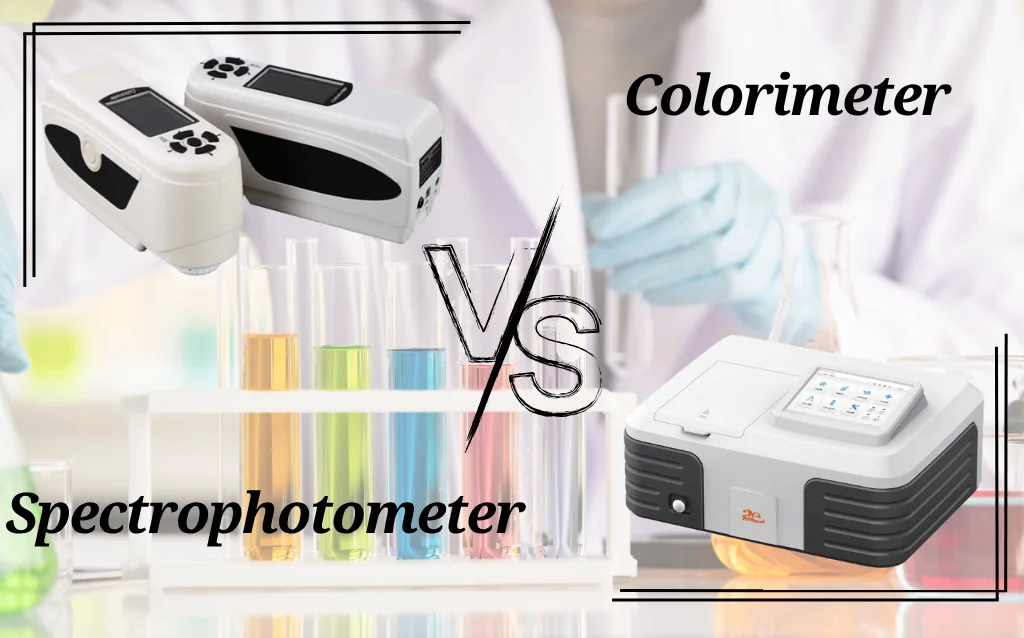
In industries where appearance and quality matter—like food, pharmaceuticals, textiles, printing, and plastics—color is far more than just a visual element. With the growing need for accuracy and consistency, understanding the differences between Colorimeter vs Spectrophotometer has become essential to ensure quality control, meet regulatory standards, and maintain brand identity.
Two primary tools dominate the field of color analysis: colorimeters and spectrophotometers. While they both measure color, they differ significantly in how they operate, the level of precision they offer, and the applications they serve best.
In this guide, we’ll explore Colorimeter vs Spectrophotometer in depth—examining how each device works, their advantages and limitations, and which one best fits your specific needs.
What Is a Colorimeter?
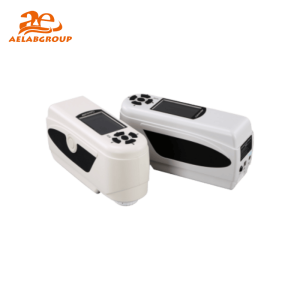
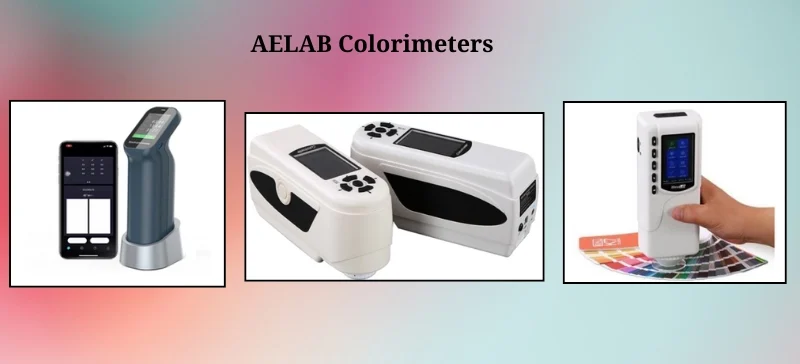
A colorimeter is a precision instrument that measures the intensity and concentration of color in a sample by comparing the amount of light absorbed or transmitted to a known standard. Using controlled light sources and RGB filters, it quantifies color differences by mimicking the human eye’s response, making it essential for accurate color matching and quality control across various industries.
Key Features of a Colorimeter:
Uses a controlled illuminant to shine light on samples
Employs red, green, and blue (RGB) tristimulus filters to quantify color values
Measures light absorbance based on Beer–Lambert’s law for concentration analysis
Displays color data on industry-standard scales for easy interpretation
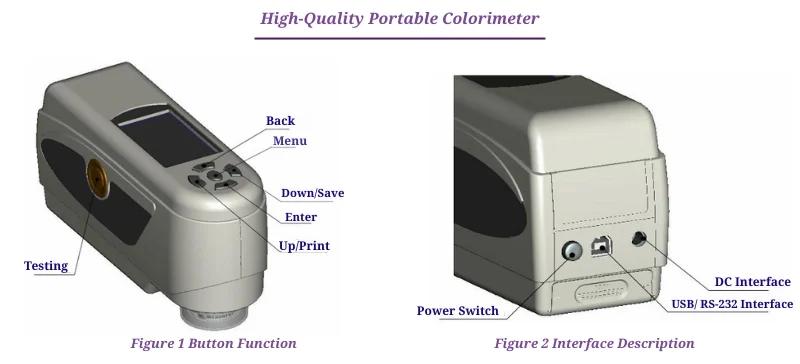
Portable and benchtop designs available for versatile use in labs or on-site
Limitations:
Limited to measuring absorbance and tristimulus values; no full spectral data
Cannot detect metamerism or complex color interactions
Best suited for routine color quality checks rather than advanced color formulation or research
What Is a Spectrophotometer?
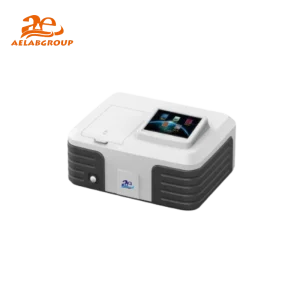
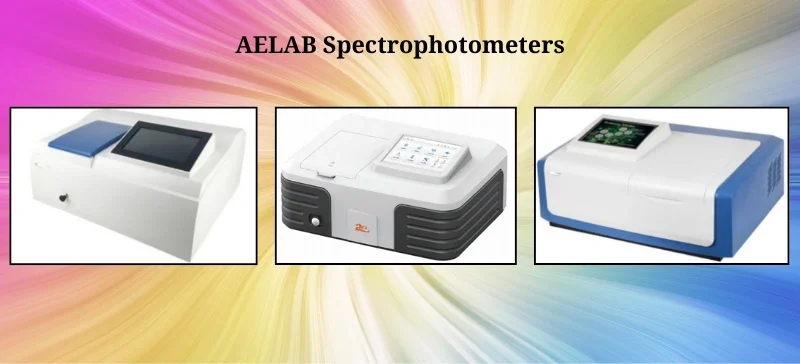
A spectrophotometer provides a detailed analysis of a sample’s color by measuring the reflectance or transmittance of light across a wide range of wavelengths, from ultraviolet to near-infrared. This results in highly accurate and reproducible data ideal for research, development, and precision manufacturing.
Key Features of a Spectrophotometer:
Covers a broad spectral range (200–800+ nm)
Offers full spectral curves in addition to tristimulus values
Detects metamerism and subtle color differences
Can analyze solids, liquids, powders, films, and more
Configurable settings: observer angle, illuminants, geometry
Advanced software support for color matching and formulation
Limitations:
Higher initial cost
Requires training and regular calibration
Typically less portable (though portable models exist)
May be overkill for basic quality checks
Side-by-Side Comparison: Colorimeter vs Spectrophotometer
| Feature | Colorimeter | Spectrophotometer |
|---|---|---|
| Measurement Principle | Tristimulus (RGB, L*a*b*) | Full spectral data + Tristimulus |
| Wavelength Range | 400–700 nm | 200–800+ nm |
| Accuracy | Moderate (±0.02–1.0) | High (±0.001–0.005) |
| Metamerism Detection | No | Yes |
| Data Output | Basic color values | Full spectrum & advanced metrics |
| Sample Types | Mostly solid/opaque | Solids, liquids, transparent & textured |
| Portability | Highly portable | Portable & benchtop options |
| Ease of Use | Beginner-friendly | Requires training |
| Software Integration | Basic to none | Advanced analytics & reporting |
| Cost | Affordable | More expensive |
Applications of Colorimeters
Colorimeters are ideal for quick, reliable, and budget-friendly color measurements. Common applications include:
Color consistency in manufacturing (textiles, plastics, paints)
Food and beverage quality checks
Cosmetics: shade matching and uniformity
Water testing (turbidity, pH, chlorine)
Clinical diagnostics (e.g., urine or blood analysis)
Paper and printing inspections

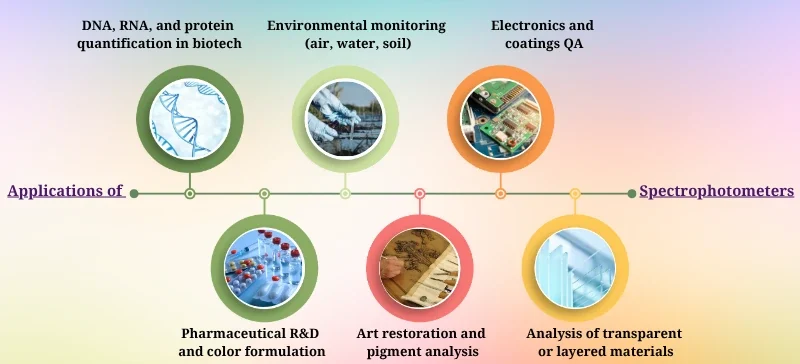
Applications of Spectrophotometers
Spectrophotometers are designed for complex, high-precision tasks, including:
DNA, RNA, and protein quantification in biotech
Pharmaceutical R&D and color formulation
Environmental monitoring (air, water, soil)
Art restoration and pigment analysis
Electronics and coatings QA
Analysis of transparent or layered materials
Colorimeter vs Spectrophotometer: Which Device Is Right for You?
| Requirement | Best Tool |
|---|---|
| Quick, cost-effective measurements | Colorimeter |
| High accuracy and spectral analysis | Spectrophotometer |
| Routine quality control | Colorimeter |
| Research, formulation, or color matching | Spectrophotometer |
| Budget-conscious decision | Colorimeter |
| Advanced data, software, and flexibility | Spectrophotometer |
| Portable use in the field | Portable Colorimeter or Portable Spectrophotometer |
| Lab-based applications | Benchtop Spectrophotometer |
Conclusion: Your Guide to Colorimeter vs Spectrophotometer
Both colorimeters and spectrophotometers play essential roles in today’s color management workflows. When considering Colorimeter vs Spectrophotometer, the choice depends on your specific accuracy needs, data requirements, application type, and budget.
Choose a colorimeter if you need fast, reliable, and affordable color data for routine checks.
Choose a spectrophotometer if you require precise, full-spectrum data for research, formulation, or quality control in regulated industries.
Colorimeter vs Spectrophotometer: Need Help Choosing the Right Device?
Still unsure about the Colorimeter vs Spectrophotometer choice for your business or research?
Get expert guidance from a trusted laboratory equipment provider like AELAB. They offer a wide selection of colorimeters and spectrophotometers designed to meet the needs of industries ranging from cosmetics to pharmaceuticals.
👉 Contact AELAB today for personalized recommendations and find the ideal solution for your color measurement challenges.