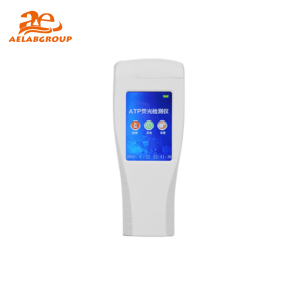
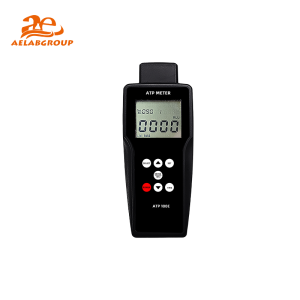
ATP Fluorescence Detector
Introduction
An ATP fluorescence detector enables rapid hygiene verification by quantifying adenosine triphosphate (ATP) on surfaces or in liquids. Delivering actionable results in seconds, an ATP fluorescence detector helps food, healthcare, and pharmaceutical operations minimize contamination risk and maintain regulatory compliance.
What Is ATP Fluorescence Detector?
An ATP fluorescence detector is a handheld or benchtop instrument that measures ATP as a proxy for biological residue. A swabbed sample is mixed with a luciferase-based reagent; the ensuing light signal (reported as Relative Light Units, RLUs) correlates with ATP concentration—higher RLUs indicate greater contamination. Fluorescence/bioluminescence chemistry delivers near-real-time results to guide cleaning validation and corrective actions.
Devices in This Category
- Handheld ATP fluorescence meters with swab-based sampling
- Benchtop hygiene monitoring systems for QC labs
- Waterproof/industrial ATP detectors for CIP and rinse-water checks
- Wireless/Bluetooth-enabled ATP meters with mobile apps
- Integrated ATP test kits (swabs + prefilled reagents)
- Multi-parameter sanitation monitors (ATP + temperature/pH logging)
Technical Features and Specifications
| Feature |
Details |
| Detection Method |
Fluorescence/bioluminescence (luciferase-luciferin reaction) |
| Measurement Unit |
RLUs (Relative Light Units) |
| Detection Range |
~1 to >1,000,000 RLUs (model dependent) |
| Response Time |
< 30 seconds per test |
| Sample Types |
Surface swabs, rinse water, process liquids, food-contact residues |
| Power & I/O |
Battery-operated or USB rechargeable; USB/Bluetooth/cloud data sync |
| Calibration/Verification |
Routine instrument checks; positive/negative control swabs for validation |
| Operating Conditions |
Typical 5–40 °C; protect reagents from heat/light per IFU |
Benefits
- Results in seconds—supporting real-time release and corrective actions
- Portable, easy to use, and deployable across lines and sites
- Sensitive to trace ATP, revealing hard-to-see residue and biofilm risk
- Quantifiable RLUs enable targets, trending, and audit-ready records
- Improves sanitation effectiveness and helps meet GMP/HACCP expectations
Applications and Tests
🔬 Molecular Biology
- Pre-/post-clean verification of PCR set-up areas and hoods
- Monitoring benches, pipettes, and centrifuge rotors for residue
- Tracking cleanliness of cold rooms and shared equipment
🧪 Clinical Diagnostics
- OR/ICU environmental hygiene audits
- Point-of-use device and cart sanitation checks
- Central sterile and lab worktop verification
🏭 Industrial & Food Testing
- Food-contact surfaces, conveyors, and fillers (HACCP/FSMA)
- CIP/SIP rinse-water verification and changeover clearance
- Beverage lines, dairy equipment, and packaging areas
🌱 Environmental & Agricultural Labs
- Water system and tank hygiene assessments
- Farm processing equipment and abattoir sanitation checks
- Field kit screening for biofilm-prone surfaces
ATP Fluorescence Detector vs. Bioluminescence ATP Detector
| Aspect |
ATP Fluorescence Detector |
Bioluminescence ATP Detector |
| Sensitivity |
High |
Very high |
| Reagent Shelf Life |
Typically longer |
Typically shorter |
| Equipment Cost |
Medium–High |
Medium |
| Ease of Use |
High (straightforward workflows) |
Moderate |
| Best Fit |
Broader applications; stable reagents |
Focused food safety/high sensitivity use |
Expert Tips for Choosing the Right ATP Fluorescence Detector
- Define acceptance criteria (RLU thresholds) by surface type and validate with baseline studies.
- Standardize swabbing (same area, pressure, and dwell time) to improve repeatability.
- Confirm data integration (Bluetooth/cloud, CSV export) for trending and audits.
- Evaluate reagent stability and storage needs for your environment and shift patterns.
- Verify instrument checks: control swabs, auto-cal routines, and user lockouts for critical areas.
Maintenance Best Practices
- Store swabs/reagents per instructions (cool, light-protected); track lot/expiry.
- Run positive/negative controls at defined intervals and after unusual results.
- Clean the optical chamber and check for debris that could scatter light.
- Perform regular calibration/verification; document results for QA.
- Maintain batteries/chargers and update device firmware and companion apps.
FAQ
Q: What does an ATP fluorescence detector actually measure?
A: It quantifies ATP via light emission from a luciferase reaction; RLUs correlate with the amount of biological residue present.
Q: Can it distinguish microbial ATP from food or organic residue?
A: No—ATP assays are non-specific. Use SOPs and, when needed, microbiological tests to confirm sources.
Q: How often should I calibrate or verify the device?
A: Follow site policy; many programs verify daily or per shift with control swabs and perform periodic instrument calibration.
Q: What RLU threshold is acceptable?
A: Thresholds are application- and surface-specific. Establish baselines during validated cleaning, then set action limits accordingly.