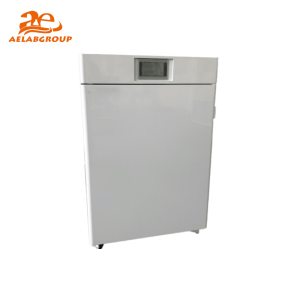
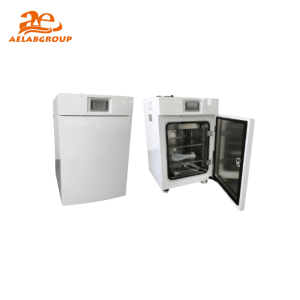
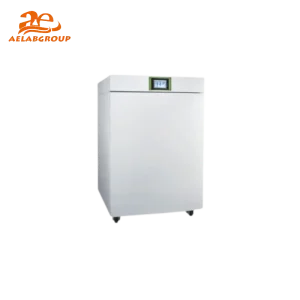
AELAB | Themostat Equipment | CO2 Incubator
A CO₂ incubator is a cornerstone of modern biological and clinical research, providing precise environmental control for cell and tissue cultures. By maintaining accurate temperature, humidity, and CO₂ concentration, these incubators replicate physiological conditions—crucial for mammalian cell growth, IVF, and microbial studies.
A CO₂ incubator is a specialized laboratory device that maintains an optimal atmosphere for cell and tissue culture. Typically, it regulates temperature at 37°C, humidity at about 95%, and CO₂ levels around 5% to simulate the body’s internal environment. These parameters ensure stable pH, prevent media evaporation, and support healthy cellular function for extended experiments.
| Feature | Details |
|---|---|
| Temperature Range | Ambient +5°C to 55°C |
| Temperature Uniformity | ±0.2°C for consistent cell growth |
| CO₂ Range | 0%–20%, typically maintained at 5% |
| CO₂ Sensor Type | Infrared (IR) or Thermal Conductivity (TC) |
| Relative Humidity | Up to 95% via humidity pan or active control |
| Contamination Control | HEPA filtration, UV sterilization, or antimicrobial coatings |
| Chamber Construction | Polished stainless steel with rounded corners for easy cleaning |
| Data Logging | Digital recording with alarms for temperature and gas deviation |
| Aspect | CO₂ Incubator | Standard Incubator |
|---|---|---|
| CO₂ Control | Yes, maintains 5% CO₂ for pH balance | No CO₂ regulation |
| Humidity Regulation | High (~95%) | Variable, often low |
| Application | Cell culture, IVF, tissue engineering | General microbiology and incubation |
| Precision | High with digital sensors | Moderate with basic controls |
| Cost | Higher due to gas and sensor systems | Lower, basic operation |
Q: What is the purpose of a CO₂ incubator?
A: It provides controlled temperature, humidity, and CO₂ levels to support the growth of mammalian cells, tissues, and microorganisms in laboratory research.
Q: Why is 5% CO₂ important in cell culture?
A: The 5% CO₂ maintains the bicarbonate buffering system in cell culture media, keeping pH around 7.2–7.4, which is ideal for mammalian cell growth.
Q: Which is better: water-jacketed or direct-heat CO₂ incubators?
A: Water-jacketed models offer superior temperature uniformity and recovery, while direct-heat designs are lighter and easier to maintain.
Q: How do I prevent contamination in a CO₂ incubator?
A: Use HEPA filters or UV sterilization, clean the chamber regularly, and maintain sterile water in humidity pans to prevent microbial growth.
Q: How often should I calibrate CO₂ sensors?
A: Calibration should be performed every 3–6 months, or as specified by the manufacturer, to ensure accurate gas control.