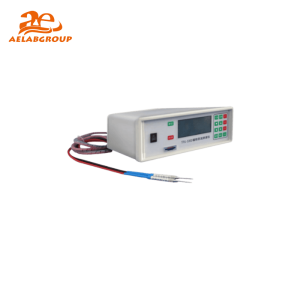
AELAB | Agricultural Testing Instruments | Stem Psychrometer
A stem psychrometer (wet-dry bulb psychrometer) measures air humidity using paired thermometers and is widely used in meteorology, HVAC, and environmental control. By relating wet-bulb cooling to dry-bulb temperature, a stem psychrometer delivers dependable relative humidity data for safety, comfort, and process optimization. This guide explains how a stem psychrometer works, what to look for, and how to use it effectively.
A stem psychrometer (wet-dry bulb) uses two adjacent thermometers—one dry bulb for ambient temperature and one wet bulb wrapped with a moist wick. Airflow over the wet bulb causes evaporation and cooling; the temperature depression between bulbs is converted to relative humidity using a psychrometric chart or formulas. This simple, robust method provides precise humidity, dew point, and vapor pressure insights without electronics.
| Feature | Details |
|---|---|
| Measurement Principle | Wet-bulb evaporation vs. dry-bulb temperature; RH derived via psychrometric chart/formulas |
| Accuracy | High with proper calibration and adequate airflow; suitable for research and climate control |
| Materials | Durable thermometer stems; stainless steel and quality wicking for resilience and stable readings |
| Temperature Range | Select model to match expected ambient conditions for intended use |
| Humidity Range | Covers typical environmental humidity; verify scale/readability for target RH span |
| Ease of Use | Ergonomic stems and clear scales enable efficient field readings |
| Power Requirement | None (no batteries); airflow provided by movement, fan, or aspiration |
| Calibration & Care | Routine thermometer calibration; clean, moist wick maintained for accuracy |
| Aspect | Stem Psychrometer | Digital Hygrometer |
|---|---|---|
| Operating Principle | Wet/dry bulb temperature difference with psychrometric chart | Electronic humidity sensor (e.g., capacitive) |
| Power Requirement | None | Batteries or external power |
| Speed & Convenience | Manual reading/calculation; airflow control needed | Instant digital display, optional logging |
| Accuracy in Extremes | High with proper technique and shielding | May drift in extreme conditions; depends on sensor |
| Cost | Generally lower | Generally higher |
Q: How does a stem psychrometer determine relative humidity?
A: It measures dry-bulb and wet-bulb temperatures; the difference is applied to a psychrometric chart to obtain relative humidity, dew point, and related properties.
Q: What factors can skew readings?
A: Direct sunlight, insufficient airflow over the wet bulb, or a dry/contaminated wick can bias results. Use shielding, ensure airflow, and maintain the wick.
Q: Do I need batteries to operate a stem psychrometer?
A: No. It relies on thermometers and evaporation, requiring only adequate airflow (manual movement, fan, or aspiration).
Q: When should I choose a digital hygrometer instead?
A: If you need rapid, continuous readouts or data logging with minimal manual steps, a digital hygrometer is convenient—though it requires power and may cost more.