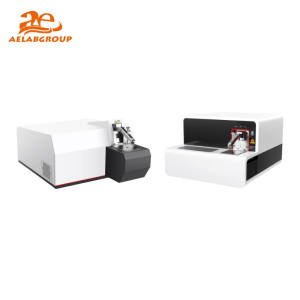
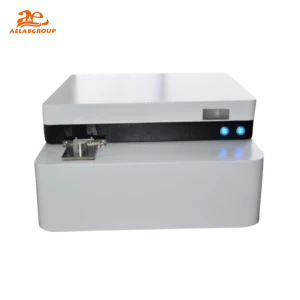
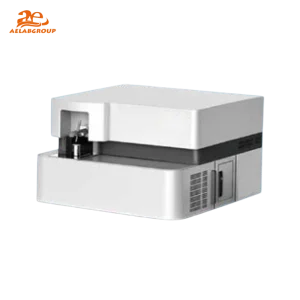
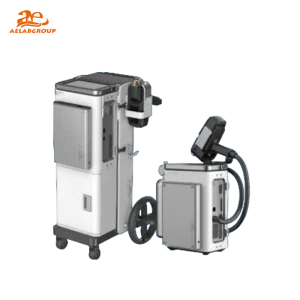
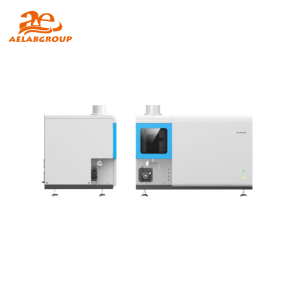
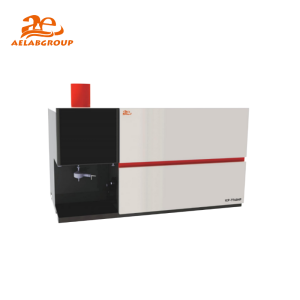
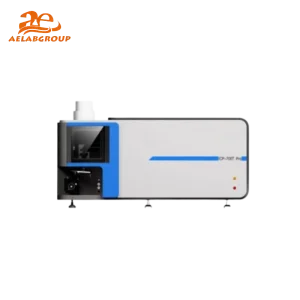
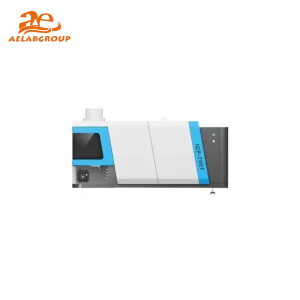
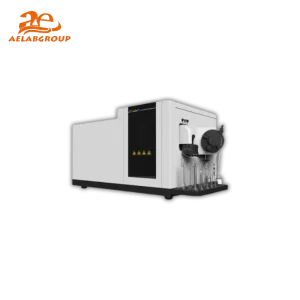
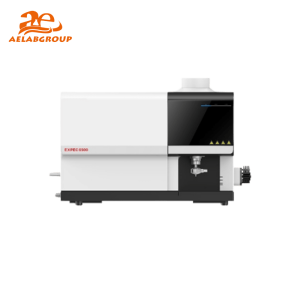
AELAB | Analytical Equipment | ICP Emission Spectrometer(ICP-AES/OES/MS)
The Laboratory ICP Spectrometer is a critical instrument for precise elemental analysis across research and industry. It enables multi-element detection at trace levels with high sensitivity and throughput. From environmental monitoring to pharmaceuticals, it ensures confident, regulatory-ready results.
A Laboratory ICP Spectrometer uses Inductively Coupled Plasma to atomize and excite samples for elemental analysis via optical emission (ICP-OES) or mass spectrometry (ICP-MS). The plasma’s high temperature ionizes atoms; emitted light (OES) or ion mass-to-charge signals (MS) are measured to identify and quantify elements—metals, non-metals, and trace species—with high precision and low detection limits.
| Feature | Details |
|---|---|
| Analytical Technique | ICP-OES (optical emission) and ICP-MS (mass spectrometry) |
| Wavelength / Mass Range | ICP-OES ~160–800 nm; ICP-MS measures ions by m/z with broad elemental coverage |
| Sensitivity & Detection Limits | ICP-MS to ppt levels; ICP-OES suitable for low ppb to high ppm |
| Plasma Source | Inductively Coupled Plasma (RF-driven) providing stable, high-temperature ionization |
| Sample Introduction | Nebulizer + spray chamber; solid samples require digestion/prep |
| Interference Management | Spectral correction (OES); collision/reaction cell & mathematical corrections (MS) |
| Throughput | Rapid, multi-element analysis with autosampler support for high sample volumes |
| Software & Data | Integrated calibration, quantification, libraries for element ID, and QA/QC reporting |
| Aspect | Laboratory ICP Spectrometer | AAS (Atomic Absorption Spectroscopy) |
|---|---|---|
| Element Detection | Simultaneous multi-element (metals & some non-metals) | Primarily single-element (metals) |
| Sensitivity | Very high; ICP-MS to ppt | Moderate to high; typically ppb |
| Speed & Throughput | Fast, high throughput | Moderate; often sequential |
| Sample Types | Liquids; solids after digestion; gases (specialized) | Liquids and digested solids |
| Cost | High capital; low per-element cost when multi-element | Moderate capital; per-element runs add time/cost |
Q: What is the difference between ICP-OES and ICP-MS?
A: ICP-OES measures light emitted by excited atoms/ions for robust multi-element analysis at ppb–ppm levels, while ICP-MS measures mass-to-charge of ions and achieves ultra-trace (ppt) detection with broader dynamic range.
Q: What sample types can be analyzed?
A: Most liquid samples directly; solids typically require digestion. Specialized setups can handle gases or nanoparticles depending on the method.
Q: How are interferences managed?
A: ICP-OES uses spectral correction and optimized wavelength selection; ICP-MS employs collision/reaction cells and mathematical corrections to reduce polyatomic and matrix interferences.
Q: What are typical detection limits?
A: ICP-MS reaches parts-per-trillion for many elements; ICP-OES typically achieves low ppb and is ideal for routine multi-element work.
Q: Why choose ICP over AAS or XRF?
A: ICP offers simultaneous multi-element capability, faster throughput, and significantly lower detection limits (with ICP-MS), making it preferred for trace analysis and complex matrices.