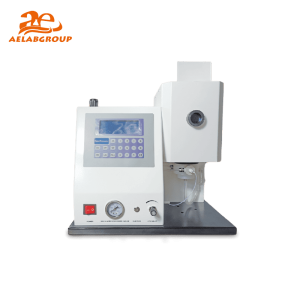
AELAB | Analytical Equipment | Flame Photometer
The Laboratory Flame Photometer is a vital analytical instrument designed for rapid and accurate determination of alkali and alkaline earth metals such as sodium, potassium, lithium, calcium, and cesium. Offering a simple and cost-effective approach to elemental analysis, it is widely applied in clinical, agricultural, pharmaceutical, environmental, and food testing laboratories.
A Laboratory Flame Photometer measures the concentration of specific metal ions in a sample by detecting the characteristic emission of light produced when the sample is introduced into a flame. The emitted light intensity is directly proportional to the element’s concentration, making it an essential tool for routine elemental analysis of alkali and alkaline earth metals.
| Feature | Details |
|---|---|
| Elements Detected | Na, K, Li, Ca, Cs (alkali and alkaline earth metals) |
| Detection Range | ppm to ppb levels, depending on instrument sensitivity |
| Emission Wavelengths | Na: 589 nm, K: 766 nm, Li: 670 nm, Ca: 622 nm, Cs: 852 nm |
| Flame & Fuel | Propane, butane, or acetylene with air/oxygen mixture; up to 2000°C |
| Display | Analog or digital readout with concentration display |
| Automation | Optional auto-dilution, calibration, and multi-sample processing |
| Connectivity | USB/RS-232 data export, software for calibration curve plotting |
| Safety Features | Flame monitoring, gas pressure control, and automatic shutoff |
| Feature | Flame Photometry | AAS | ICP-AES |
|---|---|---|---|
| Principle | Light emission in flame | Light absorption by atoms | Emission spectroscopy using plasma |
| Elements Detected | Alkali and alkaline earth metals | Most metals | Almost all elements |
| Sensitivity | Moderate | High | Very High |
| Analysis Speed | Fast | Moderate | Moderate |
| Cost | Low | Higher | Very High |
| Complexity | Simple | Moderate | High |
Q: What elements can be measured using a flame photometer?
A: Flame photometers are designed for alkali and alkaline earth metals including Na, K, Li, Ca, and Cs.
Q: Why is flame photometry preferred for clinical electrolyte testing?
A: It provides quick, accurate, and affordable measurement of sodium and potassium levels in blood and urine, critical for assessing electrolyte balance.
Q: How can interference be minimized in flame photometry?
A: Use proper filters, calibration standards, and background correction techniques to eliminate inter-element interference.
Q: What are the advantages of a digital flame photometer?
A: Digital models offer better precision, data storage, and easy integration with computer systems for automated reporting and analysis.