

Common Lab Vacuum Freeze Dryer Problems and Troubleshooting Tips
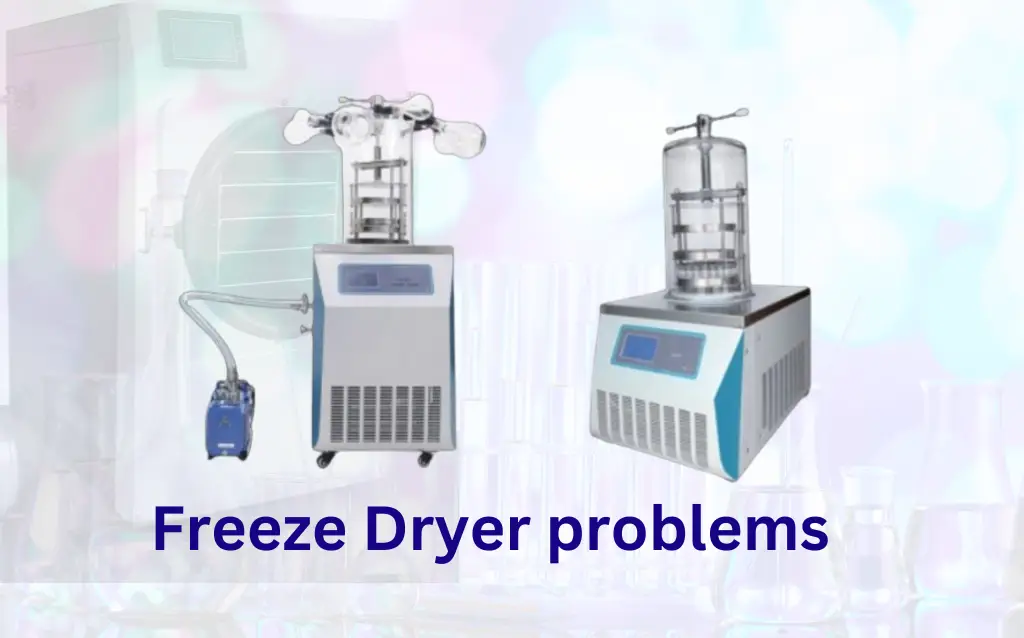
Freeze Dryer’s Problem :Vacuum freeze drying stands as a vital technique for preserving materials by removing water under conditions of low pressure and low temperature. This method is extensively used in industries such as pharmaceuticals, biotechnology, and food preservation, where maintaining product integrity is paramount. Yet, like all advanced technologies, freeze dryers are not without their challenges. They often face issues that can compromise their efficiency, reliability, and overall performance. A clear understanding of these common problems, paired with the implementation of effective solutions, is essential for achieving optimal results. Below, we outline some of the most frequent challenges encountered in vacuum freeze drying and their respective solutions.

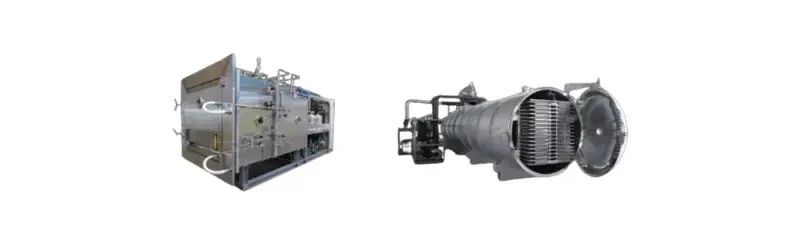
Figure 1. (A) Schematic diagram of a vacuum freeze dryer illustrating key components, including heaters, trays, condenser, and vacuum pump. (B) Photograph of a vacuum freeze dryer showcasing its internal structure with visible trays and operational components.
1. Inconsistent Drying Times
1.1 Uneven Heating
One of the most common freeze dryer’s problems is inconsistent drying times caused by uneven heating. When heat is not distributed uniformly across the product, some areas may dry faster than others, leading to inefficiencies in the drying process.
Solution: Ensure uniform heat distribution by routinely checking the functionality of heaters and optimizing shelf temperature settings. The use of controlled and calibrated temperature sensors can help maintain consistent drying performance.
1.2 Load Configuration
Improper load configuration can also contribute to uneven drying times, especially in larger batches. This occurs when airflow and heat exchange are obstructed by poor arrangement of products inside the freeze dryer.
Solution: Arrange the products systematically within the freeze dryer to allow uniform airflow around each item. Avoid overloading the dryer and maintain adequate spacing between products to improve airflow and heat transfer.

Learn more: Freeze Drying(lyophilization): A Scientific Overview and Practical Insights
2. Poor Vacuum Performance
2.1 Vacuum Pump Failure
The vacuum pump is a critical component in freeze drying, as it creates the low-pressure environment required for the sublimation process. Failure of the vacuum pump can result in inadequate vacuum levels, adversely affecting the drying process.
Solution: Regularly maintain and clean the vacuum pump to ensure optimal performance. Inspect for leaks in the vacuum system and verify that the vacuum gauge functions correctly to monitor pressure levels accurately.
2.2 Leakages in the System
Leaks in the vacuum system can lead to pressure inconsistencies, reducing the efficiency of the drying process and impacting product quality.
Solution: Conduct regular inspections of seals, gaskets, and valves. Replace or tighten any worn-out seals to maintain an airtight system. Implementing leak detection systems can further aid in identifying hidden issues.
3. Inadequate Condenser Functionality
One of the critical freeze dryer problems is inadequate condenser functionality, which can lead to inefficiencies in the drying process.
3.1 Ice Build-up on Freezer Coils
One frequent freeze dryer’s problem is ice accumulation on the condenser coils, which inhibits proper vapor condensation. This issue can result in prolonged drying times and potential equipment damage.
Solution: Perform regular defrosting cycles and clean the condenser coils thoroughly. Ensure the condenser is well-maintained to prevent excessive ice formation that could hinder performance.
3.2 Poor Heat Transfer
Another common issue is insufficient heat transfer from the condenser coils to the surrounding environment, leading to cooling inefficiencies that impact the freeze-drying process.
Solution: Regularly clean and maintain the condenser and surrounding components to improve heat transfer efficiency. Position the condenser in a well-ventilated area to avoid cooling issues.
4. Temperature and Pressure Fluctuations
4.1 Inaccurate Temperature Control
Temperature fluctuations during primary drying can negatively affect product quality. If the temperature deviates too high or too low, it may lead to product degradation or incomplete drying.
Solution: Invest in advanced temperature controllers and calibrate the freeze dryer regularly. Maintaining stable temperature conditions is essential for preserving the integrity of sensitive materials.
4.2 Pressure Inconsistencies
Stable vacuum pressure is critical for effective freeze drying. Pressure fluctuations can result in uneven drying and suboptimal outcomes.
Solution: Use high-quality pressure sensors and monitor pressure levels consistently. Ensure the pressure remains within the recommended range to maintain drying consistency.
5. Contamination Issues
5.1 Product Cross-Contamination
Cross-contamination is a frequent freeze dryer’s problem that occurs when inadequate barriers exist between different products during the drying process.
Solution: Separate different products and eliminate cross-contact points. Thoroughly clean the system between batches to minimize contamination risks.
5.2 Contaminated Environment
Dust, debris, or microorganisms can contaminate products if the freeze dryer system or environment is not properly sealed or maintained.
Solution: Implement clean-room standards in the freeze-drying area. Use high-efficiency air filters and maintain stringent cleanliness protocols to ensure contamination-free operations.

Learn more: What Enables Rapid Heating and Cooling in Water Baths
6. Overheating of Product
6.1 Excessive Heat Application
6.1 Excessive Heat Application
Excessive heat can irreparably damage products, especially those containing sensitive compounds.
Solution: Optimize temperature settings according to the product type. Use thermal sensors to monitor temperatures and prevent overheating.
6.2 Inadequate Cooling
Inefficient cooling mechanisms can also result in overheating, particularly during the final stages of the freeze-drying process.
Solution: Ensure the freeze dryer has sufficient refrigeration capacity and maintain cooling systems regularly to prevent such issues.
7. Reduced Shelf Life of Final Product
7.1 Insufficient Dryness
Products that are not dried adequately during the process may have a shorter shelf life and compromised quality.
Solution: Regular maintenance of the freeze dryer and optimization of drying cycles are critical to ensuring sufficient dryness of the final product.
7.2 Poor Packaging
Improper packaging can expose dried products to moisture and air, negating the benefits of freeze drying.
Solution: Use vacuum-sealed containers or desiccants to maintain the dryness and integrity of the products during storage.
8. Energy Inefficiency
8.1 High Power Consumption
High energy consumption is a notable freeze dryer’s problem, as vacuum freeze dryers are energy-intensive.
Solution: Upgrade to energy-efficient models, conduct regular maintenance, and adopt strategies to reduce power usage without compromising the drying process.
8.2 Poor Insulation
Poor insulation can lead to heat loss, causing higher energy consumption.
Solution: Inspect and upgrade the insulation to minimize heat loss and improve energy efficiency.
9.AELab Freeze Dryer Models: Key Solutions for Efficient Drying
9.1 Freeze Dryer AE LGJ Series
The LGJ Series from AELab offers advanced temperature control and vacuum systems. With features like multiple temperature segments, built-in alarms, and enhanced safety protections, this model effectively addresses issues such as uneven drying times and vacuum pump failure, ensuring consistent results and reducing operational failures.

9.2 Silicon Oil Heating Freeze Dryer (Silicon Oil Heating Freeze Dryer AE LGJ Series)
This model uses silicon oil heating for uniform heat distribution, tackling challenges like inconsistent drying times and temperature fluctuations. Its efficient vacuum system helps maintain stable pressure and prevents ice build-up on condenser coils, optimizing overall performance and preserving product quality.

9.3 Vacuum Freeze Dryer (Food & Pharmaceutical Vacuum Freeze Dryer AE-LYO Series)
Aelab’s vacuum freeze dryer series offers customizable configurations to address pressure inconsistencies and drying time variability. With manual and automatic modes, this series helps reduce cross-contamination risks and ensures energy efficiency, improving the overall reliability of the freeze-drying process.
Conclusion
Addressing freeze dryer’s problems effectively is vital for enhancing the efficiency and reliability of vacuum freeze drying processes. Regular maintenance, proper calibration, and adherence to optimal operating conditions are key to minimizing these challenges. Additionally, advanced vacuum freeze dryers, designed with energy-efficient and reliable features, provide industries with innovative solutions to meet diverse operational needs.