

Introduction
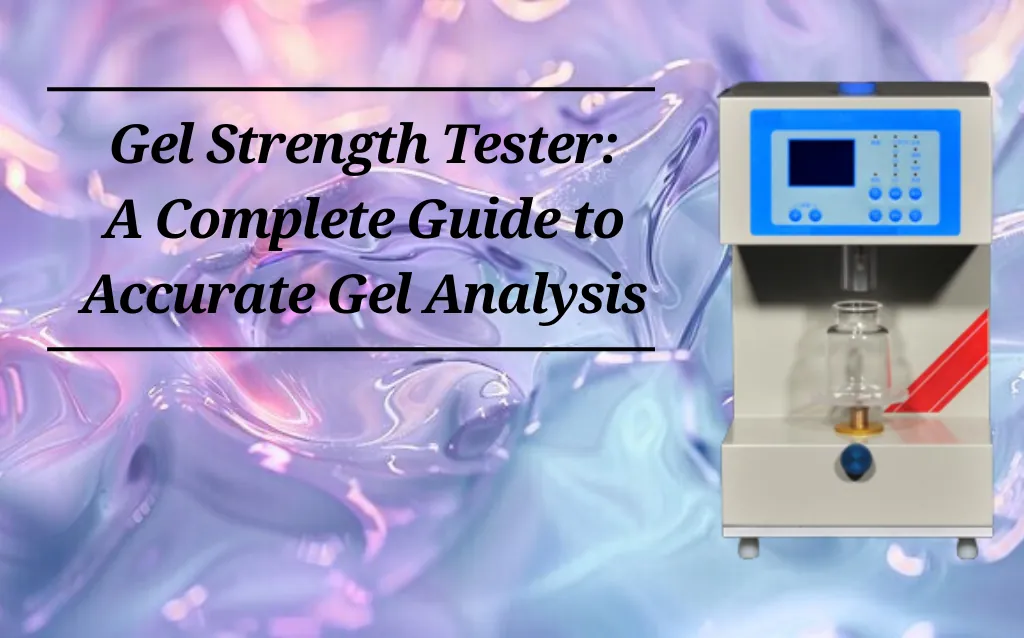
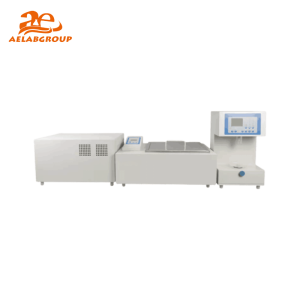
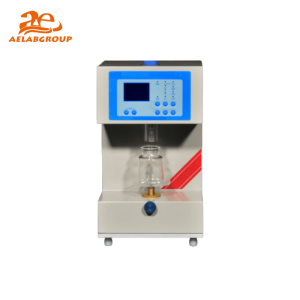
In industries where texture, firmness, and stability determine product quality, using the right testing instrument is essential. The Gel Strength Tester is a precise device designed to evaluate the firmness and structural integrity of gels in sectors such as food, pharmaceuticals, cosmetics, and material science. Among modern options, AELAB’s model is highly regarded for its accuracy, durability, and ease of use, making it an indispensable tool for both laboratories and production settings.
What Is a Gel Strength Tester?
A specialized instrument evaluates how a gel resists applied force or deformation. It provides standardized data on parameters such as:
Firmness/Hardness – ability of the gel to withstand compression
Elasticity/Springiness – recovery after deformation
Adhesiveness – stickiness of the gel surface
Cohesiveness – internal bonding strength within the gel
This information ensures that products maintain consistent quality, comply with international standards, and deliver the desired consumer experience.
Why Do You Need a Gel Strength Tester?
Food Industry
Critical for surimi products, jelly, yogurt, and gummy candies
Directly affects bite, chewiness, and overall consumer satisfaction
Pharmaceutical Industry
Ensures capsule shell stability and proper drug release
Validates hydrogel-based formulations
Cosmetics & Personal Care
Helps maintain texture and shelf life of creams, gels, and lotions
Research & Materials Science
Used in hydrogel development, biomaterial testing, and colloidal research
Investing in a Gel Strength Tester minimizes waste, optimizes production, and guarantees reliable product performance.

How does the Gel Strength Tester work?
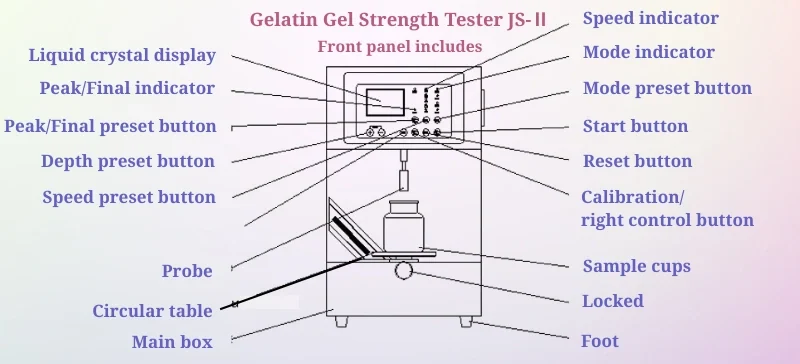
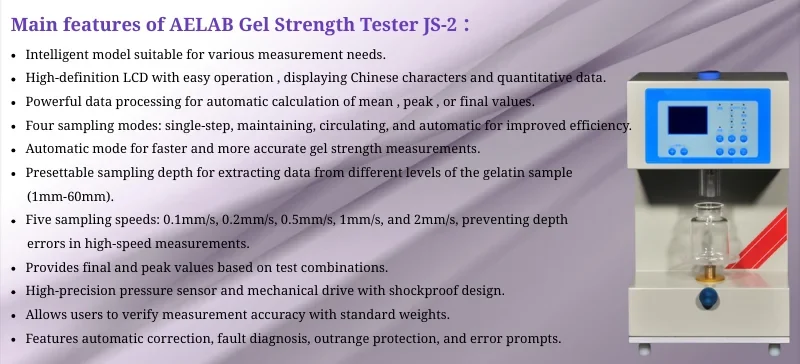
The tester applies a controlled force to a sample to measure its resistance to deformation. The process includes:
Sample Preparation: Place the sample in the tester’s holder.
Force Application: A probe or mechanical arm applies force (compression or penetration) to the sample.
Measurement: The tester measures how much the sample deforms and calculates properties like firmness, elasticity, adhesiveness, and cohesiveness.
Data Analysis: Analyze the results to determine the sample’s resistance to compression, its ability to return to shape, stickiness, and internal bonding strength.
This process provides valuable data to ensure product quality and consistency across various industries.

Methods Supported by Gel Strength Testers
Different analytical approaches are available:
Mechanical: compression & penetration tests
Rheological: rotational rheometer analysis
Optical/Imaging: computer-based deformation measurement
Thermal & Ultrasonic: advanced scanning methods
Conclusion
A Gel Strength Tester goes beyond being a simple laboratory tool—it serves as a quality assurance solution that enables industries to produce safe, stable, and consumer-approved products. The AELAB model is distinguished by its precision, reliability, and versatile applications, making it an ideal choice for manufacturers, research laboratories, and quality control teams globally.
Call to Action:
Ready to enhance your testing process? Discover the AELAB Gel Strength Testers today and ensure your products meet the highest standards of quality and performance.