

Introduction
Crude fat extraction is a vital analytical process in fields such as food science, pharmaceuticals, and environmental studies. Modern technologies, such as automated and accelerated extraction systems, have significantly improved the precision and efficiency of this essential process. Accurate fat quantification is essential for nutritional labeling, feed formulation, and pollution analysis. Soxhlet extraction remains one of the most reliable methods for this purpose due to its simplicity and efficiency.
Fat extraction involves separating fats and oils from a sample matrix. Among the various techniques available, Soxhlet extraction stands out for its robustness and reproducibility. This article explores the Soxhlet process, modern advancements, and innovative technologies that complement it.
The Soxhlet Extraction Process
Principles of Soxhlet Extraction
Soxhlet extraction utilizes a continuous solvent recycling system. This technique maximizes the interaction between the solvent and the sample, ensuring thorough extraction. The apparatus consists of a distillation flask, an extraction chamber containing the sample, and a condenser that recycles the solvent.
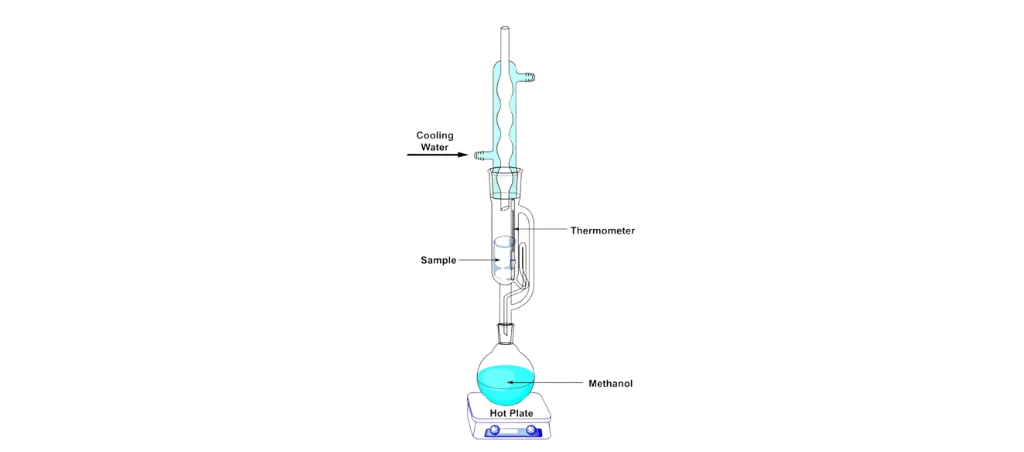
Figure 1: A schematic representation of the Soxhlet extraction apparatus, illustrating the solvent recycling mechanism.
Solvent Selection
Common solvents include hexane, petroleum ether, and ethanol. The choice depends on the sample’s properties and the desired outcome.
Recycling Mechanism
The solvent is evaporated, condensed, and reintroduced to the sample multiple times, enhancing efficiency.
Steps in the Process
Preparation
- Sample Preparation: Solid samples are dried and ground into fine powders to maximize surface area.
- Setup: The sample is placed in a cellulose thimble within the extraction chamber. The Soxhlet apparatus is assembled with all connections securely clamped.
Extraction
- The solvent in the distillation flask is heated to its boiling point, creating vapor that condenses in the condenser.
- The condensed solvent drips onto the sample, dissolving fats and oils.
- When the extraction chamber fills, the siphon transfers the solvent and dissolved fats back to the distillation flask.
- This cycle continues until complete extraction, typically taking 4-6 hours depending on the sample.
Recovery
- The distillation flask recovers the solvent-fat mixture.
- A rotary evaporator separates the solvent for reuse, leaving the extracted fat behind.
- The fat residue dries to remove any solvent traces and is weighed for analysis.
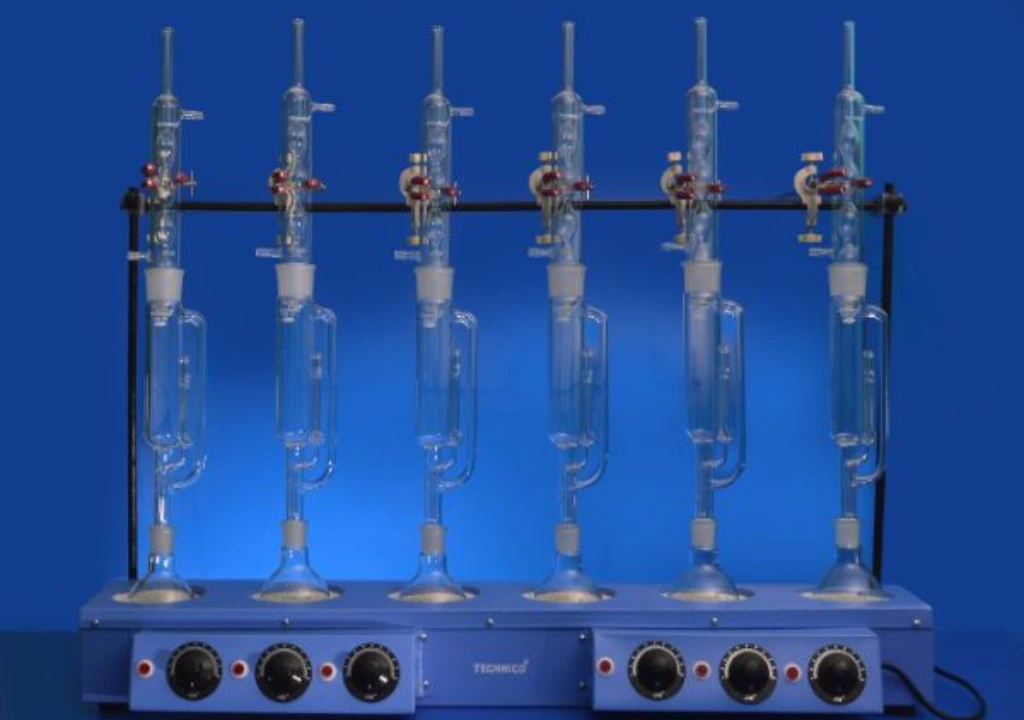
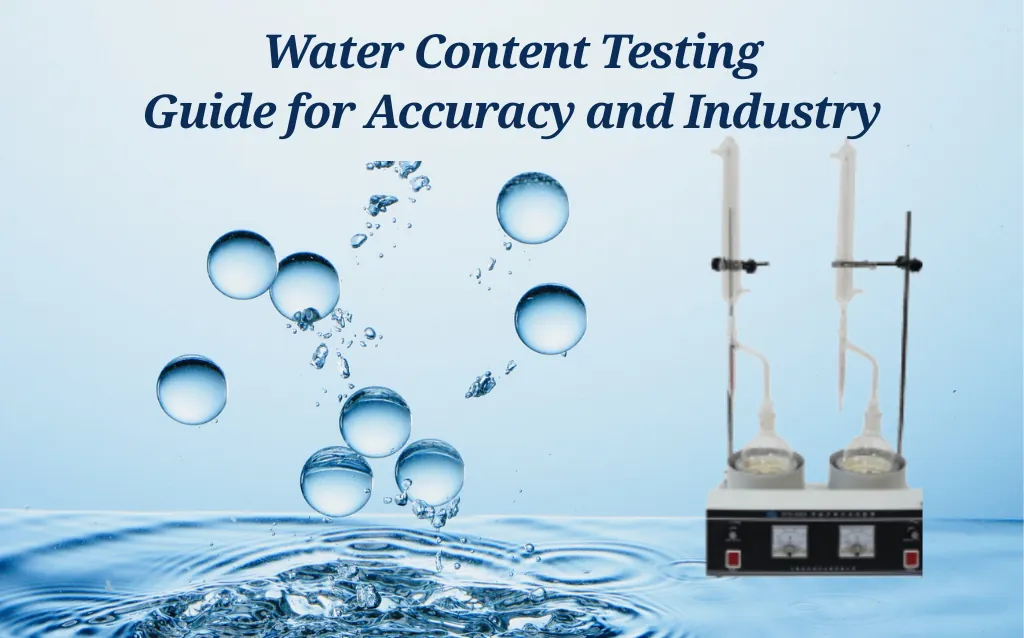
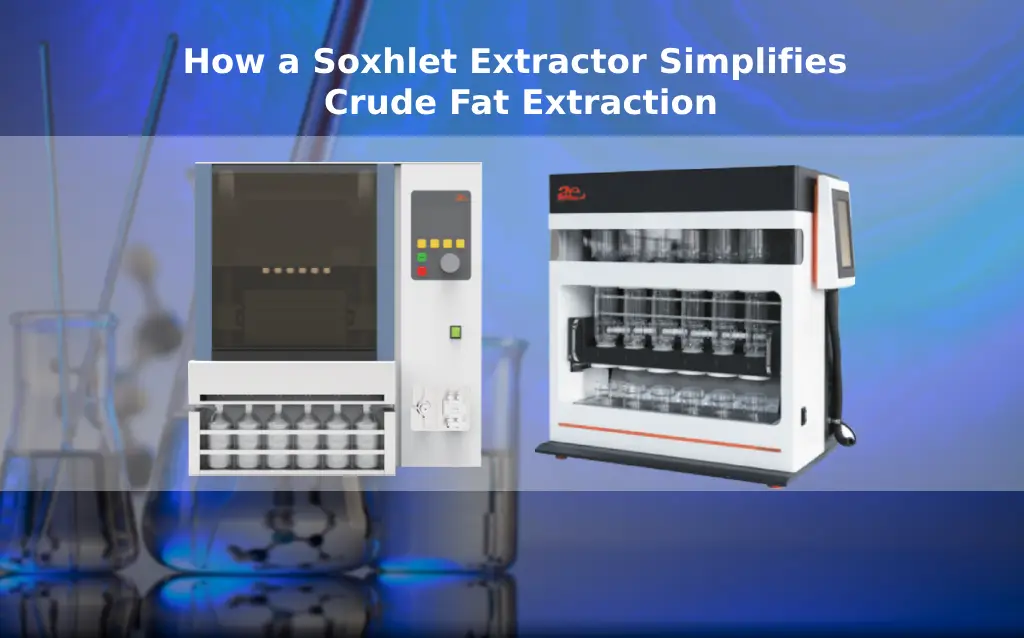
Figure 2: shows a multi-channel Soxhlet extraction setup, enabling simultaneous extraction of multiple samples for higher efficiency.
Advantages of Soxhlet Extraction
- Precision: The closed system minimizes sample loss and contamination.
- Versatility: Suitable for a wide range of sample types including seeds, meat, and soil.
- Efficiency: Continuous cycling ensures thorough fat extraction, even from complex matrices.
Innovative Devices for Fat Extraction
DW-SOX606 Automatic Soxhlet Extractor
For advanced fat analysis, Aelab’s DW-SOX606 Automatic Soxhlet Extractor offers unparalleled efficiency. This state-of-the-art system automates the traditional Soxhlet process, combining automation with precision. It operates within a temperature range of room temperature +5°C to 300°C and supports a measuring range of 0.1% to 100%. The system handles up to six samples per batch with a solvent recovery rate exceeding 85%. These features reduce labor, ensure consistent results, and make it ideal for applications in food, environmental, and pharmaceutical laboratories. Learn more about the DW-SOX606 here.

The 6 Channels Accelerated Solvent Extractor provides a modern alternative for rapid extraction of solid and semi-solid samples. Using high-pressure and temperature (up to 220°C), it processes six samples simultaneously, significantly reducing extraction time to as little as 15 minutes. This automated device improves solvent efficiency and minimizes contact with hazardous vapors, enhancing laboratory safety and environmental friendliness. Its versatility spans applications in environmental monitoring, food safety, criminal investigations, and medical research. With customizable extraction pool specifications and precise control over pressure and temperature, it represents the cutting-edge of accelerated solvent extraction technology.

6 Channels Accelerated Solvent Extractor
Applications of Fat Extraction Technologies
Food Industry
- Nutritional Analysis: Determining fat content in dairy, meat, and processed foods.
- Regulatory Compliance: Ensuring accurate nutritional labeling.
Environmental Studies
- Pollution Monitoring: Extracting lipids from soil and water samples to analyze contaminants.
- Bioavailability Studies: Assessing the movement of hydrophobic pollutants in ecosystems.
Agricultural Research
- Seed Analysis: Measuring oil content in seeds and nuts to support breeding programs.
- Optimization: Enhancing oil yields through improved agricultural practices.
Conclusion
The Soxhlet extractor remains a cornerstone in crude fat extraction due to its reliability and adaptability. Advancements such as automation and auxiliary energy sources have further enhanced its precision and efficiency, ensuring its relevance in modern applications across diverse scientific and industrial fields. Recent advancements, such as automation and auxiliary energy sources, have significantly enhanced its efficiency, making it indispensable in laboratories worldwide. Meanwhile, innovative technologies like the DW-SOX606 Automatic Soxhlet Extractor and the 6 Channels Accelerated Solvent Extractor offer faster and safer alternatives, catering to evolving scientific needs. Together, these tools ensure precise, efficient, and sustainable extraction processes, addressing current and future challenges in diverse industries.