

X-Ray Fluorescence (XRF) Analysis: How It Works and Its Applications
How Does X-Ray Fluorescence (XRF) Work?
X-ray fluorescence (XRF) analysis is a widely used and highly effective analytical technique for determining the elemental composition of materials. When a material is exposed to high-energy X-rays, it emits secondary (or fluorescent) X-rays. These emissions are unique to each element, allowing precise identification and quantification. This article explores the principles, process, and applications of XRF analysis.
Principle of XRF Analysis
X-ray fluorescence analysis operates on the principle of energy excitation and emission. When high-energy X-rays strike a material, they excite its atoms, causing inner-shell electrons to eject. This excitation creates instability within the atoms. To stabilize, electrons from higher energy levels drop into the vacancies, releasing energy as fluorescent X-rays. These emitted X-rays have characteristic energies, making them specific to individual elements.

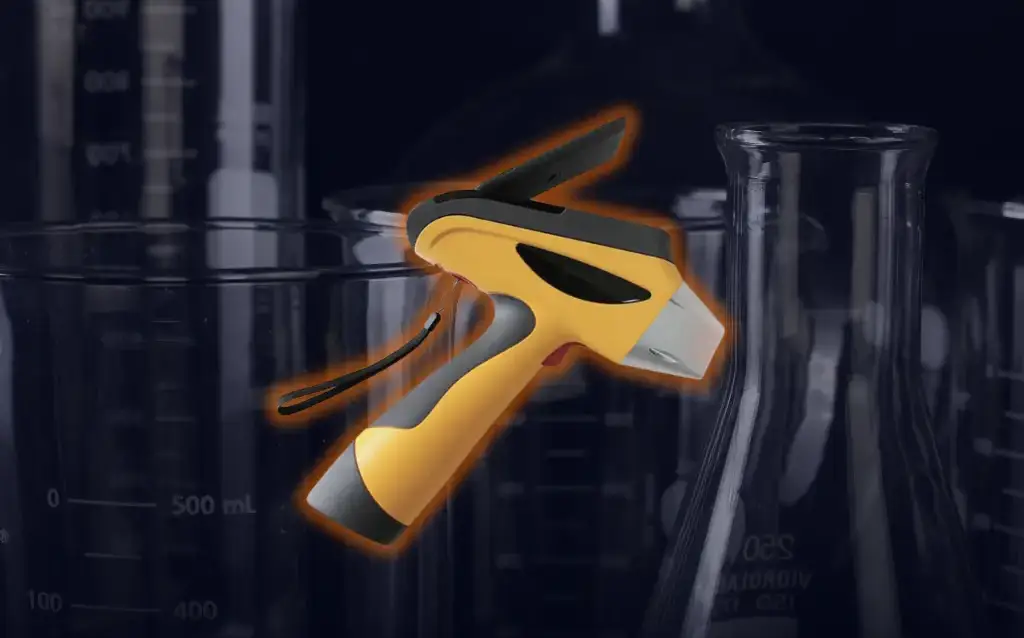
XRF-Spectrometer-for-Metal-Alloy-and-Ore-Analyzer-EXPLORER-7000
Steps in the XRF Process
- Excitation: The sample is exposed to primary X-rays, typically produced by an X-ray tube. These high-energy rays penetrate the sample, causing the ejection of inner-shell electrons.
- Emission: As atoms stabilize, electrons from higher energy levels fill the vacancies, emitting fluorescent X-rays unique to the elements in the sample.
- Detection: A solid-state detector captures the emitted fluorescent X-rays, measuring their energy and intensity. The detector differentiates between the X-rays’ energies, enabling elemental identification.
- Analysis: Specialized software compares the detected X-ray energies with known standards. This step provides both qualitative (element identification) and quantitative (element concentration) insights into the sample’s composition.
Applications of XRF Analysis
X-ray fluorescence analysis is invaluable across industries due to its non-destructive nature and high sensitivity. Common applications include:
- Environmental Analysis: Detecting heavy metals and pollutants in soil and water.
- Archaeometry: Determining the composition and origin of artifacts and historical objects.
- Mining and Geology: Analyzing ores and minerals to determine their elemental content.
- Quality Control: Ensuring material consistency in manufacturing.
- Coatings and Thin Films: Measuring the thickness and composition of coatings in electronics and automotive industries.
Advantages of XRF Analysis
X-ray fluorescence analysis offers several benefits:
- Non-Destructive: The sample remains intact throughout the process.
- Rapid Results: Analysis is completed within minutes.
- Minimal Sample Preparation: Most samples require little to no preparation.
- Versatility: XRF can analyze solids, liquids, powders, and thin films.
- Wide Elemental Range: Elements from sodium (Na) to uranium (U) can be detected.
Limitations of XRF Analysis
Despite its advantages, XRF analysis has some limitations:
- Matrix Effects: Variations in sample composition can influence accuracy.
- Detection Limits: Trace elements at extremely low concentrations may not be detected.
- Sample Homogeneity: Inconsistent samples can lead to inaccurate results.
Conclusion
X-ray fluorescence (XRF) analysis is not only a powerful but also a highly versatile technique for determining the elemental composition of materials. By accurately measuring the unique X-rays emitted by elements in a sample, XRF provides both qualitative and quantitative data. Moreover, its wide range of applications, along with its rapid analysis and non-destructive nature, makes it an indispensable tool for scientists, engineers, and manufacturers. Although challenges such as matrix effects and detection limits still persist, the advantages of XRF analysis—such as efficiency, precision, and versatility—clearly outweigh these limitations. Consequently, XRF continues to play a crucial role in modern elemental analysis.