

Introduction: Because Every Signal Counts
The Enzyme-Linked Immunosorbent Assay (ELISA) is one of the most widely used techniques in laboratories for detecting and quantifying substances such as proteins, peptides, antibodies, and hormones. Central to the ELISA process is the microplate reader, an instrument that plays a pivotal role in determining the results. Ensuring that the ELISA microplate reader delivers high sensitivity and accuracy is essential for achieving reliable and precise results.
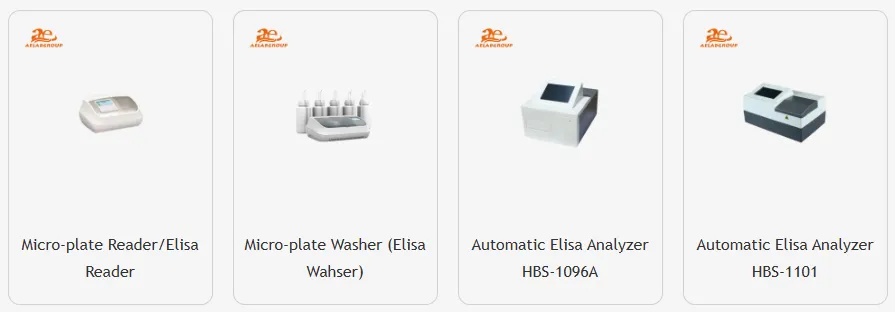
Whether you’re in a medical lab, biotech company, or academic setting, optimizing your AELAB ELISA microplate reader isn’t just a bonus — it’s a necessity for credible and efficient results.
Why Improving the Sensitivity and Accuracy of ELISA Microplate Readers Matters
- Enhanced Detection of Low-Concentration Targets: Detect subtle signals that might otherwise go unnoticed.
- Increased Reliability: Ensure your measurements reflect true values.
- Better Sample Discrimination: Differentiate between similar concentrations with confidence.
- Faster Data Analysis: Reduce false positives/negatives for quicker decisions.
- Cost-Effectiveness: Fewer errors mean fewer repeats.
- Expanded Applications: Broaden the research or diagnostic tests you can run.
- Regulatory Compliance: Meet industry standards for accuracy.
- Improved Reproducibility: More consistent data for scientific integrity.
Key Factors That Influence ELISA Reader Accuracy & Sensitivity
| Factor | Impact on Sensitivity and Accuracy |
|---|---|
| Wavelength Calibration | Ensures precise detection and absorbance measurement |
| Sensitivity Settings | Balances detection with background noise |
| Optical System Performance | Advanced optics reduce stray light |
| Temperature Control | Stable temperature supports consistent reactions |
| Background Noise | Clean baseline improves signal-to-noise ratio |
| Software Quality | Better analysis and reporting |
| Reagent Stability | Unstable reagents distort results |
| Sample Volume Consistency | Reduces variability |
| Microplate Quality | Uniform wells = uniform readings |
| Maintenance | Keeps the optics aligned and clean |
Strategies to Improve ELISA Reader Sensitivity and Accuracy
1. Optimizing Instrument Calibration
- Use certified standards to calibrate absorbance and wavelength.
- Calibrate pathlength to ensure precise light measurement.
2. Enhancing Sensitivity with Advanced Optics
- Use high-resolution optics and filters to reduce stray light.
- Choose the right photodetector (PMT for low-light, photodiode for mid-range).
3. Optimizing Plate Handling & Temperature Control
- Ensure accurate plate positioning inside the AELAB reader.
- Maintain consistent temperatures to support enzyme activity.
4. Improving Data Analysis with Advanced Software
- Real-time processing allows immediate flagging of errors.
- Generate advanced calibration curves for better accuracy.
5. Choosing High-Quality Reagents
- Use stable, high-affinity antibodies and substrates.
- Store reagents under optimal conditions.
6. Minimizing Interference and Matrix Effects
- Pretreat or dilute samples to minimize interference.
- Use blocking agents to avoid non-specific binding.
7. Regular Maintenance and Troubleshooting
- Clean optics and trays regularly.
- Prevent cross-contamination with proper pipetting techniques.
8. Optimizing Sample Handling
- Use consistent volumes across wells.
- Mix thoroughly and avoid edge effects.
ELISA Reader vs Manual Analysis: A Quick Comparison
| Feature | ELISA Reader | Manual ELISA (Visual) |
| Speed | Fast | Slow |
| Accuracy | High (if calibrated) | Low to moderate |
| Sensitivity | Excellent | Poor |
| Throughput | 96–384 samples per run | 1–10 samples |
| Objectivity | High | Subject to human error |
Improving your AELAB ELISA reader‘s sensitivity and accuracy isn’t about fancy features — it’s about thoughtful calibration, high-quality components, and smart sample handling. With consistent attention to detail, you can trust every result, every time.