

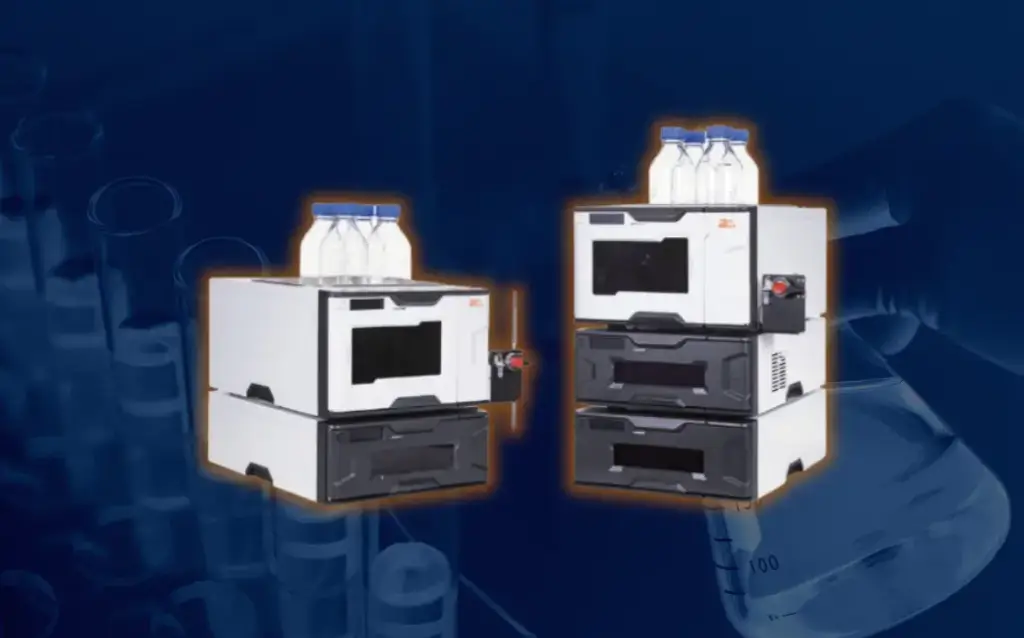
High-Performance Liquid Chromatography (HPLC) is a vital analytical technique used across various fields such as pharmaceuticals, environmental science, and food safety. Understanding how HPLC works can provide insights into its applications and importance.
How Does HPLC Work?
HPLC operates by passing a liquid sample through a column packed with a solid adsorbent material under high pressure. This process starts with the injection of the liquid sample into the HPLC system. A high-pressure pump then moves the sample through the column. The column is the core of the HPLC system, where the actual separation of the sample components occurs.
As the sample travels through the column, its components interact with the adsorbent material differently. These varying interactions cause the components to move at different rates, leading to their separation. The separated components exit the column and pass through a detector. The detector identifies and quantifies each component based on its interaction with the adsorbent material.
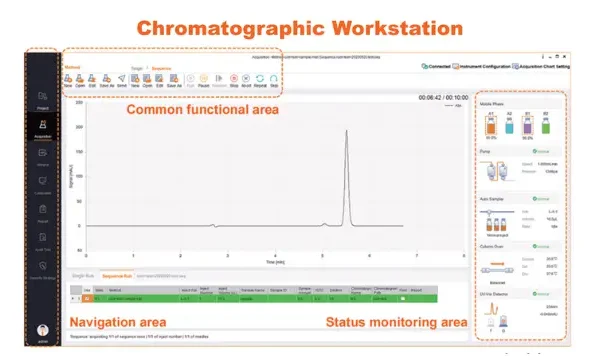
Key Components of HPLC
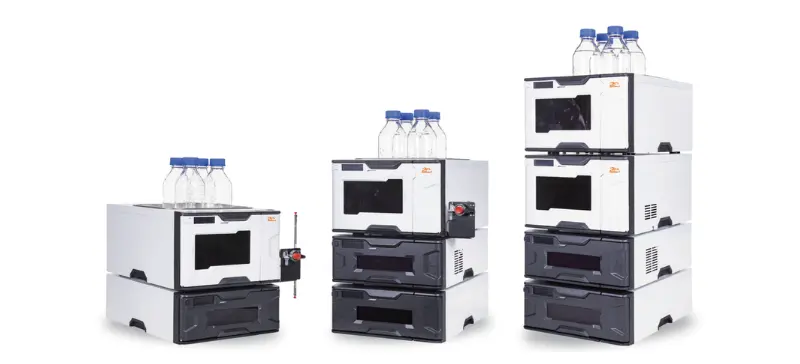
High-pressure Gradient Pump
A high-pressure gradient pump in HPLC allows for the precise mixing of different solvents at varying ratios under high pressure. This enables the optimization of the mobile phase composition during the separation process, enhancing the resolution and efficiency of the analysis.
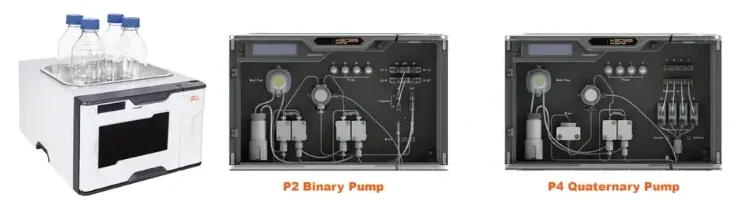
The precise gradient change and retention time are guaranteed with the reciprocating tandem plunger pump and pressure dynamic suppression algorithm. The repeatability of retention time is less than 0.2%.
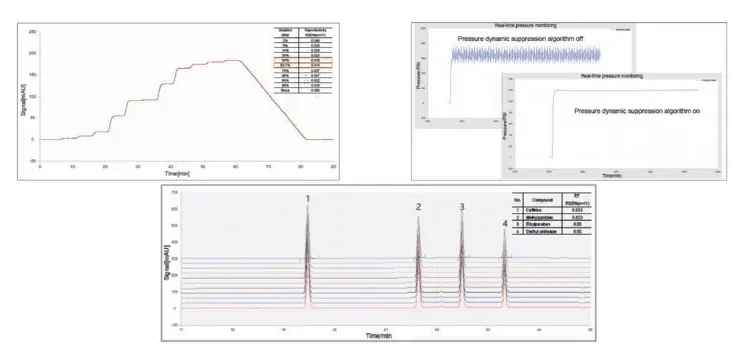
Autosampler
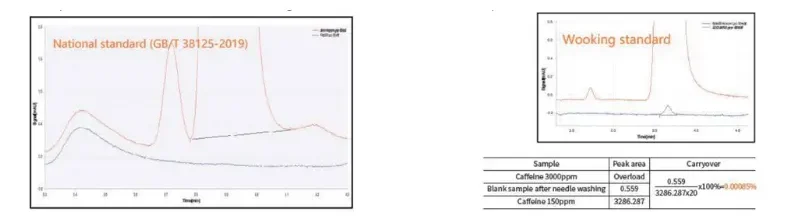
An autosampler adopts a patented integrated constant pressure needle and a precise syringe pump, which ensures accurate injection volume and excellent linearity, making the results more precise and accurate.
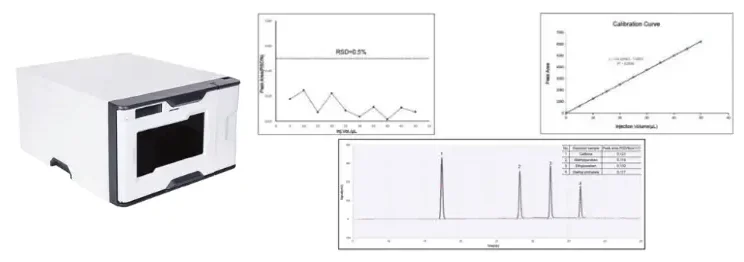
Low carryover to make results more accurate : The sampling needle is highly polished for the outer surface and passivated for the inner surface, which can effectively reduce the sample residue.The carryover is much lower when needle washing of the outer and inner surfaces are performed.
Column Oven
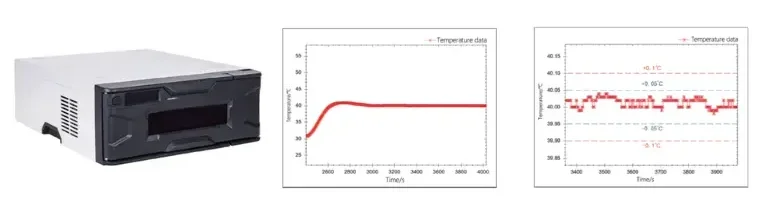
Precise temperature control ensures good separation and repeatability Using fuzzy PID intelligent temperature control algorithm, ban-based air circulation, and multiple insulation layer design, the column temperature is more accurate, stable, and uniform, the temperature stability is±0.1℃, and the temperature for each analysis are constant and consistent.
UV-Vis Detector
Low LOD:The high-throughput optical path, reference subtraction algorithm, and ultra-precise signal acquisition circuit ensurethe detector’s excellent sensitivity.

Diode Array Detector (DAD)
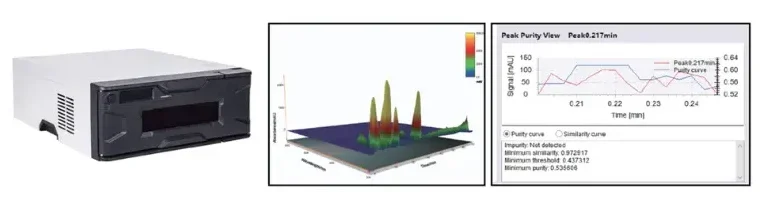
The diode array detector performs spectral similarity alignment and determines peak purity for precise analysis. It provides full-spectrum information, enabling the identification of compounds through similarity comparison in a spectral database. The workstation allows researchers to perform peak purity determination using DAD efficiently.
Versatility of HPLC
HPLC is highly versatile due to the ability to adjust various parameters such as the type of column, mobile phase composition, flow rate, and temperature. This flexibility allows for the analysis of a wide range of compounds, from small organic molecules to large biomolecules.
Applications of HPLC
- Pharmaceuticals: Ensuring the purity and concentration of active ingredients in medications.
- Environmental Science: Detecting pollutants in water, soil, and air.
- Food Safety: Analyzing food additives, contaminants, and nutritional content to ensure compliance with safety standards.
Conclusion
High-Performance Liquid Chromatography operates by injecting a liquid sample into a high-pressure system. The system pushes the sample through a column, where it interacts with an adsorbent material. This interaction separates the components, and the system detects and quantifies them. HPLC provides precise and accurate analyses, making it an indispensable tool for scientific research and various industrial applications.
Understanding how HPLC works allows researchers and professionals to appreciate its critical role in ensuring quality, safety, and compliance across many fields. This technique remains essential for both researchers and industry professionals.