


1. Drug Discovery and Development: Innovating with HPLC
In pharmaceutical research and development, HPLC in Pharmaceutical Industry plays a pivotal role in drug discovery and development. During the initial phases of drug development, HPLC enables the screening and purification of potential drug candidates. By using HPLC in Pharmaceutical Industry, researchers can rapidly assess the purity, chemical composition, and stability of new compounds, ensuring their suitability for further clinical testing.
Moreover, HPLC in Pharmaceutical Industry assists in formulation development, where it is used to evaluate the stability of drugs under various environmental conditions, such as temperature and humidity. This ensures that drugs are formulated for optimal shelf life and effectiveness.
2. Pharmaceutical Quality Control (QC) and Assurance: Maintaining Consistency through HPLC
Quality control in pharmaceutical manufacturing heavily relies on HPLC in Pharmaceutical Industry. This technique ensures that every batch of drugs meets predetermined quality standards. HPLC is employed for:
Purity Testing: Detecting impurities that may compromise drug safety and effectiveness.
Stability Testing: Monitoring degradation products and establishing the shelf life of drugs.
Quantification of Active Pharmaceutical Ingredients (APIs): Ensuring the correct dosage of ingredients in raw materials and finished products.
The application of HPLC in Pharmaceutical Industry ensures that products remain consistent and meet regulatory requirements, maintaining compliance with agencies like the FDA and EMA.
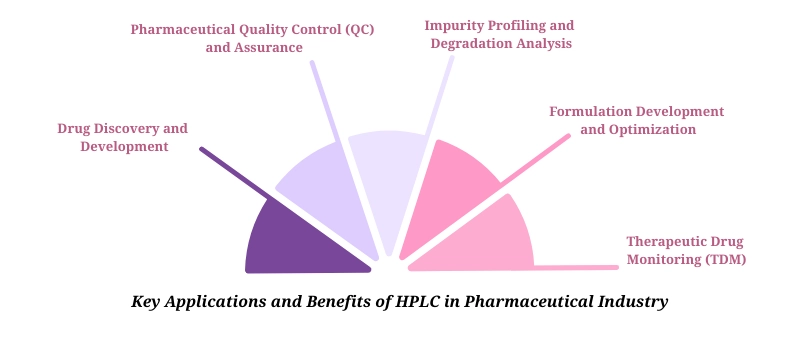
3. Impurity Profiling and Degradation Analysis: Protecting Patient Safety with HPLC
HPLC in Pharmaceutical Industry is essential for detecting even trace amounts of impurities that could jeopardize patient safety. This method is used to identify contaminants from raw materials or by-products of the manufacturing process. Furthermore, HPLC helps determine the optimal storage conditions by analyzing degradation products under various environmental conditions.
4. Formulation Development and Optimization: Enhancing Drugs with HPLC
HPLC is indispensable in optimizing drug formulations. HPLC in Pharmaceutical Industry helps researchers enhance drug solubility, stability, and bioavailability, ensuring effective delivery. By assessing excipient compatibility with active ingredients, HPLC prevents unwanted interactions during production, optimizing the final formulation.
5. Therapeutic Drug Monitoring (TDM): Precision with HPLC
HPLC in Pharmaceutical Industry is crucial for therapeutic drug monitoring (TDM). By measuring the concentration of drugs in biological samples, HPLC ensures that patients receive accurate dosages. This is especially important for drugs with a narrow therapeutic window, as it allows clinicians to adjust doses for optimal patient outcomes.
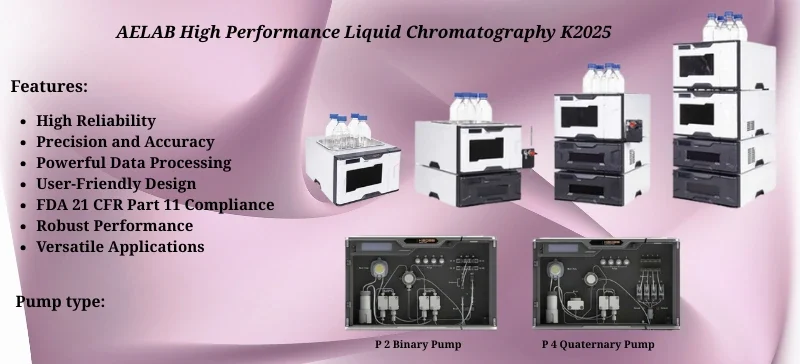
Selecting the appropriate HPLC system is critical for ensuring efficient and accurate pharmaceutical analysis. Below are some considerations when choosing an HPLC system:
1. Types of HPLC
There are different types of HPLC systems, each suited to specific pharmaceutical applications:
Analytical HPLC: Used for routine quality control and product analysis.
Preparative HPLC: Ideal for the isolation and purification of compounds during drug synthesis.
Ultra-High Performance Liquid Chromatography (UHPLC): Provides high-speed, high-resolution analysis for complex pharmaceutical samples.
2. Automation and Data Integrity in HPLC
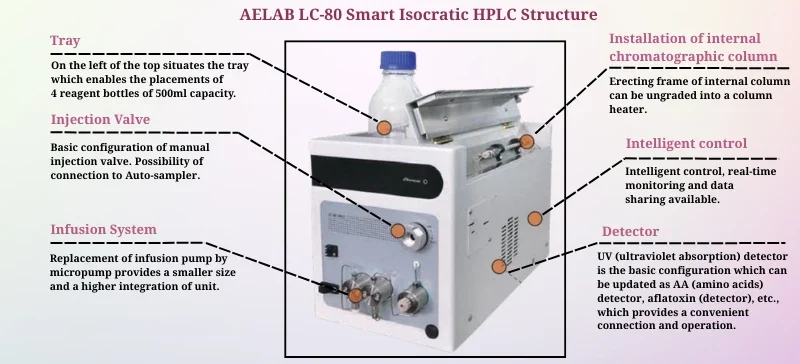
Modern HPLC systems come equipped with advanced features such as automated sample injection and column switching, improving lab efficiency. These systems also ensure compliance with Good Laboratory Practices (GLP) through robust data integrity features and audit trails, essential for pharmaceutical companies.
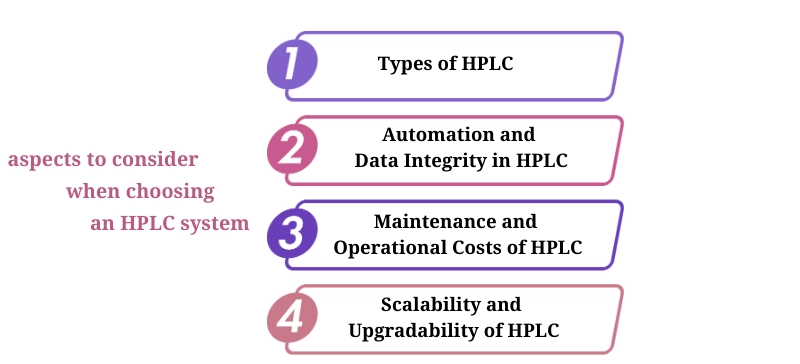
3. Maintenance and Operational Costs of HPLC
Regular maintenance and operational costs, such as solvent and column replacements, are important considerations when selecting HPLC in Pharmaceutical Industry equipment. While UHPLC systems may have higher initial costs, they offer significant savings in solvents and faster analysis times, leading to long-term cost benefits.
4. Scalability and Upgradability of HPLC
When selecting HPLC systems for Pharmaceutical Industry , scalability is important. Choose equipment that can be easily upgraded with additional detectors, such as Mass Spectrometry (LC-MS), to expand your laboratory’s capabilities as research needs grow.