

Introduction
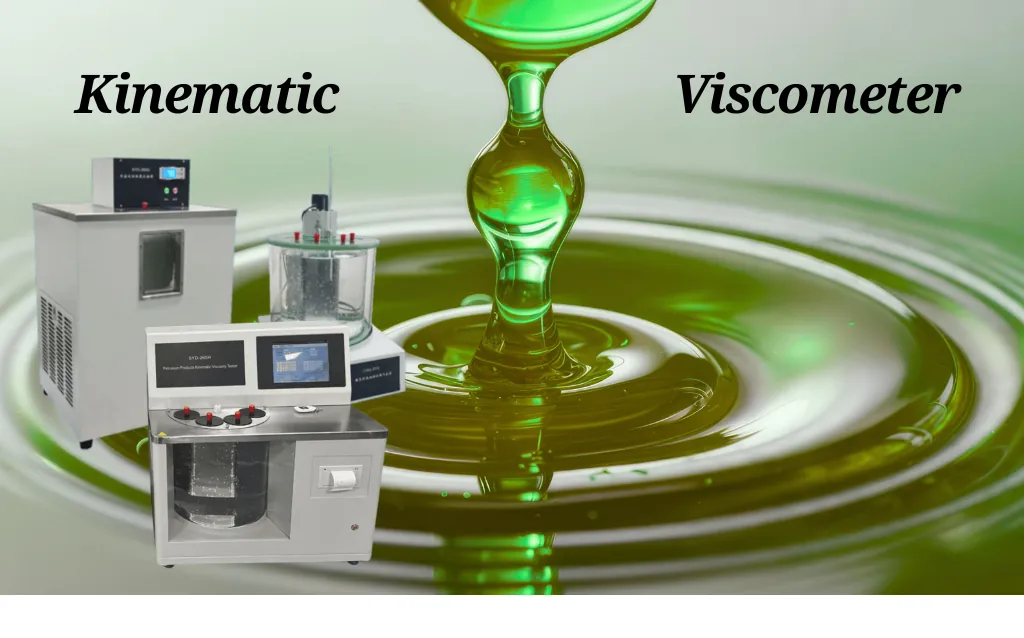
Viscosity is one of the most important properties of fluids, directly influencing flow behavior, lubrication, product quality, and system efficiency. To measure this property with high precision, laboratories and industries widely rely on the Kinematic Viscometer. Based on the principle of measuring the time it takes for a fixed volume of liquid to flow through a calibrated capillary under gravity, the Kinematic Viscometer is an essential tool for quality control and process optimization.

What is a Kinematic Viscometer?
A Kinematic Viscometer is a tool that measures how easily a liquid flows, which is called kinematic viscosity. Simply put, kinematic viscosity shows how much a fluid resists flowing based on its density.
It is calculated using the formula:
ν=μρ\nu = \frac{\mu}{\rho}ν=ρμ
Where:
ν\nuν = kinematic viscosity (cSt)
μ\muμ = dynamic viscosity (Pa·s)
ρ\rhoρ = fluid density (kg/m³)
The result usually comes in centistokes (cSt), which is a standard unit for describing how thick or thin a fluid is.
How a Kinematic Viscometer Works?
Kinematic viscometers operate based on a gravity-driven flow principle:
A specific volume of liquid is introduced into a capillary tube.
The time taken for the liquid to pass between two calibrated marks is recorded.
Using calibration constants, this flow time is converted into viscosity units (cSt).
Example: An oil sample may have a viscosity of 25 cSt at 40°C.
Key Point: Since viscosity is highly temperature-dependent, tests are often conducted at standardized temperatures such as 40°C and 100°C.
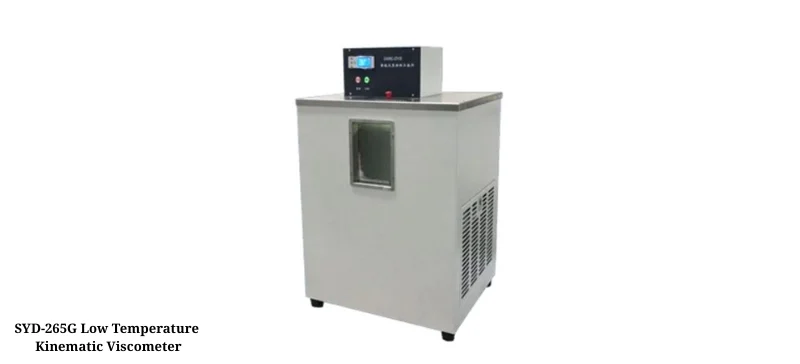
Kinematic vs. Dynamic Viscosity
Dynamic Viscosity (μ):
Measures a fluid’s internal resistance under shear stress.
Unit: centipoise (cP).
Kinematic Viscosity (ν):
Ratio of dynamic viscosity to density.
Unit: centistokes (cSt).
Most laboratories prefer kinematic viscosity because it offers higher repeatability and complies with ASTM D445 standards.
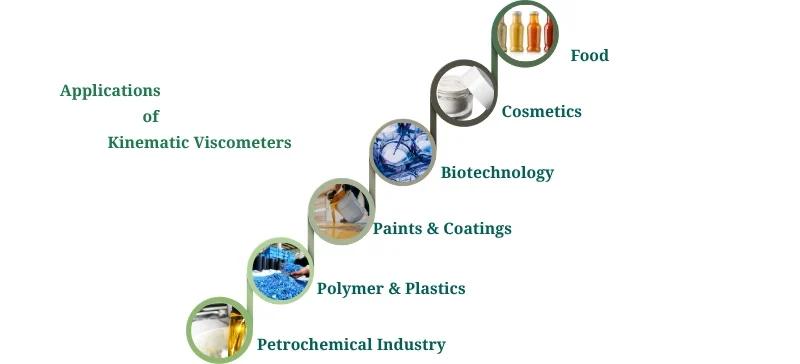
Applications of Kinematic Viscometers
Kinematic viscometers are widely used in:
Petrochemical Industry → Testing lubricants, fuels, and oils
Polymer & Plastics → Monitoring molecular weight and polymerization processes
Paints & Coatings → Ensuring proper thickness and flow behavior
Food & Cosmetics → Measuring consistency in sauces, beverages, lotions, and toothpaste
Biotechnology → Tracking enzyme activity through viscosity changes
They are critical for quality control, process optimization, and compliance with international standards.
Types of Kinematic Viscometers
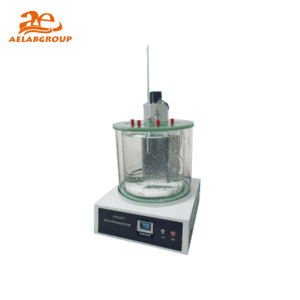
1. Manual Capillary Viscometers
Includes Ostwald, Ubbelohde, Cannon-Fenske, and Houillon types.
Require precise temperature control (40°C or 100°C).
Operators must allow the flow time to reach ≥200 seconds to ensure accuracy
Advantages: High accuracy, low cost
Disadvantages: Manual operation, cleaning takes time
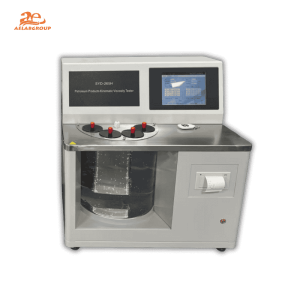
2. Automated Kinematic Viscometers
Modified Ubbelohde or direct-flow systems.
Computer-controlled sample handling for higher throughput (25–45 samples/hour).
The device automatically cleans the samples using dual-solvent options.
Ideal for opaque or in-service oils.
Advantages: High efficiency, minimal operator effort
Disadvantages: Higher initial cost
Key Considerations When Buying a Viscometer
When selecting a viscometer, keep in mind:
Viscosity range → Match with the fluid being tested
Temperature control → Essential for accurate results
Sample volume → Important for clinical or expensive samples
Accuracy & repeatability → ASTM/ISO compliance is a must
Automation level → Choose between manual, semi-auto, or full-auto
Ease of cleaning → Saves time in high-throughput labs
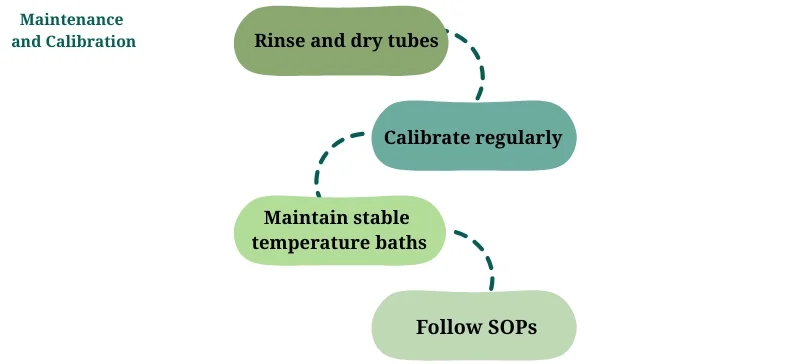
Maintenance and Calibration
For reliable, repeatable results:
- Rinse and dry tubes with suitable solvents
- Calibrate regularly with ASTM reference oils
- Maintain stable temperature baths
- Follow SOPs (Standard Operating Procedures)
Expert Tips for Kinematic Viscometer Accuracy
Control temperature within ±0.1°C
Avoid introducing air bubbles into the sample
Choose an automated system for high sample throughput
Use both dynamic and kinematic viscosity for complex fluids
Conclusion
The kinematic viscometer is a cornerstone tool for measuring fluid viscosity and ensuring quality, safety, and efficiency across industries. By selecting the right viscometer, maintaining proper calibration, and applying best practices, laboratories can achieve accurate, repeatable, and standardized results.
Looking for a reliable kinematic viscometer? Explore our AELAB viscometers that ensure consistent viscosity measurements for your laboratory and industrial needs.