

Introduction
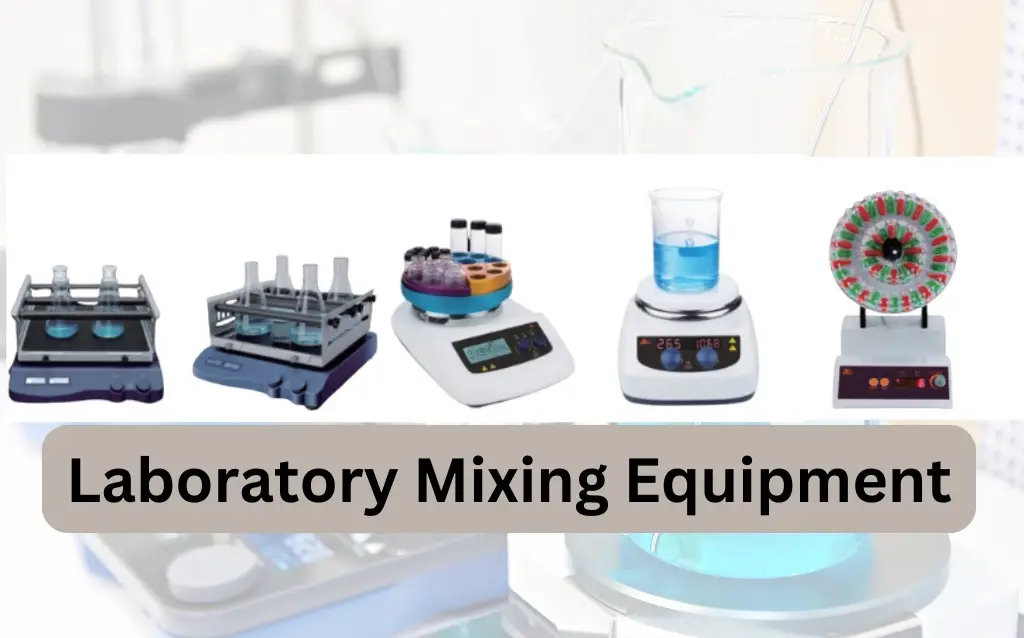
In laboratory settings, precise mixing of substances is crucial for obtaining consistent and reliable results. Laboratory mixing equipment serves to mix a wide range of materials, from liquids to powders and high-viscosity substances. Selecting the appropriate mixing equipment enhances both efficiency and accuracy across various applications in research and industry.
Types of Laboratory Mixing Equipment
-
Magnetic Stirrers
Magnetic stirrers are commonly used mixers that utilize a rotating magnetic field to spin a stir bar in a container. These are ideal for low-viscosity liquids and provide precise mixing for small volumes.
Overhead Stirrers
Overhead stirrers are designed for higher-viscosity substances. Equipped with a motor-driven shaft and blade, they can handle large volumes and are essential for mixing pastes, slurries, and gels.
Rotary Evaporators
Rotary evaporators, primarily used for distillation, also mix volatile substances effectively. The rotating flask ensures consistent mixing while evaporating solvents, making them indispensable in organic chemistry.
Laboratory Shakers
Laboratory shakers provide gentle mixing through back-and-forth or circular motions. Scientists commonly use laboratory shakers to mix samples in test tubes, flasks, or plates, particularly for cell cultures and protein synthesis.
Ultrasonic Mixers
Ultrasonic mixers employ high-frequency sound waves to agitate liquid samples, breaking down solids and creating uniform mixtures. They are particularly useful for emulsification and dispersion processes.
Planetary Mixers
Planetary mixers combine rotational and planetary movements to mix highly viscous materials efficiently. They are commonly used in pharmaceuticals, cosmetics, and food science.
High-Speed Homogenizers
High-speed homogenizers break particles into smaller sizes, creating uniform suspensions. These are extensively used in biotechnology and pharmaceutical applications for ensuring even dispersion of materials like active pharmaceutical ingredients (APIs).
Learn More:Sample Preparation for AAS Analysis: Sample Types and How to Prepare
Applications of Laboratory Mixing Equipment
Pharmaceuticals
Uniform mixing of ingredients is vital in pharmaceutical research to ensure consistent drug formulations. Laboratory mixers guarantee even distribution of active ingredients for effective and reliable potency.
Chemical Industry
Precise mixing is essential for chemical reactions, emulsions, and dissolving solids in liquids. The right equipment optimizes reaction rates and improves product quality.
Biotechnology
Proper mixing is critical in biotechnology for successful cell cultures, fermentation, and protein purification. Shakers, homogenizers, and ultrasonic mixers are frequently used for these applications.
Food and Beverage
Laboratory mixers are employed in the food industry for blending ingredients in products like sauces, beverages, and dairy. Consistency in mixing directly influences the product’s taste, texture, and shelf life.
Environmental Testing
In environmental research, laboratory mixers play a key role in testing soil samples, water treatment, and pollution analysis. Accurate mixing ensures reliable and reproducible results.
Learn More:How a Soxhlet Extractor Simplifies Crude Fat Extraction
Selecting the Right Laboratory Mixing Equipment
When choosing mixing equipment, it is important to carefully consider the following factors:
- Viscosity and Volume: If you are working with low-viscosity liquids, magnetic stirrers are a good choice. On the other hand, thicker materials benefit more from overhead or planetary mixers, which can handle the additional resistance effectively.
- Mixing Speed and Power: While high-speed mixers work well for breaking down solids, slower speeds are better suited for delicate operations that require precision and care. Therefore, understanding the material’s properties and the mixing requirements is crucial.
- Application Type: Determine whether the process involves emulsification, dispersion, or simple stirring. For example, ultrasonic mixers are ideal for emulsification processes, whereas homogenizers are more suitable for particle size reduction and achieving uniformity.
-
Ease of Cleaning and Maintenance:
- Opt for equipment that minimizes contamination risks and is easy to clean, ensuring accuracy and reliability across different applications.
AELAB Solutions for Laboratory Efficiency
For reliable and efficient laboratory mixing, AELAB provides top-tier products such as magnetic stirrers, high-performance liquid chromatography (HPLC) systems, and melting point apparatus. These products are designed to meet the evolving needs of researchers and laboratory professionals.Learn more about their products at AELAB.

Hotplate Stirrers AE-HS Series


Conclusion
Choosing the right laboratory mixing equipment is key to achieving precise and repeatable results. From magnetic stirrers to high-speed homogenizers, each type of equipment offers unique benefits tailored to specific applications. By understanding your materials and process requirements, you can select the optimal tools to improve efficiency and outcomes in your laboratory work.