

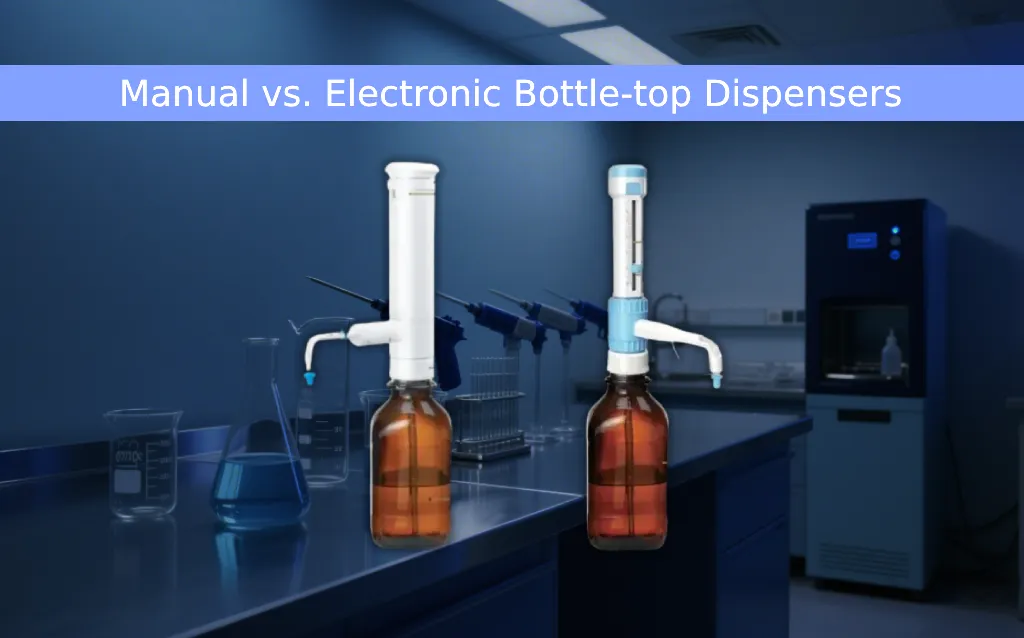
Manual vs. Electronic Bottle-top Dispensers: Which Type to Choose?
In laboratories, precision in liquid handling is crucial to ensure reliable results. Among the essential tools that help achieve this level of accuracy, bottle-top dispensers play a critical role. These dispensers come in two main types: manual and electronic. While both serve the same fundamental purpose of providing reliable volume measurements, they differ significantly in functionality, ease of use, and suitability for specific applications. This article explores the differences between manual and electronic bottle-top dispensers, helping you make an informed decision based on your laboratory’s needs.
Introduction
Bottle-top dispensers are indispensable tools in laboratory environments. They enable the safe, accurate, and efficient dispensing of liquids directly from storage bottles, minimizing the risk of contamination, reducing manual handling errors, and ensuring consistent volume delivery. These dispensers are essential for tasks like titrations, solution preparation, and sample dilution in a variety of laboratory settings, including analytical, chemical, and biological laboratories. However, the decision between manual and electronic dispensers often comes down to the specific demands of the laboratory.
In this article, we’ll compare the manual and electronic bottle-top dispensers, highlighting their key features, advantages, and applications to help you choose the best option for your needs
What Are Manual Bottle-top Dispensers?
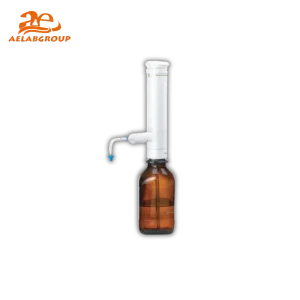
Manual bottle-top dispensers are a staple in laboratories, known for their simplicity and reliability. These dispensers operate through a mechanical piston-driven system, allowing users to manually control the dispensing process. A piston retracts when the plunger is pulled up, drawing liquid into the chamber from the attached bottle. Pressing the plunger forces the liquid out through a spout.
How They Work: The manual dispenser relies on the user’s technique to control the dispensing volume. Volume settings are adjusted via a rotating dial or knob, providing repeatable measurements. They are widely used for tasks that do not require extreme precision.
Common Applications:
Dispensing solvents or acids
Transferring reagents for titrations
Filling tubes or vials with set volumes
Sample preparation
Advantages of Manual Bottle-top Dispensers:
Simplicity and Ease of Use: No need for external power or electronics.
Durability: Built with chemical-resistant materials like PTFE or borosilicate glass.
Cost-Effective: Perfect for labs with limited budgets or occasional liquid dispensing needs.
Portability: Can be used without power constraints, making them ideal for field applications.
Limitations: Manual dispensers may be labor-intensive and prone to inconsistencies during repetitive or high-volume tasks, especially when absolute precision is required.
What Are Electronic Bottle-top Dispensers?
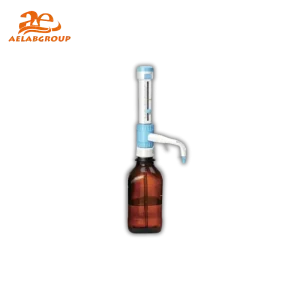
Electronic bottle-top dispensers represent a modern evolution in laboratory liquid handling. Unlike their manual counterparts, these dispensers operate using motorized systems controlled via buttons or touch panels. The electronic models offer greater precision and repeatability, making them ideal for high-throughput environments or tasks requiring high accuracy.
How They Work: Electronic dispensers use a motor-driven piston mechanism controlled through a digital interface. Users can program specific volumes, dispensing modes (e.g., single, multi-dispense, or sequential), and even set custom dispensing protocols. Once programmed, the dispenser delivers the liquid with consistent speed and force, minimizing human error.
Key Features and Capabilities:
Precision and Reproducibility: Digital controls offer enhanced volume and speed control, reducing human error.
Safety Features: Includes electronic locking, overfill protection, and auto-calibration.
Memory Functions: Many models store multiple user-defined methods for efficient workflow.
Data Management: Features such as tracking and connectivity options allow for easy integration into laboratory information systems.
Ideal Applications: Electronic dispensers are highly suitable for laboratories that require:
High-precision dosing
Repetitive dispensing tasks
Reduced operator fatigue
Documentation and traceability of dispensing actions
Fields such as pharmaceuticals, clinical diagnostics, analytical chemistry, and quality control benefit from the consistency and automation provided by electronic dispensers.
Advantages of Electronic Bottle-top Dispensers:
Precision and Reproducibility: Offers enhanced control and consistent performance.
Efficiency: Fast and consistent liquid handling, especially with programmable features.
User Comfort: Reduced hand strain during prolonged use.
Data Management: Optional tracking and memory for traceability.
Limitations: Electronic dispensers require a higher initial investment and some level of user training. Regular calibration and maintenance of electronic components are necessary to maintain optimal performance.
Manual vs. Electronic Bottle-top Dispensers: A Detailed Comparison
| Feature | Manual Bottle-Top Dispenser | Electronic Bottle-Top Dispenser |
|---|---|---|
| Operation Method | Manual plunger or piston | Motorized, button-controlled |
| Power Requirement | None | Battery or external power required |
| Ease of Use | Simple, user-dependent | High, especially for repetitive tasks |
| Precision and Accuracy | Good, varies with user consistency | Excellent, digitally controlled |
| Volume Setting | Manual dial or knob | Digital input with programmable functions |
| Throughput Suitability | Best for low to moderate volume tasks | Ideal for high-throughput, repetitive work |
| Fatigue Factor | Higher due to repeated manual action | Lower—minimal physical effort needed |
| Cost | Generally more affordable | Higher initial investment |
| Maintenance | Low; fewer mechanical parts | Requires care with electronic components |
| Application Suitability | Routine lab use, education, fieldwork | Research labs, QC labs, regulated industries |
| Data Management | Not available | Often includes memory, tracking, or connectivity options |
Which Type Should You Choose?
Selecting between manual and electronic bottle-top dispensers depends on your laboratory’s needs, workflow, and budget.
Consider the Nature of Your Work:
Manual Dispensers: Ideal for laboratories that need low to moderate liquid dispensing with minimal precision requirements. They are perfect for general-purpose labs, teaching environments, and fieldwork.
Electronic Dispensers: Better suited for high-throughput environments where consistency, precision, and speed are required. These dispensers are particularly useful in pharmaceutical labs, quality control, and analytical testing where accuracy and documentation are critical.
Weighing Cost vs. Performance:
While manual dispensers are more affordable, electronic dispensers offer long-term value for laboratories requiring high efficiency and precision. The initial cost may be higher, but the return on investment is often realized through time savings, reduced errors, and less reagent waste.
Maintenance and Calibration:
Manual dispensers require minimal maintenance and are easy to clean. However, they need to be regularly calibrated to ensure accuracy.
Electronic dispensers require more careful maintenance and calibration. Regular servicing, including software updates and electronic component care, is essential to maintain their performance.
Final Thoughts
Choosing between manual and electronic bottle-top dispensers depends on your laboratory’s specific requirements. Manual dispensers are a reliable and cost-effective solution for simple tasks, while electronic dispensers provide enhanced accuracy, consistency, and efficiency for high-precision, high-throughput environments.
Call to Action: Ready to optimize your laboratory’s liquid handling processes? Explore the options available at AELAB and find the perfect bottle-top dispenser for your needs. Whether you need a manual or electronic model, we are here to help guide you through the selection process. Contact us today for personalized recommendations and expert advice!