

Microplate Readers and Elisa Readers
Microplate readers, including Elisa readers, are indispensable instruments in various scientific fields, particularly in biological, chemical, and medical research. These devices play a critical role in quantifying samples in microplates, providing accurate data that drives scientific discovery. This article explores the types, applications, and key features of Microplate Readers and Elisa Readers, based on comprehensive analysis and industry trends.

Learn more : The Best Digital X-Ray Systems for Industrial Material Analysis and Quality Control
1. What is a Microplate Reader?
A Microplate Reader is a laboratory instrument that detects and quantifies the concentration of specific compounds in microplates. These devices are crucial for assays that involve chemical, biological, or physical reactions. Microplate readers are typically used in high-throughput screening, where multiple samples are analyzed simultaneously.
Microplate readers can measure various types of light signals emitted or absorbed by the samples. These signals may include absorbance, fluorescence, and luminescence, depending on the nature of the assay.
2. Types of Microplate Readers
2.1 Dedicated Microplate Readers
Dedicated microplate readers are designed to measure one type of detection signal, such as absorbance, fluorescence, or luminescence. These readers are highly accurate, cost-effective, and commonly used in labs where specific, single-mode assays are conducted. Some examples include:
-
Absorbance Microplate Reader
Measures the amount of light absorbed by the sample at specific wavelengths.
-
Fluorescence Microplate Reader
Detects the emission of light from a sample after excitation by a light source.
-
Luminescence Microplate Reader
Measures the light produced by chemical reactions or biological processes.
These devices provide reliable and precise results, making them ideal for applications like protein assays, nucleic acid quantification, and enzyme activity testing.
2.2 Multimode Microplate Readers
Multimode microplate readers combine several detection modes into a single unit. These instruments offer greater flexibility by enabling researchers to perform multiple types of assays without needing separate instruments. They can measure:
-
Absorbance
-
Fluorescence
-
Luminescence
-
Fluorescence Polarization
-
Time-Resolved Fluorescence (TRF)
these readers are particularly suitable for more complex research environments. such as drug discovery, biomarker screening, and high-throughput screening (HTS).
Learn more : The Best Digital X-Ray Systems for Industrial Material Analysis and Quality Control
3. Elisa Readers: Specialized Microplate Readers for Immunoassays
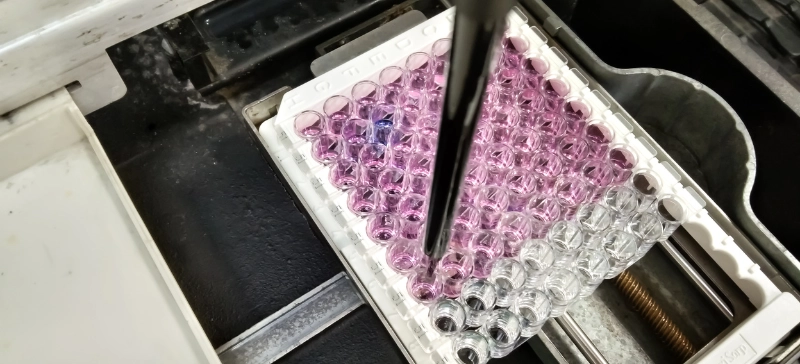
An Elisa Reader is a type of microplate reader specifically designed to measure absorbance in enzyme-linked immunosorbent assays (ELISA). These assays are commonly used to detect antibodies, antigens, proteins, and other biological markers in samples. Elisa readers offer precise and sensitive measurements, making them essential for clinical diagnostics and biomedical research.
3.1 Working Principle of Elisa Readers
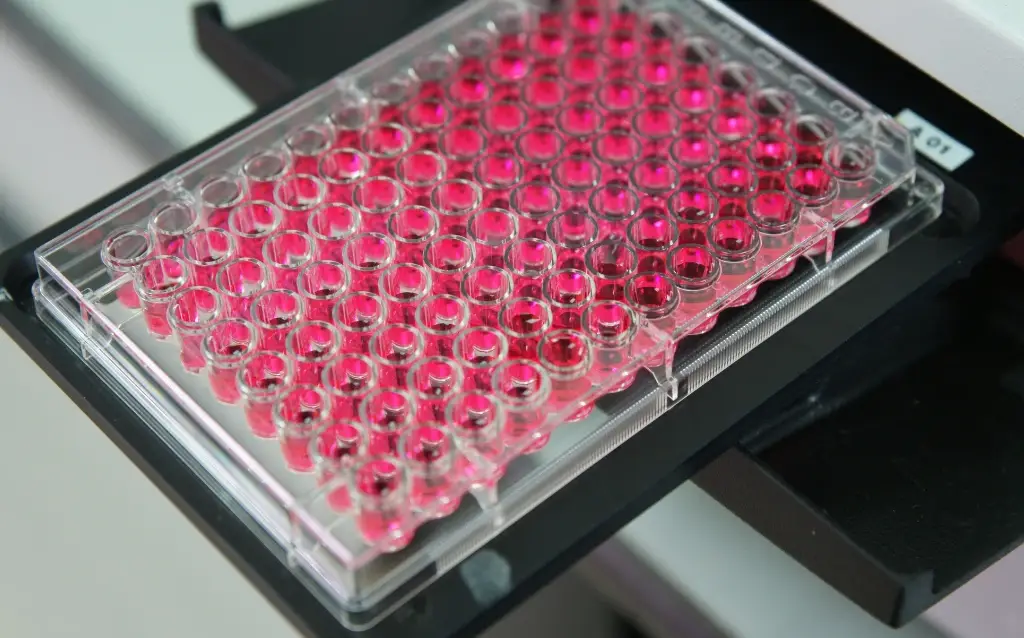
The working principle of an Elisa Reader involves the measurement of the color change in the microplate wells after a substrate reacts with the enzyme linked to the antibody. This color change is proportional to the concentration of the target molecule. Elisa readers measure the absorbance at specific wavelengths, typically ranging from 400 nm to 750 nm, depending on the assay’s requirements.
4. Applications of Microplate Readers and Elisa Readers
Microplate and Elisa readers are widely used in various fields, including:
4.1 Medical and Clinical Research
In medical research, these instruments are employed to diagnose diseases, detect infections, and monitor disease progression. Common applications include:
-
HIV Detection
-
Cancer Biomarker Detection
-
Autoimmune Diseases
-
Food Allergens Testing
4.2 Biotechnology and Pharmaceutical Industry
These readers are essential for drug discovery and development. They facilitate high-throughput screening (HTS) of drug candidates, as well as testing for efficacy and toxicity. Key applications include:
-
Enzyme Activity Assays
-
Recombinant Protein Production
-
Cell-Based Assays
4.3 Agriculture and Environmental Research
In agricultural research, researchers use microplate readers to study plant growth, soil health, and pest resistance. They also employ these readers in environmental testing, including water and soil quality analysis.
5. Key Features of Microplate Readers
Microplate readers come with a variety of features that enhance their performance and versatility:
5.1 Sensitivity and Accuracy
High-quality microplate readers offer exceptional sensitivity and accuracy, enabling the detection of low concentrations of analytes. This is crucial in applications like early-stage cancer detection, where small amounts of biomarkers can have significant clinical implications.
5.2 Automation and Efficiency
Many modern microplate readers use automated systems that allow researchers to perform high-throughput screening. Automation reduces the need for manual intervention, improving efficiency and reproducibility while saving time in the laboratory.
5.3 Multi-Detection Capability
various detection technologies, including absorbance, fluorescence, and luminescence, equip multimode readers, thereby offering flexibility in handling different types of assays.
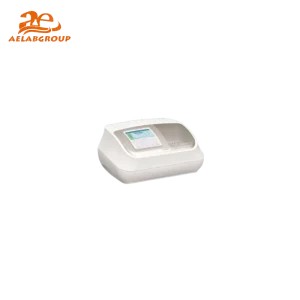
Micro-plate Reader/Elisa Reader SPR-960
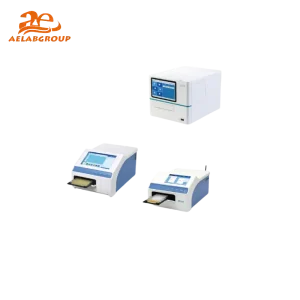
Microplate Reader AMR/Flex/Feyond Series
6. Conclusion
Microplate readers and Elisa readers are indispensable tools in modern research and clinical laboratories. They provide accurate and reliable data for a wide range of applications, from disease detection to pharmaceutical research. By understanding the types, applications, and key features of these instruments, research institutions can improve their research capabilities and obtain more accurate results in their studies.